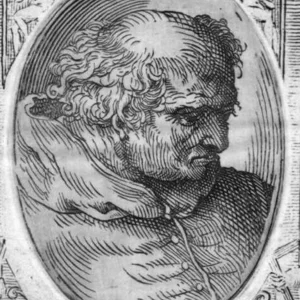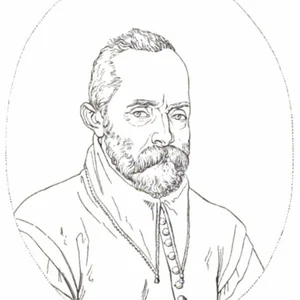

Italian Renaissance painter (c. 1495–1576), active mainly in Lombardy and Emilia. A pupil of Correggio, he developed a style influenced by Lombard Mannerism, creating frescoes and altarpieces for the major churches of Cremona and Pavia.
Bernardino Gatti(1495 — 1576)
Bernardino Gatti
9 min read
Frequently asked questions
Key Facts
- Born around 1495, probably in Pavia or Cremona
- Trained in the circle of Correggio, whose soft and luminous style he adopted
- Created important frescoes in Cremona Cathedral
- Also worked in Pavia, notably at the church of San Pietro in Ciel d'Oro
- Died in 1576, leaving a body of work that is essentially religious in nature
Works & Achievements
A series of frescoes created for the church of San Sigismondo in Cremona, one of the most significant artistic projects in Lombardy in the 16th century. Gatti contributed alongside other Cremonese painters in a Mannerist style tinged with the influence of Correggio.
A grand monumental fresco adorning the apse of Pavia Cathedral, depicting the Virgin's ascent to heaven surrounded by angels and apostles. This composition, with its dizzying foreshortened figures, is directly inspired by Correggio's frescoes in Parma and represents the pinnacle of Gatti's art.
A typical altarpiece from Gatti's output for the major Lombard churches, illustrating his ability to wed Correggesque softness with the Lombard sense of color and textile detail in the draperies.
A devotional painting showing Christ in prayer at Gethsemane, a frequent subject in Counter-Reformation art; the work bears witness to Gatti's adaptation to the new spiritual demands of the post-Tridentine Church.
Participation in the painted decorations of this Milanese building, attesting to Gatti's reach beyond Cremona and his ability to secure commissions in the cultural capital of Lombardy.
Anecdotes
Bernardino Gatti is universally known by the nickname 'Il Sojaro', which he carried throughout his life far more than his birth name. The precise origin of this sobriquet remains debated among art historians, yet it was the name by which patrons of the great Lombard churches recognized and sought him out. It speaks to the importance of nicknames in the artistic circles of the Italian Renaissance, where a painter's identity was shaped as much by reputation as by his body of work.
The great apse fresco in Pavia Cathedral, depicting the Assumption of the Virgin, is considered Gatti's masterpiece. Executed in the second half of the sixteenth century, this monumental composition reveals his deep admiration for the style of Correggio, his foremost point of reference, with its dizzying foreshortened figures and luminous clouds that give the impression of gazing up at the sky from inside the church.
Gatti was one of the many painters who contributed to the decoration of the church of San Sigismondo in Cremona, a building erected to commemorate the marriage of Bianca Maria Sforza and Francesco Sforza. This exceptional project brought together several major Cremonese and Lombard painters over several decades, and Gatti left a number of significant frescoes there, taking part in the collective artistic rivalry that was so characteristic of the Renaissance.
A pupil, or at the very least a fervent admirer, of Correggio, Gatti absorbed the Parma master's style so thoroughly that some of his paintings were long attributed to Correggio himself by collectors and art dealers. This confusion, flattering for Gatti, illustrates the ability of Renaissance painters to immerse themselves so deeply in a stylistic tradition that they could become almost indistinguishable continuators of it.
Active for more than forty years, Gatti lived through one of the most turbulent periods in Lombard history: the Italian Wars, Spanish domination, the Council of Trent. Far from slowing his output, the Catholic renewal that emerged from the council stimulated fresh commissions for religious works, and Gatti proved adept at adapting his lyrical, devotional style to the demands for clarity and fervour championed by the reformed Church.
Primary Sources
The archives of the Pavia Cathedral workshop preserve payment records attesting to commissions given to Bernardino Gatti for the execution of the apse frescoes, specifying the terms of the contract and the sums paid to the painter.
The archives of the church of San Sigismondo in Cremona contain accounting documents attesting to Bernardino Gatti's involvement in the interior decoration of the building, alongside other renowned Cremonese painters.
Lomazzo, the Milanese art theorist, discusses the Lombard painters of the 16th century and their relationship to the legacy of Correggio, a tradition to which Gatti fully belongs through his luminous compositions and foreshortened figures.
Zaist devotes an entry to Bernardino Gatti, known as Il Sojaro, tracing his principal commissions in Cremona and Pavia and emphasizing the decisive influence of Correggio on his training and style.
Key Places
A Lombard city where Gatti spent most of his active career, producing important frescoes for the church of San Sigismondo and other religious buildings. Cremona was at the time a major artistic center of Lombardy, bringing together several great painters.
The building where Gatti executed his most ambitious frescoes, most notably the Assumption of the Virgin in the apse, considered his masterpiece and directly inspired by Correggio's foreshortened compositions in Parma.
The city where Correggio, the master who inspired Gatti throughout his life, had created his greatest works. Gatti likely studied the frescoes in the Cathedral and the convent of San Paolo to draw from them models of foreshortened composition and luminous effects.
The cultural and political capital of Lombardy under Spanish rule, Milan offered significant artistic opportunities and served as a hub for the spread of Mannerist ideas coming from central Italy.
A small Lombard town with which the Gatti family may have had ties, according to certain hypotheses about the painter's origins, though documentary sources remain scarce and contradictory on this point.
Typical Objects

A large full-scale drawing traced on thick paper, used as a model to transfer the composition onto the plastered wall before painting the fresco. An indispensable tool for every Renaissance fresco painter, it reflects the extensive design work that preceded the actual mural painting.

Gatti used mineral and vegetable pigments — azurite, lapis lazuli, ochre, vermilion — mixed with water for fresco work or with linseed oil for easel paintings, producing the warm, golden tones characteristic of his Lombard style.

Fine sable-hair brushes allowed the painter to render the delicate details of faces and drapery, hallmarks of the refined Lombard style that Gatti cultivated as an heir to Correggio's gentle manner.

For fresco painting, the intonaco — a fresh coat of lime and sand plaster — had to be applied each morning over the surface to be painted that day, imposing a rigorous work rhythm and demanding complete mastery of the composition.

Gatti's large altar paintings were set within carved and gilded wooden structures, commissioned from local joiners and gilders in Cremona or Pavia to enhance the work within its liturgical context.

A sketchbook in which the painter collected figure studies, compositions inspired by other masters, and visual notes; for Gatti, Correggio's works in Parma served as a constant and inexhaustible reference.
School Curriculum
Vocabulary & Tags
Key Vocabulary
Daily Life
Morning
Gatti began his day at dawn to take advantage of the natural light essential to painting. In his bottega — the workshop-studio where he directed apprentices and collaborators — he prepared pigments, checked the condition of the plaster laid the day before, and drew on the cartoon the sections to be painted that day.
Afternoon
The afternoon was devoted to the actual painting sessions, particularly demanding during fresco work, where each journata — section of fresh plaster — had to be painted before the lime dried. For easel paintings, Gatti could work for longer stretches, refining details with successive glazes.
Evening
In the evenings, the painter sometimes received his commissioners — a canon, a confraternity representative, a local nobleman — to present the progress of the work and discuss desired changes to the iconography, colors, and delivery deadlines, which were an ever-present source of tension between the artist and his patrons.
Food
Like most prosperous artisans of 16th-century Lombardy, Gatti ate bread, vegetables, legumes, and meat on days permitted by the Church. Cremonese cheese, renowned throughout the region, and local cured meats regularly featured at his table, accompanied by wine from the hills near Pavia.
Clothing
Gatti wore the typical garments of prosperous artisans of his time: a long woolen or cloth tunic over which he put on a work apron to protect his clothes from paint splatter. When meeting his commissioners, he wore more refined attire, reflecting his intermediate status between skilled craftsman and respected intellectual.
Housing
The painter most likely lived in a house-workshop in the heart of Cremona, close to the great churches that employed him. Living space and working space merged in these botteghe where apprentices also lived, following a medieval tradition that persisted well into the 16th century despite the growing social prestige of the painter's profession.
Historical Timeline
Period Vocabulary
Liens externes & ressources
Références
Œuvres
Vierge à l'Enfant avec saints (pala d'altare)
XVIe siècle
Décoration de Santa Maria della Pace, Milan
XVIe siècle