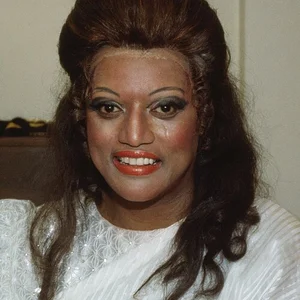

African-American soprano considered one of the greatest operatic voices of the 20th century. Born in 1945 in Georgia, she rose to prominence on the world's most prestigious stages (the Met Opera, Bayreuth, Covent Garden). A figure in the civil rights movement, she performed *La Marseillaise* on the Champs-Élysées during the bicentennial of the French Revolution in 1989.
Jessye Norman(1945 — 2019)
Jessye Norman
États-Unis
9 min read
Frequently asked questions
Famous Quotes
« Music gives a soul to our hearts and wings to thought.»
« To sing is to love and to affirm.»
Key Facts
- Born September 15, 1945, in Augusta, Georgia (United States)
- Debut at the Berlin Opera in 1969, followed by a swift international career
- Performed *La Marseillaise* on the Champs-Élysées during the bicentennial of the French Revolution (1989)
- Awarded the Grand Cross of the Légion d'honneur by France
- Died September 30, 2019, in New York, from complications following a 2015 accident
Works & Achievements
Her debut in this demanding Wagnerian role at the Deutsche Oper Berlin marked the official launch of her international career. Critics immediately hailed a voice and stage presence unmatched among singers of her generation.
Her recordings of Schubert's songs are considered benchmark interpretations of the genre. Her ability to inhabit every German text with emotional depth while sustaining a vocal line of rare and sculpted beauty makes these recordings a reference to this day.
One of the most demanding roles in the operatic repertoire, brought to life by Jessye Norman with exceptional vocal and dramatic power, definitively cementing her international reputation as one of the great Wagnerian voices.
This album of African American spirituals and gospel songs reflects Jessye Norman's musical roots and her deep connection to her community's cultural heritage. It reveals how her upbringing in a Baptist church in Augusta shaped the whole of her lyrical sensibility.
A historic performance on the Champs-Élysées before one million spectators and hundreds of millions of television viewers. Draped in a tricolor flag, Jessye Norman transformed the French national anthem into a moment of universal resonance, weaving together art, history, and commitment.
Her autobiography traces her journey from Augusta to the world's greatest stages, touching on her commitment to civil rights, arts education, and cultural transmission. It stands as a vital document on the place of a Black artist within the world of European classical opera.
Anecdotes
During the bicentennial of the French Revolution, on July 14, 1989, Jessye Norman performed *La Marseillaise* on the Champs-Élysées before more than one million spectators, draped in an enormous tricolor flag. This moment, broadcast on television to hundreds of millions of viewers worldwide, remains one of the most memorable operatic performances of the twentieth century.
Jessye Norman grew up in a deeply musical family in Augusta, Georgia, in the segregated American South. From the age of four, she sang in her hometown's Baptist church, developing an exceptional voice in a context where African Americans were fighting for their most basic rights. This dual formation — religious and operatic — left a profound mark on her entire career.
In 1968, Jessye Norman won the International Music Competition in Munich, which immediately opened the doors of the Deutsche Oper in Berlin. She made her professional debut in 1969 in the role of Elisabeth in Wagner's *Tannhäuser* — a role traditionally reserved for European singers — and was acclaimed by critics who had not expected such a revelation to come from America.
Jessye Norman possessed a voice so powerful and so rich in harmonics that she could sing both soprano and mezzo-soprano roles, an absolute rarity in the operatic world. Her exceptional middle register and her ability to fill the world's greatest concert halls without amplification earned her the nickname “Grande Dame de l’Opéra.”
Aware of her roots and her history, Jessye Norman devoted her entire life to the civil rights cause and to supporting underprivileged young artists. In 2003 she founded the Jessye Norman School of the Arts in Augusta, her hometown, to offer free artistic training to children who could never otherwise have afforded it — the exact opposite of what the segregationist system had imposed on her own generation.
Primary Sources
I was born into a family that sang. My parents, my brothers and sisters, we all sang. Music was not something we did on Sunday mornings; it was something we were, every day of the week.
I don't think of myself as a black singer or a woman singer. I think of myself as a singer who happens to be black and who happens to be a woman. The music is what matters.
Jessye Norman, world-renowned American soprano, performs La Marseillaise on the Place de la Concorde during the July 14, 1989 celebrations, as part of the parade and international televised concert.
Every child deserves the opportunity to discover the transformative power of the arts. In Augusta, where I grew up, I want to offer that chance to children who would otherwise never have access to music, dance, or theater.
Key Places
Jessye Norman's hometown in the American South, where she grew up in a musical family and first sang at a Baptist church. In 2003, she founded an arts school bearing her name there, as a tribute to her roots.
A historically Black university where Jessye Norman completed her higher musical education, earning her Bachelor of Music degree in 1967. Founded in 1867, this institution symbolizes the intellectual emancipation of the African American community after the Civil War.
The venue of her professional debut in 1969, where she performed the role of Elisabeth in Wagner's Tannhäuser and was immediately recognized by European critics as a voice and stage presence of extraordinary caliber.
America's foremost opera house, where Jessye Norman made her debut in 1983 and gave many memorable performances, becoming one of the artists most closely identified with this world-renowned institution.
The world's premier venue for Wagnerian opera, founded by Richard Wagner himself in 1876, where Jessye Norman performed and cemented her status as an international benchmark in the German composer's repertoire.
The site of a legendary performance on July 14, 1989, when Jessye Norman sang La Marseillaise before an audience of one million, draped in the tricolor flag, to mark the bicentennial of the French Revolution — a moment broadcast in more than 150 countries.
Typical Objects
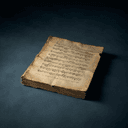
The scores of great operas and lieder were Jessye Norman's daily working tools. She studied works by Wagner, Schubert, and Mahler with extreme attention to the nuances of both text and music, often in several languages at once.
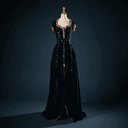
Jessye Norman's stage gowns — often majestic and richly colored — were an integral part of her stage presence. For her performance of *La Marseillaise* in 1989, she wore an enormous French tricolor flag fashioned into a garment, an image that became iconic in the history of music.

Jessye Norman won four Grammy Awards over the course of her career — the highest honor in the American music industry. These trophies reflect the international recognition of her talent, spanning opera, lieder, and spirituals alike.

Like most classical singers, Jessye Norman worked through her roles at the piano alongside her accompanists and vocal coaches. The piano was the central instrument of her daily rehearsals, allowing her to analyze every musical phrase in detail.
📷 CC BY-SA 3.0 · Wikimedia Commons ↗
Jessye Norman left behind a substantial catalog of recordings for the Philips label (now Deutsche Grammophon), covering Wagner operas, Schubert lieder, and African-American spirituals. These recordings are today considered essential pedagogical references in the operatic repertoire.

On permanent tour across five continents, Jessye Norman lived between New York, London, Paris, Bayreuth, and Tokyo. Her travel diaries reflect a life entirely devoted to the stage, racing from rehearsal to performance around the world.
School Curriculum
Vocabulary & Tags
Key Vocabulary
Tags
Daily Life
Morning
Jessye Norman began her days with strict vocal exercises — warming up the voice was essential for preserving such a precious instrument. She devoted her mornings to studying scores and working with her accompanists, analyzing each musical phrase and each word of the text — often in German, French, Italian, or English depending on the current repertoire.
Afternoon
Afternoons were spent in rehearsals at the opera house or concert hall, often lasting several hours, with conductors and fellow soloists. Outside performance periods, she placed great importance on meetings with the press, conferences, and her activities related to arts education and her humanitarian commitments.
Evening
Evenings were reserved for performances — operas and recitals are given primarily at night. After the show, Jessye Norman would meet organizers, patrons, and fans backstage before resting scrupulously, vocal recovery being a discipline as serious as training itself.
Food
Like most professional opera singers, Jessye Norman was very mindful of her diet in order to protect her voice. She avoided foods that irritate the vocal cords — strong alcohol, harsh spices, dairy products before concerts — and favored a balanced diet and constant hydration, an absolute prerequisite for maintaining the sonic quality of her voice.
Clothing
On stage, Jessye Norman wore spectacular costumes suited to her roles — medieval gowns for Wagner, sumptuous concert attire in rich colors for recitals. Her imposing figure and natural stage presence made every appearance a visual event as much as a musical one. The performance of July 14, 1989 remains iconic: she had draped herself in an immense tricolor flag, transforming her body into a living banner of Franco-American fraternity.
Housing
Jessye Norman divided her life between New York, her primary base, and the cities where she performed — Berlin, Paris, London, Bayreuth. She also owned a property in Dutchess County, in the state of New York, where she could recharge far from the bustle of the world's great stages and receive friends and collaborators in a more intimate setting.