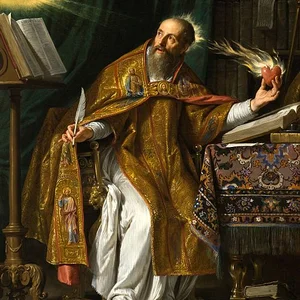

First-century Jewish preacher from Galilee and the central figure of Christianity, which recognizes him as the Messiah and Son of God. His preaching, his crucifixion in Jerusalem under Pontius Pilate, and his disciples' proclamation of his resurrection gave rise to a new religion.
Jesus of Nazareth
Jesus of Nazareth
7 min read
Frequently asked questions
Famous Quotes
« Love one another»
« Render unto Caesar the things that are Caesar's, and unto God the things that are God's»
Key Facts
- Born around 7-4 BCE in Bethlehem or Nazareth, in Galilee under Roman rule
- Began his itinerant preaching in Galilee around 27-28 CE, surrounded by disciples
- Crucified in Jerusalem around 30-33 CE under the Roman prefect Pontius Pilate
- His disciples proclaimed his resurrection, the starting point for the spread of Christianity
- The Gospels, written at the end of the 1st century, are the main sources on his life
Works & Achievements
A long discourse recorded in the Gospel of Matthew, containing the Beatitudes. It sums up the heart of the moral teaching attributed to Jesus.
Short, vivid stories (the Good Samaritan, the Prodigal Son, the Sower) used for teaching. They have remained a model for passing on moral lessons.
A prayer that Jesus is said to have taught his disciples according to the Gospels. It has become the most widely recited prayer in Christianity.
At the final meal, the sharing of bread and wine establishes a central rite for Christians. It is commemorated in the Mass.
Jesus sums up his moral law as love of God and of one's neighbor, including one's enemies. This message has deeply shaped Western thought.
Jesus chooses twelve disciples tasked with spreading his message. They are the origin of the first Christian community.
Anecdotes
According to the Gospels, Jesus is said to have begun his teaching around the age of thirty, traveling through **Galilee** surrounded by twelve disciples called the apostles. He taught above all through parables, short stories drawn from everyday life (the Good Samaritan, the Prodigal Son) to convey a moral message that was easy to remember.
The Gospels recount that Jesus liked to address the fishermen of the **Sea of Galilee**, several of his first disciples such as **Peter** and **Andrew** practicing that trade. This is why many accounts take place by the water and use the image of the net or of fishing.
According to the accounts, Jesus entered **Jerusalem** on a donkey, a humble mount, and the crowd spread palm branches along his path. This episode is commemorated each year by Christians on **Palm Sunday**.
Jesus' last meal with his disciples, the Last Supper, took place within the setting of the Jewish Passover. During this meal, according to the Gospels, he shared the bread and the wine, a gesture that became the foundation of the Christian rite of the Eucharist.
The Jewish historian **Flavius Josephus** and the Roman historian **Tacitus**, writing at the end of the 1st century and the beginning of the 2nd century, briefly mention Jesus and his execution under **Pontius Pilate**, which makes him one of the few figures of this milieu attested by non-Christian sources.
Primary Sources
The beginning of the Gospel of Jesus Christ, the Son of God.
Blessed are the poor in spirit, for theirs is the kingdom of heaven. Blessed are the peacemakers, for they shall be called sons of God.
At this time there appeared Jesus, a wise man [...] whom Pilate condemned to the punishment of the cross.
Christ, in the reign of Tiberius, had been put to death by the procurator Pontius Pilate.
I delivered to you [...] that Christ died for our sins according to the Scriptures, that he was buried, and that he rose again on the third day.
Key Places
Town in Judea presented by the gospels of Matthew and Luke as the birthplace of Jesus. It is associated with the lineage of King David.
Village in Galilee where, according to the gospels, Jesus spent his childhood and youth. His epithet 'of Nazareth' comes from it.
Large lake in Galilee around which much of Jesus's preaching takes place. Several of his disciples were fishermen there.
River where, according to the gospels, Jesus was baptized by John the Baptist, an episode marking the beginning of his public life.
Jewish religious capital where the final days of Jesus take place: the Last Supper, his arrest, his trial and his crucifixion under Pontius Pilate.
Hill at the gates of Jerusalem where, according to the gospels, Jesus was crucified. The name means 'place of the skull'.
Typical Objects
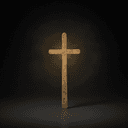
A Roman instrument of execution on which Jesus was crucified, which became the foremost symbol of Christianity. It represents both his death and the hope of the resurrection.
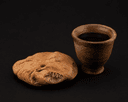
During his final meal, Jesus shared bread and wine, associating them with his body and blood. This act founds the Christian rite of the Eucharist.
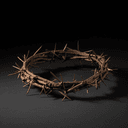
According to the Gospels, Roman soldiers placed a crown woven from thorns on Jesus's head to mock his kingship. It became a symbol of his Passion.
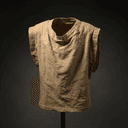
A simple garment worn by Jesus which, according to the Gospel of John, the soldiers cast lots for at the foot of the cross. It illustrates the humble condition attributed to him.
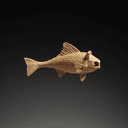
The fish, linked to the stories of fishing and the multiplication of the loaves, became a secret sign of recognition among the early Christians. The Greek word ichthys formed an acrostic referring to Christ.
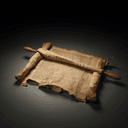
In the Jewish tradition of his time, Jesus read and commented on the scrolls of the Torah and the prophets in the synagogue. These texts nourished his teaching.
School Curriculum
Vocabulary & Tags
Key Vocabulary
Tags
Daily Life
Morning
In first-century Galilee, the day began early, at sunrise. According to the Gospels, Jesus would sometimes withdraw to a solitary place to pray before joining the crowds. Mornings were well suited to teaching and to travelling from village to village.
Afternoon
In the afternoon, Jesus is said to have taught in the open air, by the shores of the Sea of Galilee or on the hillsides, surrounded by disciples and onlookers. The accounts also tell of encounters with the sick, with fishermen and with tax collectors.
Evening
In the evening, people shared the main meal, often at the home of hosts or disciples. It was a time for discussion and teaching, as at the Last Supper. At night, they slept in welcoming homes or sometimes out in the open.
Food
The Galilean diet was based on barley or wheat bread, fish from the lake, olives, figs and wine cut with water. Meat was rare, reserved for feasts. The Gospels often show Jesus sharing simple meals.
Clothing
People wore a tunic of linen or wool gathered at the waist with a belt, covered by a cloak for the night and the cold. Their feet were shod in leather sandals. A veil or length of cloth shielded the head from the sun.
Housing
Galilean houses were modest, built of stone and earth, with a flat terraced roof. People often lived there as a family, sometimes with livestock close by. Jesus, according to the Gospels, led an itinerant life and lodged with those who took him in.
Historical Timeline
Period Vocabulary
Sound Ambience
Ambiance sonore de la Galilée et de la Judée du Ier siècle : troupeaux, lac, foules rurales, chants liturgiques hébreux et murmures en araméen.
Liens externes & ressources
Références
Œuvres
Le Sermon sur la montagne
vers 28-30 apr. J.-C.
Les paraboles
vers 28-30 apr. J.-C.
Le 'Notre Père'
vers 28-30 apr. J.-C.
L'institution de l'eucharistie (la Cène)
vers 30-33 apr. J.-C.
Le commandement de l'amour
vers 28-30 apr. J.-C.
Le rassemblement des douze apôtres
vers 28 apr. J.-C.