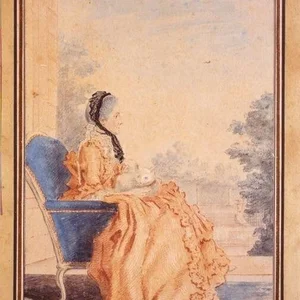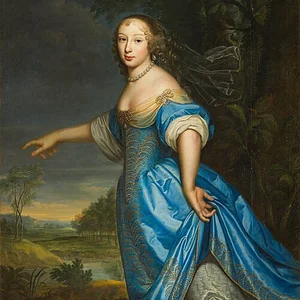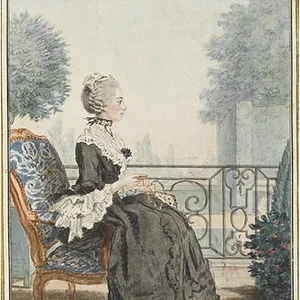

An 18th-century French salonnière, Julie de Lespinasse ran one of the most influential salons in Paris, frequented by the Encyclopédistes. A passionate letter-writer, her correspondence offers a vivid window into the intellectual life of the Enlightenment.
Julie de Lespinasse(1732 — 1776)
Julie de Lespinasse
France
7 min read
Frequently asked questions
Famous Quotes
« Love is the only passion that tolerates neither past nor future.»
« I live in a whirlwind; I see a thousand people and I am alone.»
Key Facts
- Born on November 9, 1732, in Lyon, the illegitimate daughter of the Comte de Vichy
- From 1764, opened her own salon on the Rue Saint-Dominique in Paris, independent of Mme du Deffand's
- Her salon brought together the greatest Encyclopédistes: d'Alembert, Condorcet, Turgot, and Marmontel
- Maintained a passionate correspondence with the Comte de Guibert, published after her death
- Died on May 22, 1776, in Paris, leaving behind a major body of epistolary work
Works & Achievements
A masterpiece of French epistolary literature, these letters to the Count de Guibert reveal a rare intensity of romantic passion and stand as an exceptional record of the inner life of an Enlightenment woman.
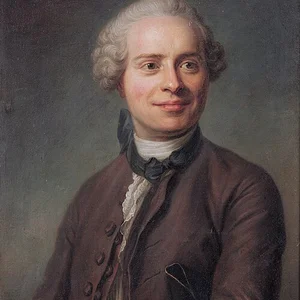
A richly intellectual and emotional exchange between Julie and the mathematician-encyclopédiste, illustrating the deep bonds between friendship, love, and the life of the mind in 18th-century France.
Without having written a work in the conventional sense, Julie de Lespinasse contributed directly to the development of Enlightenment thought by creating a unique space for intellectual exchange, shaping the ideas and careers of the Encyclopédistes.
Her correspondence as a whole — with philosophers, aristocrats, and men of letters — forms an epistolary body of work that attests to her role as an intellectual mediator at the heart of the Enlightenment network.
Anecdotes
Julie de Lespinasse was the illegitimate daughter of the Countess of Albon — a secret carefully kept for years. She was raised discreetly, never officially knowing her true origins, which partly explains the sensitivity and depth of her character.
Introduced into Madame du Deffand's salon as a lady's companion, Julie so quickly won the admiration of its regulars — including d'Alembert — that the jealous old marquise eventually drove her out in 1764. Julie then opened her own salon on the Rue de Bellechasse, which soon eclipsed that of her former patroness.
D'Alembert, the great mathematician and co-editor of the Encyclopédie, fell desperately in love with Julie. He lived for years in the apartment above hers, devoting himself to her entirely — even as Julie was passionately in love with another man, the Marquis de Mora.
Julie de Lespinasse died at 44, worn down by consuming passions and the overuse of medications — notably opium, which she took to ease both her physical heart condition and her emotional anguish. Her letters to the Count de Guibert, discovered after her death, revealed to the world the volcanic intensity of her secret feelings.
Primary Sources
I live to love you; it is the only good that remains to me, the only occupation of my soul. I can think of nothing but you, I can feel nothing except through you.
Mlle de Lespinasse gathers at her home all that Paris counts among philosophers and enlightened minds; her salon has become the meeting place of thinking Europe.
Her salon was the gathering of all who thought in Europe. She had the rare gift of animating conversation without ever stifling it, of bringing out the best in everyone.
It is she who shaped the public mind of our century, by bringing together those who were forming it and giving them a place where their ideas could meet freely.
Key Places
It was here, in this modest apartment in the Faubourg Saint-Germain, that Julie held one of Paris's most influential salons from 1764 to 1776, bringing together encyclopédistes, philosophers, and foreign diplomats.
Julie began here as a lady's companion from 1754; it was in this salon that she formed her first connections with the great minds of the century, before being forced out in 1764.
Julie de Lespinasse's birthplace, where she was born in 1732 under difficult family circumstances stemming from her status as an illegitimate child.
The institution of which d'Alembert, Julie's close friend, was perpetual secretary; Julie exerted a discreet but real influence over academic elections through her network.
Typical Objects

Julie de Lespinasse was a prolific letter writer; the quill pen and inkwell were her daily tools for maintaining an intense correspondence, particularly with Guibert and the philosophers of her circle.

The armchair, a central piece of furniture in the Enlightenment salon, symbolizes the intellectual sociability that Julie cultivated: a space for speech, debate, and exchange among philosophers and men of letters.

The volumes of the Encyclopédie adorned Julie's library; she was in daily contact with its editors, notably d'Alembert and Diderot, who were regular visitors to her salon.

Salon evenings were held by candlelight and candelabras, which illuminated discussions well into the late hours of the night in the apartment on the Rue de Bellechasse.

Toward the end of her life, Julie turned to laudanum to ease her heart pains and emotional suffering — a common remedy in the 18th century that contributed to hastening her death.

Music held an important place in 18th-century Parisian salons; Julie cultivated the arts and sometimes welcomed musicians to her evenings, in keeping with the customs of enlightened high society.
School Curriculum
Vocabulary & Tags
Key Vocabulary
Daily Life
Morning
Julie rose late, often after nine o'clock, worn out from long evenings. She began her day with an abundant correspondence, sometimes writing several letters before even getting dressed — the pen being for her a natural extension of thought.
Afternoon
The afternoon was devoted to visits and preparations for the salon: discussions with the servants, arranging the chairs, receiving close friends such as d'Alembert, who often came up to see her from his apartment directly above hers. She read the latest philosophical publications and gazettes.
Evening
From five to nine o'clock, the salon came alive: philosophers, academicians, ambassadors, and men of letters crowded in. Julie directed conversations with consummate skill, reigniting debates, settling disputes, and drawing out the best in each guest, before ending the evening exhausted but fulfilled.
Food
Like many salonnières of her standing, Julie ate little and irregularly, preferring conversation to meals. She enjoyed coffee, then very fashionable in Parisian salons, as well as the sweet confections served to guests during evening gatherings.
Clothing
Julie wore robes à la française in silk or taffeta in pastel shades — cream white, pale blue, powder pink — with boned bodices and panniers widening the hips, in keeping with Rococo fashion. Her powdered hair and understated jewelry reflected her status as a cultivated woman, though not an aristocrat.
Housing
Julie lived in a modest but carefully decorated apartment on the Rue de Bellechasse, in the Faubourg Saint-Germain. The main salon, hung with pale silk and furnished with comfortable armchairs, contrasted sharply with the simplicity of her private rooms — revealing a woman who sacrificed personal comfort for the brilliance of her intellectual life.
Historical Timeline
Period Vocabulary
Visual Style
Style Rococo français tardif et néoclassicisme naissant : intérieurs dorés à la bougie, boiseries élégantes, soieries pastel et atmosphère intime des salons parisiens du XVIIIe siècle.
Sound Ambience
L'atmosphère sonore du salon de Julie de Lespinasse : conversations philosophiques animées à la lueur des bougies, froissement de soie, clavecin discret et bruits feutrés du Paris des Lumières.
Liens externes & ressources
Références
Œuvres
Lettres à M. de Guibert
1773-1776 (publiées en 1809)
Correspondance avec d'Alembert
1764-1776
Animation du salon encyclopédiste (1764-1776)
1764-1776
Lettres diverses (correspondance générale)
1760-1776