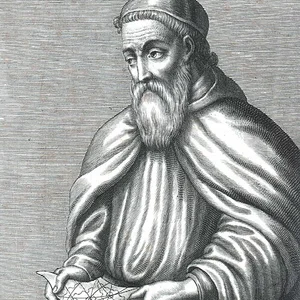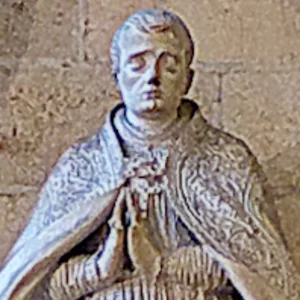

Secretary and chaplain to Cardinal Luigi d'Aragona, Antonio de Beatis is known for the travel journal he wrote during their European journey of 1517–1518. He left a particularly valuable account of his meeting with Leonardo da Vinci in Amboise.
Antonio de Beatis(1450 — ?)
Antonio de Beatis
Belgique
8 min read
Frequently asked questions
Key Facts
- 1517–1518: accompanied Cardinal Luigi d'Aragona on a grand journey across Europe (France, the Netherlands, Germany, Switzerland)
- 1517: met Leonardo da Vinci at the Château du Clos Lucé in Amboise and described his works and state of health
- Wrote the *Itinerario*, a travel journal that stands as a major historical source on European courts of the Renaissance
- His account is one of the few contemporary descriptions of Leonardo da Vinci in his final years
Works & Achievements
A masterpiece of Renaissance travel literature, this journal offers an exceptional account of sixteenth-century Europe — its courts, its artists, and its curiosities. It is the primary source for the famous description of the visit to Leonardo da Vinci at Amboise in October 1517.
A passage from the journal describing the visit to Clos Lucé: De Beatis mentions three paintings shown by Leonardo, including a portrait of a Florentine lady that many historians identify as the Mona Lisa. This text is cited in all major biographies of Leonardo da Vinci.
Passages of the *Itinerario* devoted to the Netherlands, offering one of the earliest enthusiastic literary descriptions of Van Eyck's masterpiece in Ghent, and bearing witness to how a humanist eye from the South received Northern painting.
Anecdotes
On October 10, 1517, Antonio de Beatis accompanies Cardinal Louis of Aragon to the Clos Lucé, near Amboise, to visit Leonardo da Vinci. In his journal, he describes having seen three paintings: a portrait of a Florentine lady, a Saint Anne, and a Saint John the Baptist. This account is one of the last known descriptions of Leonardo alive, written just a few months before his death in 1519.
De Beatis notes with astonishment that Leonardo da Vinci can no longer paint with his right hand, which is affected by paralysis, but that he continues to teach and guide his pupils. This detail, faithfully recorded in his journal, has fueled centuries of debate among art historians about the final creative years of the Tuscan master.
During their passage through the Netherlands in 1517, De Beatis and the cardinal discover the Ghent Altarpiece by Jan van Eyck in Ghent. The traveler is visibly impressed by the richness of the Flemish courts and the quality of Northern painting, so different from the Italian works he had known since childhood.
In England, the cardinal's delegation is received by the young Henry VIII, then in his twenties. De Beatis describes a king of fine stature, a great lover of music and jousting, who speaks Latin and French — a precious portrait for historians of the English Renaissance.
Throughout the journey, De Beatis carefully notes local curiosities: Flemish windmills, Rhenish fortifications, the food customs of the various countries they pass through. His journal is thus an exceptional source on daily life and mentalities in Europe at the beginning of the sixteenth century.
Primary Sources
My lord and all of us have seen Messer Lunardo Vinci, a Florentine, more than seventy years of age, the most eminent painter of our time. He showed us three pictures: a portrait of a certain Florentine lady, painted from life, a young Saint John the Baptist, and a Saint Anne; all three perfect, although he can no longer expect much from his right hand, being afflicted with a certain paralysis.
We saw in the church of Saint Bavo a painting on wooden panels by Master Jan, a native of Ghent, depicting the story of the Lamb of God with many admirably painted figures; a remarkable work of great value, held to be the finest painting in Flanders.
The King of England is a lord of fine stature and noble bearing, who speaks Latin and French, plays the lute and the organ, is very fond of hunting and jousting, and is gifted with rare skill in archery; he is about twenty-five or twenty-six years of age.
The Flemish are a people of great commerce; their cities abound with merchants from all over Europe, and their workshops produce cloth of unparalleled fineness that is exported as far as the Orient and the newly discovered Indies.
Key Places
The residence of Cardinal Luigi d'Aragona and the starting point of the great European journey of 1517. De Beatis served there as secretary and chaplain within the entourage of the Aragonese prelate.
Leonardo da Vinci's residence, gifted to him by Francis I, where De Beatis and the cardinal paid him a visit on 10 October 1517. It was here that De Beatis wrote his celebrated account of the master and his final works.
A city in the Habsburg Netherlands visited during the journey, where De Beatis encountered Van Eyck's Ghent Altarpiece in Saint Bavo's Cathedral. He left an admiring description of it in his journal.
The English leg of the journey, during which the delegation was received at the court of Henry VIII. De Beatis provided a detailed physical and personal portrait of the young Tudor king — a valuable document for historians of the English Renaissance.
An essential stop for a high-ranking prelate such as Cardinal d'Aragona. De Beatis was able to observe the great artistic projects commissioned by Pope Leo X, including the reconstruction of St. Peter's Basilica.
Typical Objects

De Beatis recorded daily observations about the cities, courts, and personalities he encountered in a notebook. This journal became the *Itinerario*, a primary historical source of the first importance for understanding 16th-century Europe.

Renaissance secretaries wrote with trimmed quill pens dipped in black or brown ink. De Beatis must have kept a supply on hand at all times to set down his observations before memories faded.

As a chaplain, De Beatis carried his breviary to celebrate the daily offices wherever he found himself across Europe. This devotional object accompanied him at every stage of the long journey.

A cardinal's secretary transported sensitive diplomatic documents — letters of recommendation, papal instructions, safe-conducts — kept in a locked chest to protect them during travel.

Travelling through Europe in the 16th century required consulting rudimentary maps and road guides. De Beatis and his companions planned their stages with the help of these precious overland navigation documents.

During official audiences, the letters and documents of Cardinal Louis of Aragon were authenticated with his wax seal. As secretary, De Beatis almost certainly kept it in his custody and affixed it to official acts.
School Curriculum
Vocabulary & Tags
Key Vocabulary
Daily Life
Morning
De Beatis begins his day with prayer and the celebration of or attendance at Mass, in keeping with his duties as a chaplain. He then prepares the cardinal's agenda, drafts outstanding correspondence, and arranges the morning audiences with local dignitaries to be received.
Afternoon
Afternoons are devoted to travelling by litter or on horseback to the next destination, or to official visits to courts, cathedrals, artists' workshops, and notable buildings. It is during these outings that De Beatis observes and records the local curiosities that will feed his journal.
Evening
In the evening, De Beatis commits the day's events to his travel register while the cardinal dines with his hosts or rests. He uses these quiet moments to organise his notes and draft the more polished passages of his *Itinerario*.
Food
Travelling through the royal and episcopal courts of Europe, De Beatis had access to a fine table: roasted meats, fish on lean days, white bread, and local wines. He notes in his journal the culinary specialities of each region he passes through, reflecting a thoroughly humanist curiosity about food.
Clothing
As chaplain to a cardinal, De Beatis wore a black cassock for religious ceremonies, topped with a white surplice for services. While travelling, he adopted more practical garments of wool or heavy cloth, while retaining visible insignia of his ecclesiastical office.
Housing
During the great European journey, De Beatis lodged in the palaces and residences of the cardinal's hosts — royal courts, bishoprics, abbeys, or wealthy patrician mansions. The quality of these lodgings varied considerably, from the luxury of the Flemish courts to the discomfort of certain roadside inns.
Historical Timeline
Period Vocabulary
Liens externes & ressources
Références
Œuvres
Itinerario — Journal de voyage du cardinal Louis d'Aragon en Allemagne, aux Pays-Bas, en France et en Angleterre
Rédigé en 1517-1518, publié pour la première fois en 1905
Description de la rencontre avec Léonard de Vinci au Clos Lucé
10 octobre 1517
Notes sur les arts flamands et le Retable de l'Agneau mystique
1517