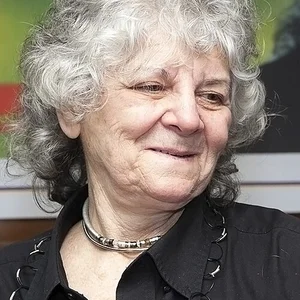

American mathematician born in 1942, pioneer of geometric analysis and gauge theory. First woman to receive the Abel Prize in 2019, the highest distinction in mathematics. Her work has profoundly influenced theoretical physics and modern geometry.
Karen Uhlenbeck(1942 — ?)
Karen Keskulla Uhlenbeck
États-Unis
8 min read
Frequently asked questions
Key Facts
- Born on August 24, 1942, in Cleveland, Ohio (United States)
- In the 1970s–1980s, develops foundational work in geometric analysis and calculus of variations
- Receives the MacArthur Fellowship (
- genius grant
- ) in 1983
- Co-founds the Park City Mathematics Institute to promote diversity in mathematics
- First woman to receive the Abel Prize in 2019, awarded by the Norwegian Academy of Science and Letters
Works & Achievements
A foundational result proving that certain singularities appearing in the Yang-Mills equations are mathematically removable, rigorously uniting differential geometry and particle physics for the first time.
A paper co-written with Jonathan Sacks introducing the notion of bubbling in families of minimal surfaces — a central concept in contemporary geometric analysis, cited thousands of times since its publication.
A proof of compactness results for Yang-Mills connections, paving the way for Simon Donaldson's work on the topology of 4-dimensional manifolds.
A series of foundational papers on harmonic maps and minimal surfaces that established Karen Uhlenbeck as one of the world's leading experts in geometric calculus of variations.
Co-founding of an annual program at the Institute for Advanced Study to encourage women to pursue careers in mathematics, which has trained hundreds of young researchers since its inception.
The first woman in decades to deliver a plenary lecture at this congress, cementing her place at the very forefront of world mathematics before thousands of researchers in Kyoto.
Anecdotes
As a curious young girl, Karen Uhlenbeck discovered her passion for mathematics by chance, stumbling upon a science book in her local library. Her parents — especially her father, an engineer — encouraged her curiosity, but at university she quickly ran into professors who did not take women seriously in the exact sciences. Far from being discouraged, she turned every obstacle into fuel for her research.
In 1968, she earned her doctorate at Brandeis University with a brilliant thesis on the calculus of variations. Yet her academic career got off to a rocky start: she and her husband, both mathematicians, were looking for positions in the same area, which proved nearly impossible at a time when universities refused to hire couples. This discrimination, known as the "anti-nepotism rule
forced her to teach at small universities far below her abilities.
In the early 1980s, Karen Uhlenbeck achieved a spectacular mathematical breakthrough: she solved a fundamental problem concerning the "bubbles" that appear in geometric equations — a phenomenon that now bears her name. Her work on Yang-Mills theory, born from the intersection of pure mathematics and theoretical physics, astonished the global scientific community and opened entire new fields of research.
In 1990, Karen Uhlenbeck became the first woman in decades to deliver a plenary lecture at the International Congress of Mathematicians (ICM). This distinction, at one of the most prestigious gatherings in world mathematics, symbolized a belated but resounding recognition of her exceptional contribution to the discipline.
When in 2019 the Norwegian Academy of Sciences awarded her the Abel Prize — the mathematics equivalent of the Nobel — Karen Uhlenbeck, aged 76, became the first woman to receive this honor since the prize was established in 2003. In her speech, she remarked with humor that she hoped the award would help make women in mathematics "normal" — meaning seen as natural and unremarkable in the field.
Primary Sources
I was always very interested in the visual and geometric aspects of mathematics. I think that's what drew me to geometric analysis — the ability to see and feel the mathematics.
I think one of the most important things that happened to me was that I had very good friends who were also doing mathematics. We learned from each other and supported each other.
We prove that all singularities of Yang-Mills fields in dimensions greater than four are removable under appropriate energy bounds.
Mathematics is a field in which one can make real progress by sheer force of thought and imagination, regardless of one's background.
Key Places
Karen Uhlenbeck's hometown, where she grew up in a curious and intellectually stimulating family environment before leaving to study at major American universities.
The university where Karen Uhlenbeck earned her doctorate in 1968, launching a research career that would go on to revolutionize geometric analysis.
The institution where Karen Uhlenbeck spent the greater part of her career, training generations of mathematics students and conducting her most influential research in gauge theory.
The legendary institution where Einstein and Gödel once worked; Karen Uhlenbeck serves there as a visiting professor and co-founded the Women and Mathematics program to encourage young women in the field.
The Norwegian capital where the Abel Prize ceremony is held each year; it was here, in 2019, that Karen Uhlenbeck received mathematics' highest honor from the hands of King Harald V.
Typical Objects
A central working tool for mathematicians, Karen Uhlenbeck uses it to visualize and share her complex geometric proofs during seminars and university courses.

Mathematicians record their intuitions, attempts, and proofs in personal notebooks; for Uhlenbeck, these notebooks are the laboratory where her discoveries on minimal surfaces and differential equations take shape.
Publications in which her landmark articles appeared; these journals are the primary channel for disseminating and validating mathematical discoveries within the international community.

With the rise of scientific computing, Karen Uhlenbeck and her students use symbolic computation software to explore numerical solutions to complex geometric equations.
Physical or digital objects representing minimal surfaces or vector bundles, used to illustrate the abstract concepts of geometric analysis during conferences.

Presented in 2019 by King Harald V of Norway, they symbolize the international recognition of a lifetime of pioneering research and advocacy for women's place in mathematics.
School Curriculum
Vocabulary & Tags
Key Vocabulary
Tags
Daily Life
Morning
Karen Uhlenbeck starts her day early, often at dawn — a habit built up over many years. She devotes the first hours to reading mathematical preprints and corresponding with colleagues around the world, before the demands of the day take over.
Afternoon
The afternoon is given over to teaching and seminars: lectures for advanced students, doctoral thesis supervision, or participation in international workshops. Karen Uhlenbeck is known for her demanding yet supportive teaching style, with particular attention paid to female students.
Evening
In the evening, she returns to pure research, often well into the night — the time when her deepest intuitions tend to emerge. She also enjoys hiking and running, activities that let mathematical problems she has set aside quietly settle in her mind.
Food
Like many American academics of her generation, Karen Uhlenbeck eats simply: meals often taken at the campus cafeteria or quickly put together at home. She appreciates shared meals with colleagues and students at conferences, where mathematical discussions carry on well past the table.
Clothing
Karen Uhlenbeck favors practical, unpretentious attire, typical of the American academic: comfortable trousers, wool sweaters, plain jackets. Far from formal dress codes, her appearance reflects the approachability and lack of pretension she seeks to bring to mathematics itself.
Housing
During her long career at the University of Texas at Austin, Karen Uhlenbeck lives in a modest house in Austin, a lively university city. Her home office, filled with books and research papers, is as familiar as her campus office — the two spaces merging into a life entirely dedicated to mathematics.
Historical Timeline
Period Vocabulary
Visual Style
Style visuel épuré et géométrique, mêlant l'élégance abstraite des surfaces mathématiques et des champs de jauge aux atmosphères feutrées des campus universitaires américains des années 1970-2000.
Sound Ambience
Ambiance sonore feutrée d'un département de mathématiques américain des années 1970-1990 : silence studieux, craie sur tableau noir, bruissement de pages et murmures de séminaires.
Liens externes & ressources
Références
Œuvres
Removability of singularities in Yang-Mills fields
1982
The existence of minimal immersions of 2-spheres (avec Jonathan Sacks)
1981
Connections with Lp bounds on curvature
1982
Travaux sur les surfaces harmoniques et le calcul des variations
1976
Programme Women and Mathematics (IAS Princeton)
1994
Conférence plénière au Congrès International des Mathématiciens
1990