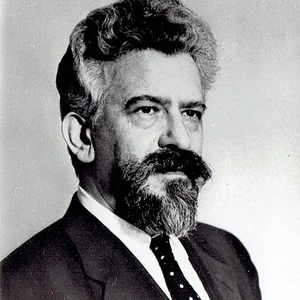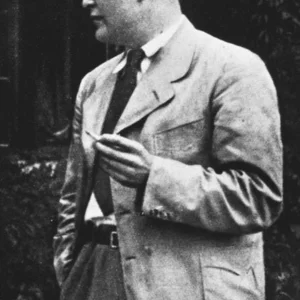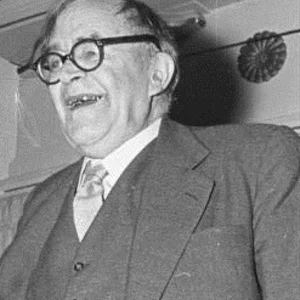

Karl Barth was a Swiss Reformed Protestant theologian and a major figure of 20th-century Christian thought. The founder of "dialectical theology," he profoundly renewed Protestantism and opposed the Nazi grip on the German Churches.
Karl Barth(1886 — 1968)
Karl Barth
Suisse
6 min read
Frequently asked questions
Key Facts
- Born in 1886 in Basel (Switzerland) and died in 1968 in the same city.
- Published his commentary on the Epistle to the Romans in 1919, which revolutionized Protestant theology.
- Principal author of the Barmen Theological Declaration (1934), the manifesto of the Confessing Church against Nazism.
- Expelled from Germany in 1935, he then taught at the University of Basel.
- Author of the monumental "Church Dogmatics" (Kirchliche Dogmatik), which remained unfinished.
Works & Achievements
Revolutionary commentary that breaks with liberal theology and launches “dialectical theology” or “theology of crisis.”
Founding text of the Confessing Church, affirming the sovereignty of Christ against Nazi ideology.
Monumental work of more than thirteen volumes, left unfinished, regarded as one of the greatest theological summas of the 20th century.
An accessible presentation of his thought, drawn from lectures given in Bonn amid the ruins of the postwar period.
A short essay in which Barth expresses his admiration for Mozart, whom he associates with the joy and freedom of creation.
A late and lucid synthesis of his understanding of theology, the fruit of a lifetime of teaching.
Anecdotes
In 1919, while still just a pastor in the Swiss village of Safenwil, Karl Barth published a commentary on the Epistle to the Romans that hit like a bombshell. It was said to have fallen “like a bomb on the playground of the theologians,” shaking up all of European Protestant thought.
A worker-pastor, Barth stood alongside the laborers of his village and joined the Social Democratic Party. His parishioners sometimes nicknamed him “the red pastor” because of his support for strikers and unions.
In 1934, Barth drafted most of the Barmen Declaration, a manifesto of German Christians refusing the Nazi takeover of the Church. He is said to have claimed he wrote it “fortified by strong coffee and one or two cigars.”
Refusing to swear the oath of unconditional loyalty to Hitler demanded of professors, Barth was driven from his chair at the University of Bonn in 1935 and expelled to his native Switzerland, where he continued to teach in Basel.
Barth worked while listening to Mozart every morning before setting to writing. He claimed that the angels, when they praise God, surely play Mozart, and that God himself listens with a very special pleasure.
Primary Sources
If I have a system, it is limited to recognizing that all knowledge of God begins with the relationship that the living God maintains with humankind: God is in heaven and you are on earth.
Jesus Christ, as he is attested for us in Holy Scripture, is the one Word of God which we have to hear and which we have to trust and obey in life and in death.
God is the one who loves in freedom. Everything we can say about him must start from this reality and return to it.
There is no path from humankind to God; there is only the path from God to humankind, in Jesus Christ.
Key Places
Barth's birthplace, where he returned to teach after his expulsion from Germany and where he died in 1968.
Working-class village where Barth served as pastor from 1911 to 1921 and where he stood alongside the workers.
Barth's first university chair, from 1921, where he began teaching Reformed theology.
Barth taught here until 1935, before being driven out for his refusal to swear an oath to Hitler.
Site of the 1934 synod where the Barmen Declaration, the founding text of the Confessing Church, was adopted.
City where the young Barth studied under the liberal theologians from whom he later broke away.
Liens externes & ressources
Références
Œuvres
L'Épître aux Romains (Der Römerbrief)
1919, refondu en 1922
Déclaration théologique de Barmen
1934
Dogmatique ecclésiale (Kirchliche Dogmatik)
1932-1967
Esquisse d'une dogmatique (Dogmatik im Grundriss)
1947
Wolfgang Amadeus Mozart
1956
Introduction à la théologie évangélique
1962