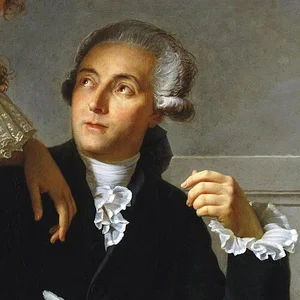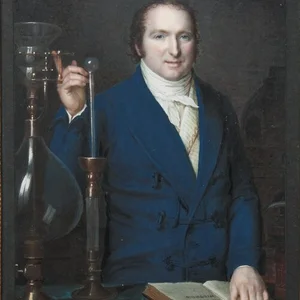

Katharina Gsell (c. 1707–1773) was the daughter of Swiss painter Georg Gsell, who was employed at the imperial court of Saint Petersburg. In 1734 she married the mathematician Leonhard Euler, one of the greatest scholars of the 18th century, and was the companion of his entire scientific life.
Katharina Gsell(1707 — 1773)
Katharina Gsell
9 min read
Frequently asked questions
Key Facts
- Born c. 1707 in Saint Petersburg, daughter of Swiss painter Georg Gsell, employed at the court of Peter the Great
- Married Leonhard Euler on 7 January 1734 in Saint Petersburg
- Mother of 13 children, 5 of whom reached adulthood
- Accompanied Euler during his stay at the Berlin Academy (1741–1766) and on his return to Saint Petersburg
- Died on 23 August 1773 in Saint Petersburg, ten years before her husband
Works & Achievements
For thirty-nine years, Katharina provided the domestic and family stability without which Euler's extraordinary scientific productivity — more than eight hundred publications — would have been impossible.
For twenty-five years in Berlin, Katharina organized the life of a large family in a foreign country, enabling Euler to produce some of his most important works, including the *Introductio in analysin infinitorum*.
As Euler gradually lost his sight, Katharina reorganized the household and coordinated the help of their sons and assistants to allow the continuous dictation and transcription of his mathematical memoirs.
After their home was destroyed in the great Saint Petersburg fire, Katharina oversaw the family's rehousing and the restoration of Euler's working conditions — at a time when he was completely blind and sixty-four years old.
Anecdotes
Katharina Gsell grew up at the imperial court of Saint Petersburg, where her father Georg Gsell was the appointed painter of Peter the Great. From childhood, she was surrounded by scholars, artists, and diplomats from across Europe, immersed in a cosmopolitan environment rare for a young woman of her time. Her mother, Dorothea Maria Graff, was the daughter of the celebrated naturalist and illustrator Maria Sibylla Merian, making Katharina the granddaughter of a pioneer of the natural sciences.
On January 7, 1734, Katharina married the mathematician Leonhard Euler in a ceremony in Saint Petersburg. They had thirteen children, five of whom survived to adulthood. Despite the demands of raising a large family, Katharina maintained a stable household that allowed Euler to devote himself entirely to his research, producing more than eight hundred mathematical papers over forty years.
When Euler gradually lost sight in his right eye from 1738 onward, and then became almost completely blind around 1771, Katharina reorganized every aspect of domestic life so that he could continue working. She coordinated the help of her sons and assistants who took dictation from the scholar, and ensured that the house remained quiet and conducive to concentration.
In May 1771, a violent fire swept through a large part of Saint Petersburg and destroyed the Eulers' home. Katharina, then about sixty-four years old, had to flee the flames with her entire family. According to accounts from the time, the blind mathematician was saved in extremis by a Swiss neighbor named Peter Grimm, who risked his life to bring him to safety. Catherine II gave them a new home and reimbursed their losses.
Katharina Gsell died on August 13, 1773 in Saint Petersburg, after thirty-nine years of marriage. Euler, then sixty-six years old and nearly blind, remarried shortly afterward with Katharina's half-sister, Salome Abigail Gsell, in order to maintain the domestic support essential to the continuation of his scientific work — a testament to the central role Katharina had played throughout Euler's entire body of work.
Primary Sources
Euler mentions his family life in Saint Petersburg on several occasions, noting the births of his children, reflecting the importance of the domestic environment that Katharina maintained at home.
The academic archives document the marriage of Leonhard Euler and Katharina Gsell, daughter of court painter Georg Gsell, celebrated on 7 January 1734 in Saint Petersburg.
The eulogy written by the Academy's secretary describes Katharina Gsell as Euler's devoted wife and mother of his thirteen children, noting that the household she maintained was a key condition for the scholar's extraordinary productivity.
Writing from Berlin, Euler refers to his large family and the necessity of providing for them, reflecting Katharina's fundamental role in managing the household during their twenty-five years in Berlin.
The *Letters to a German Princess*, dedicated to a niece of Frederick II, were written in a household organized by Katharina; Euler expresses his gratitude toward his immediate circle, who enabled him to dictate his work despite his blindness.
Key Places
Leonhard Euler's workplace and the intellectual heart where Katharina grew up and lived until her death. The Academy housed and paid its academicians, shaping every aspect of the family's daily life.
The Euler family settled here from 1741 to 1766 at the invitation of Frederick II. Katharina spent twenty-five years in the Prussian capital, raising her children far from her hometown.
The Saint Petersburg district where the Imperial Academy was located and where the Euler family lived for several decades. Their home stood here until it was destroyed in the fire of 1771.
The official residence of the tsars and a venue frequented by court artists such as Georg Gsell, Katharina's father. She was exposed to this aristocratic world from childhood.
Leonhard Euler's birthplace and home of the Bernoulli family, Euler's intellectual mentors. It represented the scholarly and family roots of the household Katharina shared, even though she herself likely never lived there.
Liens externes & ressources
Références
Œuvres
Union conjugale et soutien à l'œuvre d'Euler
7 janvier 1734
Gestion du foyer pendant les années berlinoises
1741-1766
Soutien lors de la cécité progressive d'Euler
1738-1773
Reconstruction familiale après l'incendie de 1771
1771