 flip
flipWai Niu — navigator's coconut drink
Wai Niu — navigator's coconut drink
Why this dish? Coconut water was the survival drink of Polynesian navigators. On Kupe's *waka hourua*, whole coconuts served both as a reserve of drinking water and as food. Unlike fresh water stored in gourds that could spoil, coconut water remained pure in its natural shell for weeks — a vital advantage on the open sea.
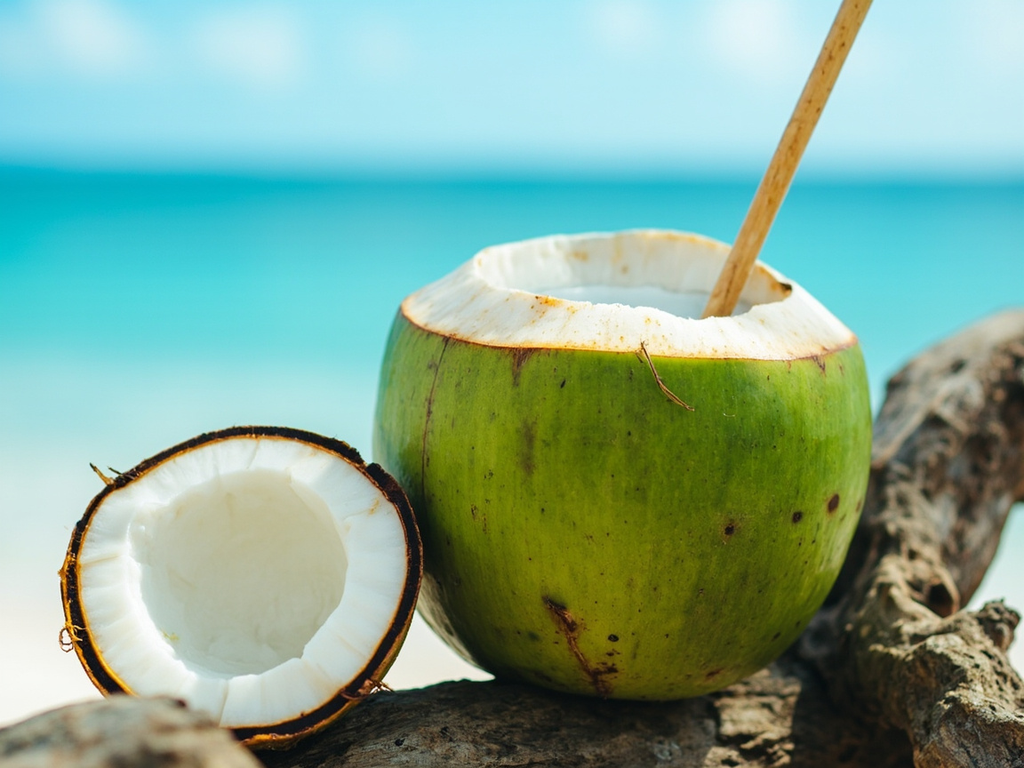
The clear, sweet water contained in a young green coconut, drunk directly from the pierced shell. After drinking the water, the thin layer of gelatinous flesh is scooped out with a spoon. The enriched version blends coconut water with pressed grated coconut pulp, creating a richer, more nourishing drink.
On the waka, the fresh water in gourds is the first thing to run short. But the coconut keeps its water pure and cool in its shell as long as you do not pierce it. We carried dozens, stacked in the hull of the waka. When thirst bites and the sun beats down on the sea like fire, you pierce the shell with a sharp bone, bring the nut to your lips — and that sweet, light water gives you life back. Then you scrape the tender flesh with your fingers. That is how Tangaroa and Tāne feed us together, the sea and the tree.
- •Young green coconuts — One per person (Source of water and flesh)
Wai Niu — navigator's coconut drink
The clear, sweet water contained in a young green coconut, drunk directly from the pierced shell. After drinking the water, the thin layer of gelatinous flesh is scooped out with a spoon. The enriched version blends coconut water with pressed grated coconut pulp, creating a richer, more nourishing drink.
Why this dish? Coconut water was the survival drink of Polynesian navigators. On Kupe's *waka hourua*, whole coconuts served both as a reserve of drinking water and as food. Unlike fresh water stored in gourds that could spoil, coconut water remained pure in its natural shell for weeks — a vital advantage on the open sea.
On the waka, the fresh water in gourds is the first thing to run short. But the coconut keeps its water pure and cool in its shell as long as you do not pierce it. We carried dozens, stacked in the hull of the waka. When thirst bites and the sun beats down on the sea like fire, you pierce the shell with a sharp bone, bring the nut to your lips — and that sweet, light water gives you life back. Then you scrape the tender flesh with your fingers. That is how Tangaroa and Tāne feed us together, the sea and the tree.
Ingredients (period version)
- Young green coconuts — One per person (Source of water and flesh)
Ingredients
- Young green coconut (or natural unsweetened coconut water) — 1 nut or 500 ml coconut water (Drink base)
- Young coconut pulp (optional) — 100 g (Flesh to eat with a spoon)
Method
- If using a whole green coconut: slice off the top with a machete or pierce with a strong sharp knife. Insert a straw or pour into a glass.
- Drink the fresh water as is — it should be clear, slightly sweet and without bitterness (a bitter nut is too ripe).
- After drinking, split the coconut in half and scoop out the thin gelatinous flesh with a spoon.
- Enriched version: blend 500 ml coconut water with 100 g young coconut flesh. Strain or serve with pulp depending on desired texture. Serve well chilled.
How it was made : The coconut (*Cocos nucifera*) travelled with Polynesians across the entire Pacific and was one of the first trees planted on each newly colonized island. At sea, green coconuts were a reserve of sterile, nutritious water naturally protected by the shell. Polynesian navigators, who lacked perfect waterproof containers, relied on them as much as on calabash gourds. Coconut water is naturally isotonic, making it an ideal rehydration drink in the tropics.
The contemporary twist : Serve the coconut water in the hollowed half-shell, with a few ice cubes and a thin slice of lime perched on the rim — a refreshing tropical nod to Kupe's voyage.
Sources : Whistler, W. Arthur. “Plants of the Canoe People”. National Tropical Botanical Garden, 2009. · Pollock, Nancy J. “These Roots Remain: Food Habits in Islands of the Central and Eastern Pacific since Western Contact”. University of Hawaii Press, 1992.
Kupe · Charactorium