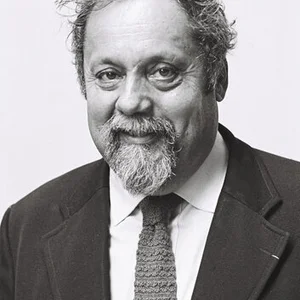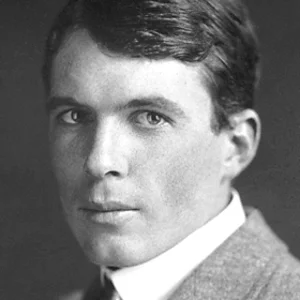

British physicist born in Australia, a pioneer of X-ray crystallography. At 25, he became the youngest-ever Nobel laureate in Physics (1915), sharing the prize with his father William Henry Bragg for the study of crystal structure.
Lawrence Bragg(1890 — 1971)
William Lawrence Bragg
Royaume-Uni, Australie
6 min read
Frequently asked questions
Key Facts
- Born in 1890 in Adelaide (Australia), died in 1971 in England
- Formulates Bragg's law on the diffraction of X-rays by crystals in 1912
- Receives the Nobel Prize in Physics in 1915 with his father, at age 25 — the youngest laureate in history
- Directs the Cavendish Laboratory in Cambridge, where Watson and Crick unravel the structure of DNA in 1953
- Knighted in 1941, he remains a major figure in world crystallography
Works & Achievements
Fundamental relation describing the reflection of X-rays by the planes of a crystal. It is the cornerstone of all modern crystallography.
The first crystal structures ever established atom by atom, proving that X-rays reveal the internal architecture of matter.
A landmark work founding the discipline of crystallographic analysis by X-rays.
A military technique for locating enemy guns by sound, a major contribution to the Allied war effort.
Under his leadership, the Cavendish became the birthplace of molecular biology, culminating in the discovery of the structure of DNA.
A masterful synthesis of the state of knowledge on the structure of crystals, long a reference work for researchers.
Anecdotes
In 1915, at just 25 years old, Lawrence Bragg became the youngest Nobel laureate in physics in history — a record he still holds for that category. He received the news while serving as an officer on the front in France, during the First World War.
The Nobel Prize was shared with his own father, William Henry Bragg: it is the only case in history where a father and his son received a scientific Nobel together. The famous “Bragg's law” was nonetheless discovered by the son, who was then only in his early twenties.
During the war, Bragg put his genius for physics at the service of the army by perfecting “sound ranging”: thanks to microphones placed on the ground, the position of enemy guns could be calculated from the noise of their fire.
In 1953, it was in the Cavendish Laboratory directed by Bragg that James Watson and Francis Crick discovered the double-helix structure of DNA. The X-ray crystallography techniques invented by Bragg were essential to this breakthrough.
A keen gardener and shell collector since childhood, Bragg retained a naturalist's curiosity. At Cambridge, he would sometimes anonymously tend his neighbours' gardens, simply for the pleasure of gardening without being recognized.
Primary Sources
It demonstrates how a crystal reflects X-rays along atomic planes, laying the foundations for what would become known as Bragg's law: nλ = 2d sinθ.
A foundational work explaining how X-rays make it possible to map the position of atoms inside crystals.
Bragg presents the analysis of crystal structure by X-rays and the first structures elucidated, such as those of sodium chloride and diamond.
Key Places
Lawrence Bragg's birthplace, where his father taught at the university. He spent his childhood here before leaving for England.
Where he pursued his higher studies and his first work on X-ray diffraction, which led to Bragg's law.
The prestigious physics laboratory he directed from 1938. It was here that the structure of DNA was discovered in 1953.
Bragg was a professor of physics here from 1919, succeeding Ernest Rutherford and developing the British school of crystallography.
The renowned scientific institution he directed from 1954, where he continued his research and gave famous public lectures.
The town where Lawrence Bragg died in 1971, after a long career in the service of physics.
Liens externes & ressources
Références
Œuvres
Loi de Bragg (nλ = 2d sinθ)
1913
Détermination de la structure du chlorure de sodium et du diamant
1913-1914
X Rays and Crystal Structure (avec W. H. Bragg)
1915
Méthode de repérage sonore de l'artillerie
1916-1918
Direction du laboratoire Cavendish
1938-1953
The Crystalline State (traité de cristallographie)
1933