 flip
flipOatcakes of the Knight on a Quest
Oatcakes of the Knight on a Quest
Why this dish? When the knight sets out on a quest — of the Grail or an adventure — he needs food that does not spoil. The oatcake baked on a hot stone, dry and firm, travels for weeks in the pouch. It is the bread of roads, forests and long rides far from Camelot.
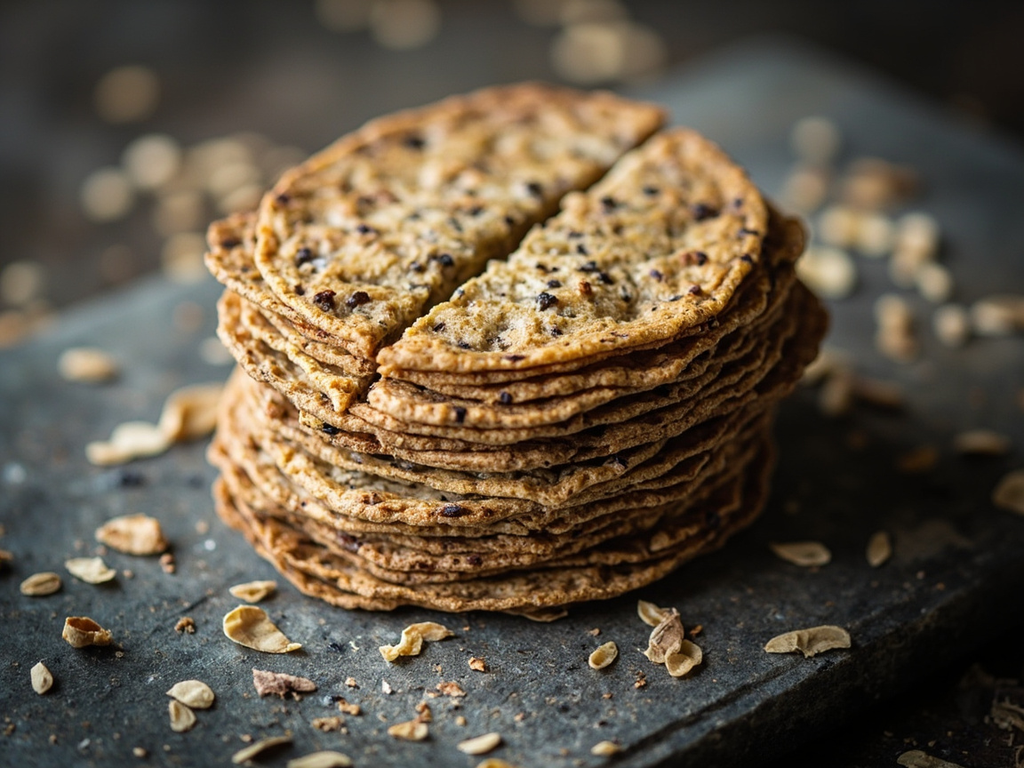
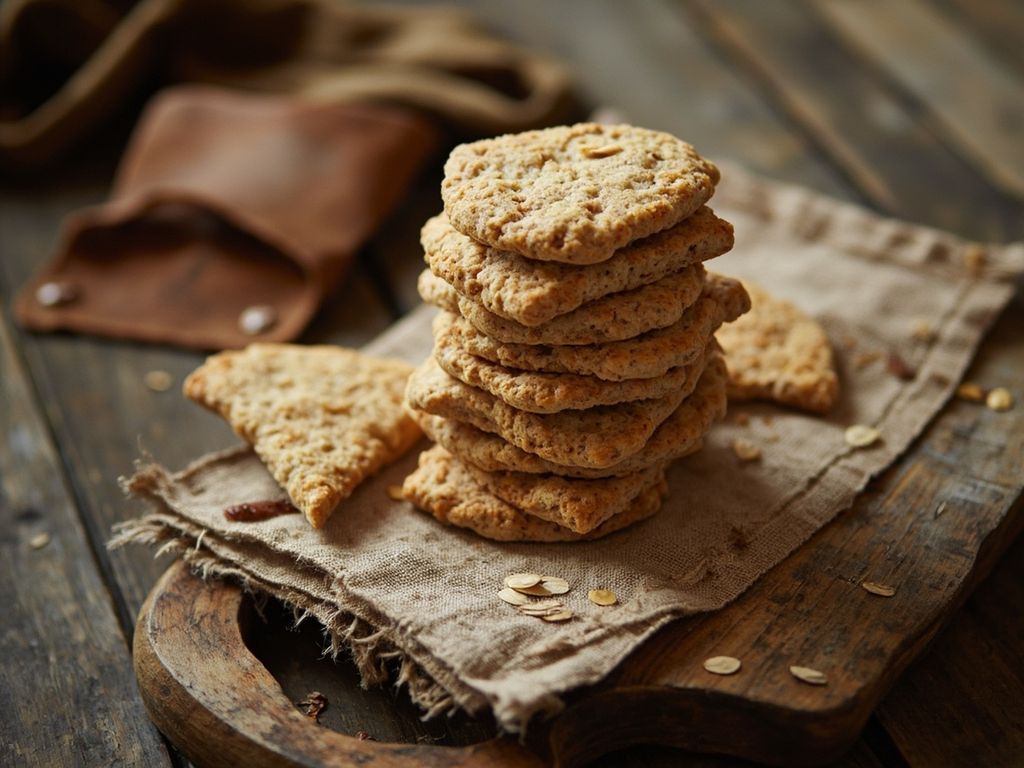
A thin oatcake baked on a stone or pan, unleavened, which dries and keeps for a long time. Rustic, slightly bitter, it is eaten as is on the road or dipped in pottage and mead.
Before you take the road of the quest, slip this into your pouch, squire. These are not the sweets of the high table, but oats baked on the hearthstone keep when fresh bread moulds in three days. I have eaten them under the rain of Logres, dipped in the dregs of a hanap, and they have kept me upright where no cook could follow. The belly of the questing knight is content with little — provided it is faithful.
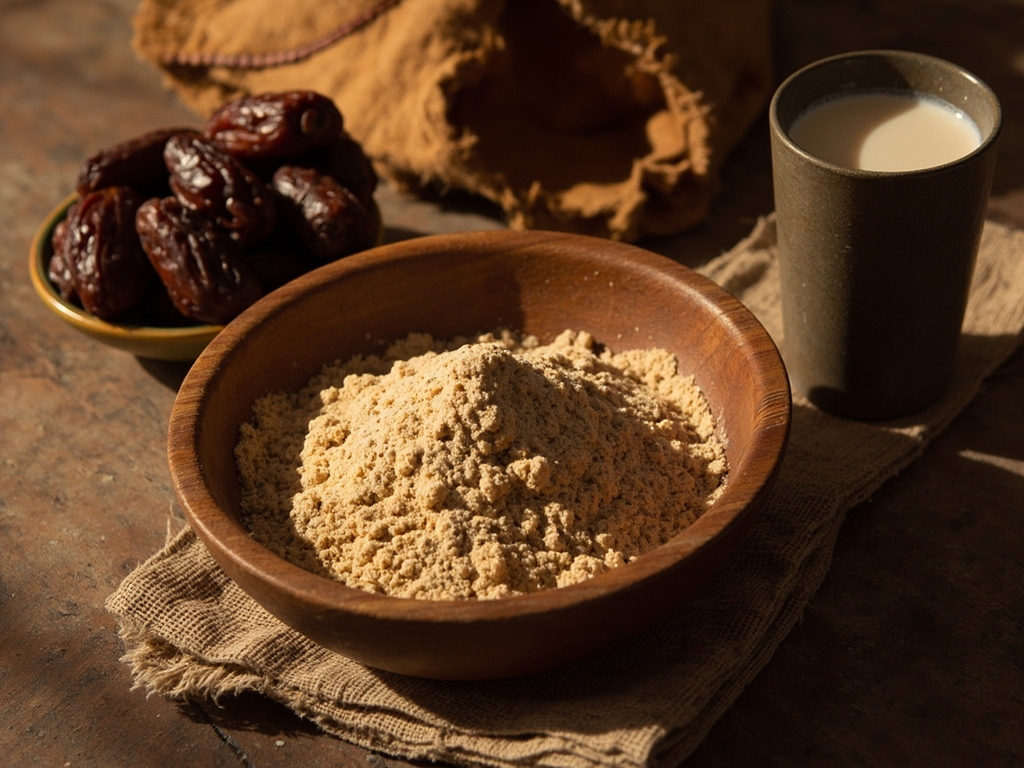
- •Oat flour (ground groats) — what two hands can hold (base)
- •Hot water — as needed (binder)
- •Fat (lard or butter) — a knob (pliability)
- •Salt — a pinch (seasoning and preservation)
Oatcakes of the Knight on a Quest
A thin oatcake baked on a stone or pan, unleavened, which dries and keeps for a long time. Rustic, slightly bitter, it is eaten as is on the road or dipped in pottage and mead.
Why this dish? When the knight sets out on a quest — of the Grail or an adventure — he needs food that does not spoil. The oatcake baked on a hot stone, dry and firm, travels for weeks in the pouch. It is the bread of roads, forests and long rides far from Camelot.
Before you take the road of the quest, slip this into your pouch, squire. These are not the sweets of the high table, but oats baked on the hearthstone keep when fresh bread moulds in three days. I have eaten them under the rain of Logres, dipped in the dregs of a hanap, and they have kept me upright where no cook could follow. The belly of the questing knight is content with little — provided it is faithful.
Ingredients (period version)
- Oat flour (ground groats) — what two hands can hold (base)
- Hot water — as needed (binder)
- Fat (lard or butter) — a knob (pliability)
- Salt — a pinch (seasoning and preservation)
Ingredients
- Blended rolled oats (or oat flour) — 200 g (base)
- Hot water — 80-100 ml (binder)
- Melted butter or lard — 20 g (texture)
- Salt — 1 pinch (flavor)
- Oat flour for work surface — a little (shaping)
Method
- Mix oat flour, salt and melted butter.
- Add hot water gradually until a supple but non-sticky dough forms.
- Roll out very thinly on an oat-floured surface; cut into triangles (farls).
- Cook on a dry hot pan or griddle, 3-4 minutes per side, until edges curl and brown.
- Let dry and harden on a rack; store in a cloth or box (keeps several days).
How it was made : Oatcakes are attested since the early Middle Ages in the north and west of the British Isles, where oats grow better than wheat. Baked on a stone (bakestone) or iron plate, dry and durable, they were the basic provision of travellers, shepherds and soldiers.
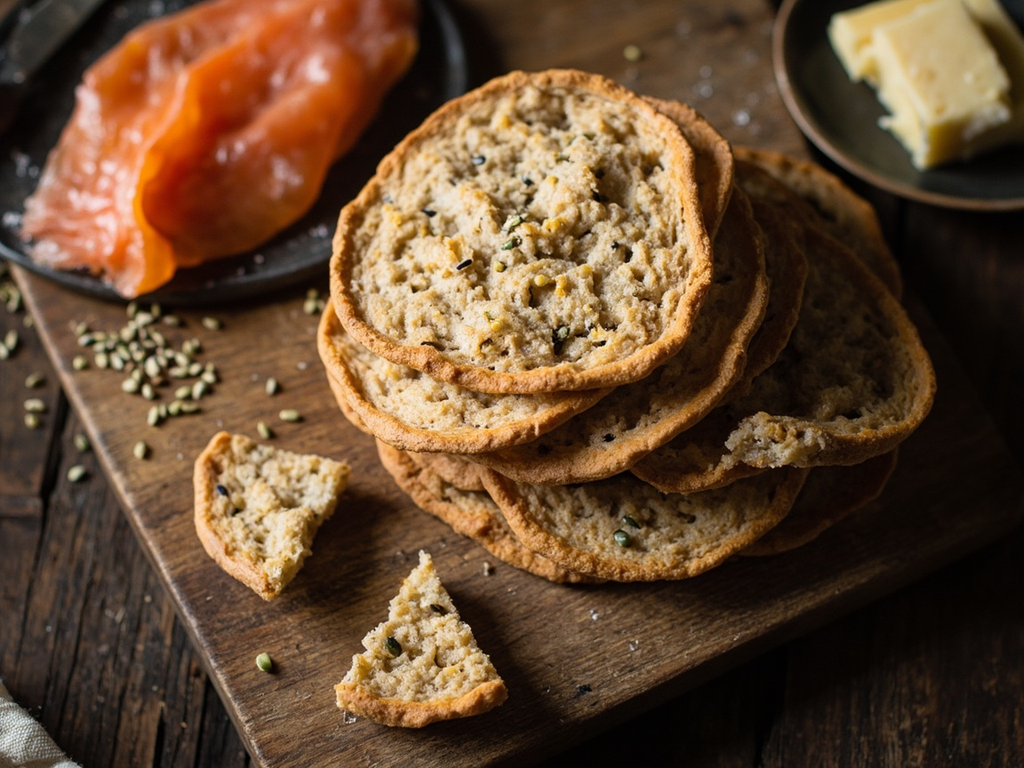
The contemporary twist : Broken into pieces, these oatcakes become a rustic cracker perfect with aged cheese — the knight's pouch repurposed as a charcuterie board.
Sources : Tradition of British oatcakes · C. A. Wilson, Food and Drink in Britain (1973)
King Arthur · Charactorium