 flip
flipTraveler's Ka'k (Semolina Rings with Sesame and Anise)
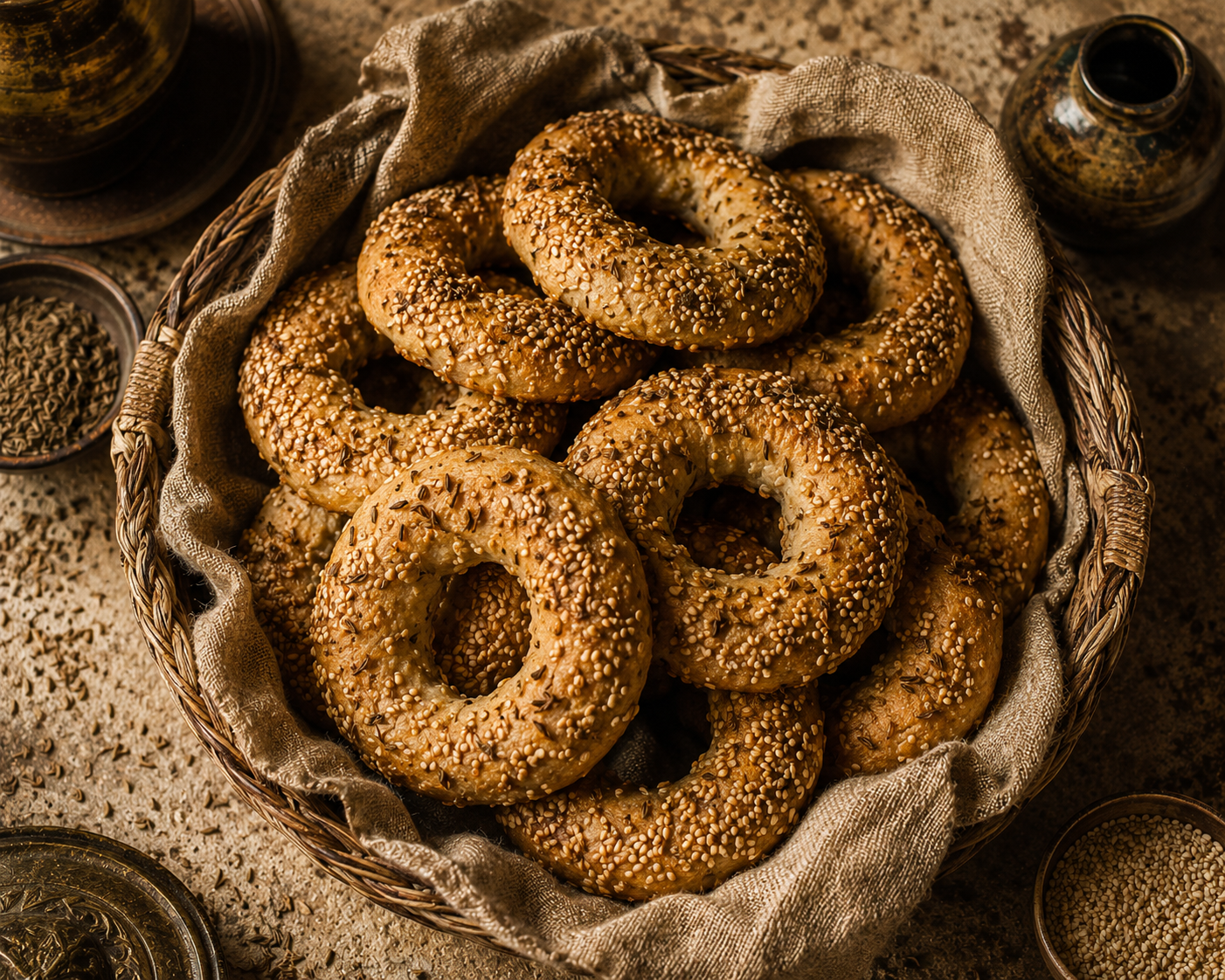
Traveler's Ka'k (Semolina Rings with Sesame and Anise)
Why this dish? Al-Ma'mun was a caliph on the move: raised and settled for a time in Merv in Khorasan, then leading his armies as far as Tarsus in Cilicia where he died on campaign. On these long roads, they carried dry ring-shaped breads that kept for weeks — the simple food of the traveler, soldier, and pilgrim.
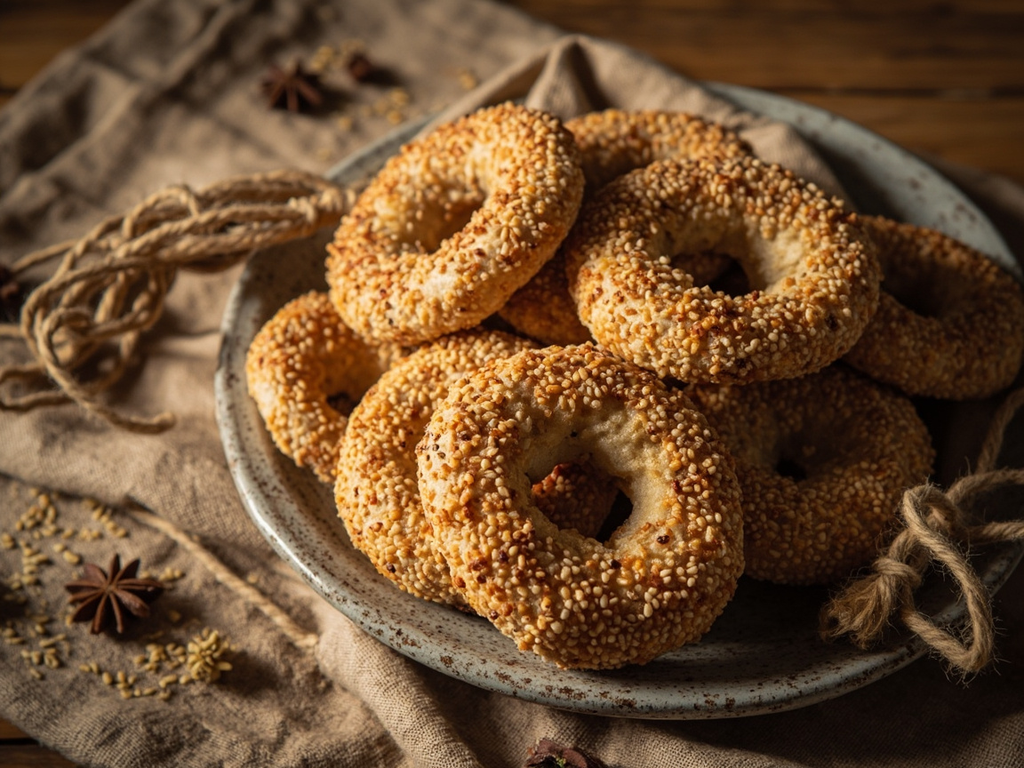
Small rings of semolina dough, perfumed with anise and cumin, coated in sesame, baked until dry and crunchy. They keep for a long time and are dipped in milk or broth on the journey.
I have known the roads of Khorasan and those that lead to the borders of Rum, and no prince travels without bread that lasts. These rings, they bake them twice if need be, until they ring dry under the finger, and they keep from Merv to Tarsus without molding. Rub them with anise and sesame, O traveler, and dip them in milk in the morning: a man on the march needs no banquet, but bread that does not betray him.
- •Fine semolina and wheat flour — two parts (base)
- •Sesame seeds — a handful (coating)
- •Anise and cumin — a pinch each (fragrance)
- •Sesame oil — a drizzle (binder)
- •Salt — a pinch (seasoning)
- •Sourdough starter — a little (leavening (optional))
Traveler's Ka'k (Semolina Rings with Sesame and Anise)
Small rings of semolina dough, perfumed with anise and cumin, coated in sesame, baked until dry and crunchy. They keep for a long time and are dipped in milk or broth on the journey.
Why this dish? Al-Ma'mun was a caliph on the move: raised and settled for a time in Merv in Khorasan, then leading his armies as far as Tarsus in Cilicia where he died on campaign. On these long roads, they carried dry ring-shaped breads that kept for weeks — the simple food of the traveler, soldier, and pilgrim.
I have known the roads of Khorasan and those that lead to the borders of Rum, and no prince travels without bread that lasts. These rings, they bake them twice if need be, until they ring dry under the finger, and they keep from Merv to Tarsus without molding. Rub them with anise and sesame, O traveler, and dip them in milk in the morning: a man on the march needs no banquet, but bread that does not betray him.
Ingredients (period version)
- Fine semolina and wheat flour — two parts (base)
- Sesame seeds — a handful (coating)
- Anise and cumin — a pinch each (fragrance)
- Sesame oil — a drizzle (binder)
- Salt — a pinch (seasoning)
- Sourdough starter — a little (leavening (optional))
Ingredients
- Fine semolina — 200 g (base)
- Wheat flour — 100 g (base)
- Sesame seeds — 60 g (coating)
- Anise seeds + cumin — 1 tsp each (fragrance)
- Oil (sesame or olive) — 4 tbsp (binder)
- Salt — 1/2 tsp (seasoning)
- Warm water — about 120 ml (hydration)
Method
- Mix semolina, flour, salt, anise, and cumin; add oil then warm water to form a firm dough.
- Knead for 8 minutes, let rest 30 minutes under a cloth.
- Form thin ropes and join them into rings the size of a bracelet.
- Moisten lightly and roll each ring in sesame seeds.
- Bake at 170°C for 25-30 minutes, then let dry in the turned-off oven to harden and become crunchy.
- Cool completely before storing in an airtight container: they keep for several weeks.
How it was made : Dry ring-shaped breads (ka'k) are attested very early in the Arab world as preserved food, sold strung on a cord. Double baking or prolonged drying removed moisture, ensuring long preservation essential for caravans, armies, and pilgrims of the Abbasid golden age.
The contemporary twist : Serve these crunchy rings as an appetizer with a mint yogurt dip: the caravan savory biscuit becomes table grissini.
Sources : Lilia Zaouali, L'Islam à table — Du Moyen Âge à nos jours (2004) · Maxime Rodinson, 'Recherches sur les documents arabes relatifs à la cuisine' (Revue des études islamiques, 1949)
Al-Ma'mun · Charactorium