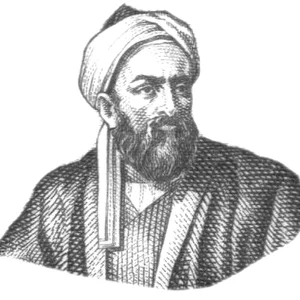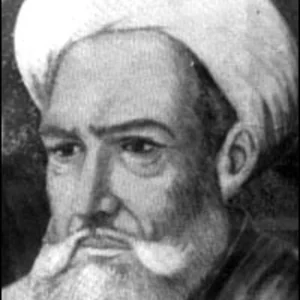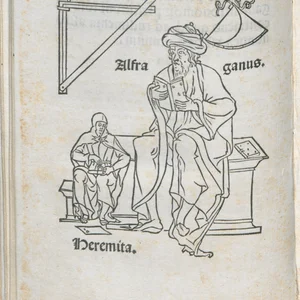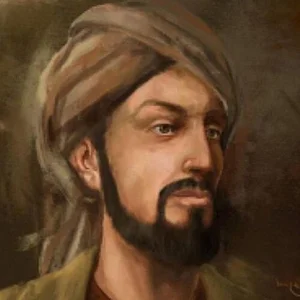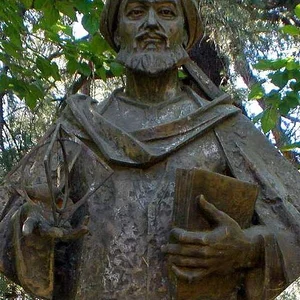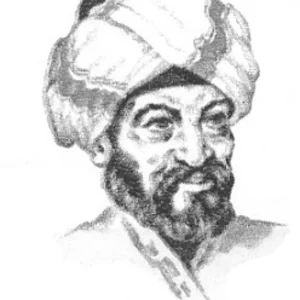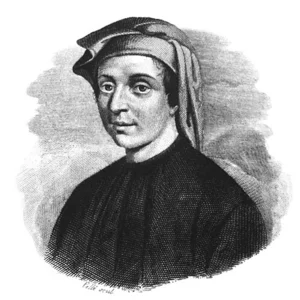

Leonardo Fibonacci, an Italian mathematician of the Middle Ages, is famous for introducing Arabic numerals and the decimal system to Europe. His major work, the Liber Abaci (1202), revolutionized Western mathematics. He is also known for the Fibonacci sequence, a numerical sequence with many applications.
Leonardo Fibonacci(1170 — 1240)
Leonardo Fibonacci
République de Pise
6 min read
Frequently asked questions
Key Facts
- Born around 1170 in Pisa, Italy
- Publication of the Liber Abaci in 1202, introducing Arabic numerals to Europe
- Travels to North Africa and the East, where he discovered Arabic mathematics
- Description of the numerical sequence known as the Fibonacci sequence in the Liber Abaci (1202)
- Died around 1240 in Pisa
Works & Achievements
Fibonacci's masterpiece introducing Arabic numerals and the decimal system to Europe. Contains hundreds of practical problems in commerce, conversion, and arithmetic that revolutionized Western mathematics.
A practical geometry treatise in eight chapters, combining Euclidean principles with Arabic methods. Intended for surveyors, engineers, and architects of the Republic of Pisa.
A short treatise written following the Palermo tournament, presenting Fibonacci's solutions to problems posed by mathematicians at the court of Frederick II.
A treatise on square numbers dedicated to Emperor Frederick II. Considered his most original work in number theory, anticipating results that Fermat would rediscover four centuries later.
A mathematical letter addressed to the imperial court philosopher, illustrating the intellectual ties between Fibonacci and the scholarly circle of Frederick II.
Anecdotes
Leonardo Fibonacci grew up in Béjaïa (in present-day Algeria), where his father worked as an accountant for Pisan merchants. It was there that he discovered Arabic numerals and the concept of zero, both unknown in Europe at the time. This encounter with Islamic mathematics would go on to transform the course of Western arithmetic.
In the Liber Abaci, Fibonacci poses a problem about rabbit reproduction: how many pairs will you have after one year if each pair produces a new pair every month? The answer generates the famous sequence 1, 1, 2, 3, 5, 8, 13… known today as the Fibonacci sequence. Ironically, Fibonacci himself never made it a central focus of his work.
The Church and merchant guilds initially resisted Arabic numerals, considering them too easy to forge on parchment. Some Italian cities even banned their use in official documents. Nevertheless, merchants quietly adopted them because they made commercial calculations far easier.
Emperor Frederick II, a great patron of the sciences, summoned Fibonacci to his court in Palermo around 1225 for a public mathematics tournament. Fibonacci brilliantly solved every challenge posed by the court's mathematicians, earning him official recognition from the empire and a pension from the Republic of Pisa.
Primary Sources
The nine Indian numerals are: 9, 8, 7, 6, 5, 4, 3, 2, 1. With these nine numerals, and with the sign 0, which the Arabs call zephirum, any number can be written.
Fibonacci presents methods for measuring surfaces and volumes inherited from Euclid and enriched by Arab contributions, intended for the surveyors and engineers of his time.
I have endeavored to compile the principal results concerning square numbers, in order to please Master Theodore, philosopher to the illustrious Emperor Frederick.
Fibonacci responds to the questions posed during the mathematical tournament in Palermo and demonstrates the irrationality of certain roots, showing a remarkable mastery of Arabic algebra.
Key Places
Fibonacci's birthplace and a major maritime trading power in the 12th century. It was from Pisa that his father conducted trade with North Africa, opening the door for Fibonacci to discover Arab knowledge.
A thriving Mediterranean port where Fibonacci lived as a teenager with his father and first encountered Hindu-Arabic numerals. This decisive contact with Islamic mathematics shaped his entire career.
Capital of the Norman kingdom and later of Frederick II's empire, an exceptional crossroads of Arab, Greek, and Latin cultures. Fibonacci was summoned here for the famous mathematical tournament of 1225.
A great Islamic metropolis that Fibonacci visited during his travels. There he studied the calculation methods of Arab merchants and scholars, enriching the material for his Liber Abaci.
Liens externes & ressources
Références
Œuvres
Liber Abaci
1202 (révisé 1228)
Practica Geometriae
1220
Flos
vers 1225
Liber Quadratorum
1225
Epistola ad Magistrum Theodorum
vers 1225