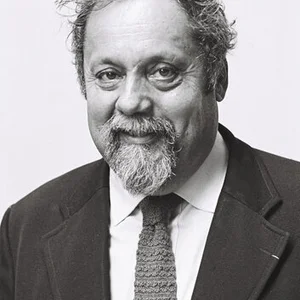

Maclyn McCarty was an American physician and geneticist. Together with Oswald Avery and Colin MacLeod, he demonstrated in 1944 that DNA is the carrier of genetic information, a founding discovery of molecular biology.
Maclyn McCarty(1911 — 2005)
Maclyn McCarty
États-Unis
5 min read
Frequently asked questions
Key Facts
- Born in 1911 in South Bend, Indiana, died in 2005 in New York
- In 1944, together with Oswald Avery and Colin MacLeod, demonstrated that DNA is the transforming principle that carries heredity
- His work on pneumococcus established that it is DNA, not proteins, that transmits genetic information
- The Avery-MacLeod-McCarty experiment is regarded as a major milestone toward the discovery of the structure of DNA (1953)
- A recognized specialist in rheumatic fever and streptococcal infections
Works & Achievements
Founding paper, co-authored with Avery and MacLeod, demonstrating that DNA is the carrier of heredity — the birth certificate of molecular biology.
Work on the enzyme that degrades DNA, which helped confirm the role of nucleic acid in transformation.
Studies on streptococcal infections and their complications, extending his interest in bacterial diseases.
A memoir recounting the 1944 discovery from the inside, which became a landmark account for historians of science.
Anecdotes
In 1944, Maclyn McCarty, Oswald Avery, and Colin MacLeod published a decisive experiment: by purifying the “transforming substance” of pneumococci, they showed that it was DNA, not proteins, that carries heredity. At the time, almost everyone believed that proteins carried genetic information.
To prove that the active molecule really was DNA, McCarty used an enzyme that specifically destroys DNA (deoxyribonuclease): as soon as he added it, the transforming power vanished. It was an elegant demonstration by elimination, like a detective ruling out suspects one by one.
Although their discovery is today regarded as a founding moment of molecular biology, it did not immediately receive the credit it deserved. It took until 1952 (the Hershey and Chase experiment) and then 1953 (the structure of DNA by Watson and Crick) for the role of DNA to be fully accepted.
McCarty was the youngest of the three researchers: he was only about thirty during the experiment, whereas Avery was nearly 67. He went on to have a long career at the Rockefeller Institute, studying in particular streptococci and acute rheumatic fever.
In 1985, more than forty years after the experiment, McCarty published a memoir titled “The Transforming Principle,” recounting from the inside how the team had identified DNA as the molecule of heredity.
Primary Sources
The evidence presented supports the belief that a nucleic acid of the desoxyribose type is the fundamental unit of the transforming principle of Pneumococcus Type III.
An autobiographical account in which McCarty retraces, year by year, the purification of the transforming substance and the demonstration that it is DNA.
The inactivation of the transforming principle by deoxyribonuclease, and not by proteolytic enzymes or ribonuclease, identifies deoxyribonucleic acid as the active agent.
Key Places
City in the American Midwest where Maclyn McCarty was born in 1911.
University where McCarty did his undergraduate studies before medical school.
Medical school where McCarty earned his doctorate (M.D.) in 1937.
Research center where McCarty joined Avery's team and carried out the 1944 experiment; he worked there for most of his career.
City where McCarty lived, worked, and died in 2005.
Typical Objects

Optical instrument used to observe bacterial colonies and tell the “smooth” pneumococci apart from the “rough” ones.

Device that spins samples at high speed to separate cellular components and purify the transforming substance.

Circular glass vessel in which pneumococcal colonies are grown on a nutrient medium.

Purified enzyme able to destroy DNA specifically; its action made the transforming power disappear, proving the role of DNA.

Thin graduated tube used to draw up and transfer small amounts of biological liquid with precision.

Notebook in which the researcher records protocols, observations, and experimental results day after day.
School Curriculum
Vocabulary & Tags
Key Vocabulary
Tags
Daily Life
Morning
McCarty started his day early at the Rockefeller Institute, putting on his white coat to prepare his pneumococcus cultures. Mornings were devoted to the delicate work of purification, which demanded patience and precision.
Afternoon
In the afternoon, he analyzed his results, recorded his observations in his lab notebook, and discussed the experiments with Avery and MacLeod. The exchange of ideas between researchers set the rhythm of life in the laboratory.
Evening
At the end of the day, McCarty read scientific papers to keep up with the latest research. He would sometimes carry on with an ongoing experiment, since bacterial cultures wait for no one.
Food
Like a middle-class American of the mid-twentieth century, he ate simple food: sandwiches or quick meals at midday, fuller meals in the evening. Coffee often accompanied the long days in the lab.
Clothing
At work, he wore the researcher's white coat over a shirt, tie, and suit trousers, the usual attire of doctors and scientists of the time. In town, he dressed plainly in the American fashion of the 1940s and 1950s.
Housing
McCarty lived in New York, near the Rockefeller Institute, in an urban apartment typical of the great American metropolis. His daily life was organized around his research.
Historical Timeline
Period Vocabulary
Liens externes & ressources
Références
Œuvres
Studies on the Chemical Nature of the Substance Inducing Transformation of Pneumococcal Types
1944
Purification de la désoxyribonucléase
1946
Recherches sur le streptocoque et le rhumatisme articulaire aigu
années 1950
The Transforming Principle: Discovering that Genes Are Made of DNA
1985