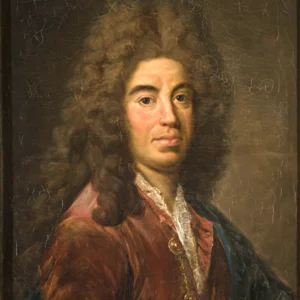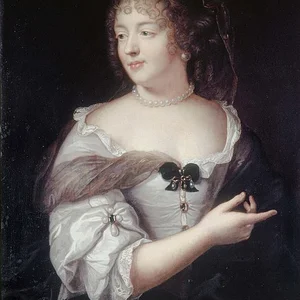

French epistolary writer of the 17th century, celebrated for her exceptional literary correspondence, particularly her letters to her daughter. Her work offers an invaluable portrait of court life and French society under Louis XIV.
Madame de Sévigné(1626 — 1696)
Marquise de Sévigné
France
8 min read
Frequently asked questions
Famous Quotes
« I love nothing so much as writing to you»
« The things I would have to tell you seem so pleasant to me that I cannot help but share them with you»
Key Facts
- 1626: Birth of Madame de Sévigné in Paris
- 1644: Marriage to Henri de Sévigné
- 1652: Widowhood following her husband's death at the Battle of Villemur
- 1671–1696: Intensive writing of her correspondence with her daughter Madame de Grignan, estimated at over 1,500 letters
- 1696: Death at Grignan, recognized as a major figure in French epistolary literature
Works & Achievements
Approximately 1,120 letters addressed to her daughter Françoise-Marguerite form the heart of her work. Published after her death, they are considered a masterpiece of French prose and an incomparable testimony to society in the Grand Siècle.
A rich epistolary exchange with her cousin Roger de Rabutin, Count of Bussy, author of the Amorous History of the Gauls. These letters reveal a more playful tone and a freedom of expression that Sévigné allowed herself with this close confidant.
A series of letters addressed to Simon Arnauld de Pomponne passionately recounting the trial of her friend Fouquet. These texts bear witness to her courage and loyalty in the face of royal power.
More than 600 letters addressed to other correspondents round out her body of work: family, friends, and figures at court. They offer a striking panorama of intellectual and social life under Louis XIV.
Anecdotes
When her daughter Françoise-Marguerite married the Count of Grignan in 1669 and went to settle in Provence, Madame de Sévigné was devastated by the separation. She then began writing to her almost daily, producing, unknowingly, one of the greatest epistolary works in French literature.
In April 1671, Madame de Sévigné was one of the first to recount the tragic death of Vatel, the majordomo of the Prince of Condé, who took his own life because the seafood ordered for a royal banquet was not arriving in time. Her letter is today the principal historical source on this famous event.
A close friend of Nicolas Fouquet, the superintendent of finances, she witnessed his arrest in 1661 on the orders of Louis XIV. She was one of the rare individuals to remain loyal to him and to follow his trial with anxiety, daring to brave the king's anger to stand by their friendship.
In 1676, she attended the public execution of the Marquise de Brinvilliers, condemned for having poisoned her father and brothers. She described the scene with striking precision in a letter to her daughter, blending horror and curiosity, offering a unique testimony on the justice of the era.
Madame de Sévigné was an insatiable reader and a regular of the Parisian literary salons, most notably that of the Hôtel de Rambouillet. She mingled with the greatest minds of her time — La Rochefoucauld, La Fontaine, Corneille — and her literary judgment was particularly respected in these circles.
Primary Sources
Vatel, that great man whom we knew, seeing at eight o'clock in the morning that the seafood had not arrived, could not bear the disgrace he believed this would bring upon him, and killed himself.
La Brinvilliers is in the air: her poor little body was thrown, after the execution, into a great fire, and the ashes to the wind; so that we shall breathe her in, and through the exchange of tiny spirits, some poisonous humor shall come upon us.
I cannot tell you, my dear, that I left you without a pain I do not wish to describe to you. I am always looking for you, and I notice, at every hour, that you are missing from my life.
I wish you such good nights and such fine days that the sympathy you feel for those in distress makes you share in my anxieties.
M. de Turenne is dead. There is great and terrible news. The entire army dissolved into tears; that alone is true in all that is being said.
Key Places
Madame de Sévigné's main residence in Paris from 1677 until her death. This magnificent private mansion in the Marais district now houses the Musée Carnavalet dedicated to the history of Paris.
The Sévigné family estate near Vitré, in Ille-et-Vilaine. Madame de Sévigné stayed there regularly to manage her lands and wrote many of her celebrated letters there.
The Provençal residence of the Grignan family, where Madame de Sévigné's daughter lived. She stayed there on several occasions and died there in 1696.
The most celebrated literary salon of the 17th century, where the young Marie de Rabutin-Chantal was introduced to the world of letters, mingling with Voiture, Corneille, and the précieuses.
The royal court that Madame de Sévigné visited and commented on in her letters with admiration for its lavish festivities and a certain irony regarding its intrigues and vanities.
Typical Objects

Madame de Sévigné's daily tool — she wrote letters of several pages in a tight, swift hand. It is estimated she could write for several hours a day without pause.

Each letter was carefully folded, sealed with wax, and bore the family seal. Delivering mail between Paris and Grignan took several days and was costly.

An indispensable means of transport for a great lady of the 17th century. Madame de Sévigné describes at length in her letters her journeys between Paris, her estates in Brittany at Les Rochers-Sévigné, and Grignan.

An avid reader, she devoured novels, plays, essays, and gazettes to stay informed and to fuel her correspondence with literary and political commentary.

The morning toilette was an important social ritual of the time. Madame de Sévigné sometimes received visitors while getting ready — a common practice in aristocratic circles.

Essential accessories for a society woman of the 17th century, worn during court visits, balls, and receptions in the Parisian salons she frequented assiduously.
School Curriculum
Vocabulary & Tags
Key Vocabulary
Tags
Mouvement
Daily Life
Morning
Madame de Sévigné rose early and devoted a large part of her morning to writing her letters, often before she had even finished her toilette. She sometimes received close friends during this ritual, in keeping with the fashion of the time, discussing news from the court and the city while composing her correspondence.
Afternoon
The afternoon was reserved for social calls and walks, particularly along the Cours-la-Reine or in the gardens of the Tuileries. She frequented literary salons, visited friends such as Madame de La Fayette, or attended theatrical performances at the Hôtel de Bourgogne or the Palais-Royal.
Evening
Evenings were often spent at intimate dinners or receptions held at the townhouses of great Parisian families. An avid reader, she sometimes ended her day by candlelight with a novel, a play, or a work of philosophy, which she would then recount to her daughter in her letters.
Food
Madame de Sévigné's table reflected the refinement of the Parisian aristocracy: roasted meats, game, fish in sauce, garden vegetables, and elaborate pastries. She often mentioned in her letters the festive meals at court or at the homes of great lords, such as the famous banquet at Chantilly.
Clothing
As a great lady of the court, Madame de Sévigné wore gowns of silk or velvet in deep, rich colors, adorned with fine lace, ribbons, and embroidery. A neckline trimmed with pearls or a lace collar, a fontange headdress, and kid gloves were her customary accessories when going out.
Housing
Her most celebrated Parisian residence is the Hôtel Carnavalet in the Marais, where she settled in 1677, with its grand panelled rooms, inner courtyard garden, and spacious apartments. She also owned Les Rochers-Sévigné in Brittany, a country manor surrounded by wooded avenues that she loved to stroll through while reading.
Historical Timeline
Period Vocabulary
Visual Style
Le style visuel évoque le Grand Siècle français : intérieurs aristocratiques chauds et dorés, portraits officiels en habits de cour, omniprésence des lettres manuscrites et de la lumière des bougies.
Sound Ambience
L'univers sonore de Madame de Sévigné est celui des salons feutrés et des cabinets d'écriture parisiens : plume sur papier, cire chauffée, cloches de Paris et bruissement des robes de cour.
Liens externes & ressources
Références
Œuvres
Correspondance (lettres à Madame de Grignan)
1671–1696 (publiées à partir de 1726)
Correspondance avec son cousin Bussy-Rabutin
À partir de 1648
Lettres à Pomponne sur le procès de Fouquet
1664–1665
Correspondance générale (lettres à divers destinataires)
1648–1696 (publiées au XIXe siècle)