 flip
flipAçorda de pão (garlic and coriander bread panade)
Açorda de pão (garlic and coriander bread panade)
Why this dish? Magellan's daily Portuguese life before honors: a bread-based cuisine that wastes nothing. *Açorda* transforms stale bread into a comforting meal with garlic, olive oil, and coriander — Portugal's signature herb. This is the humble dish that a son of minor nobility from the Alentejo knew by heart.
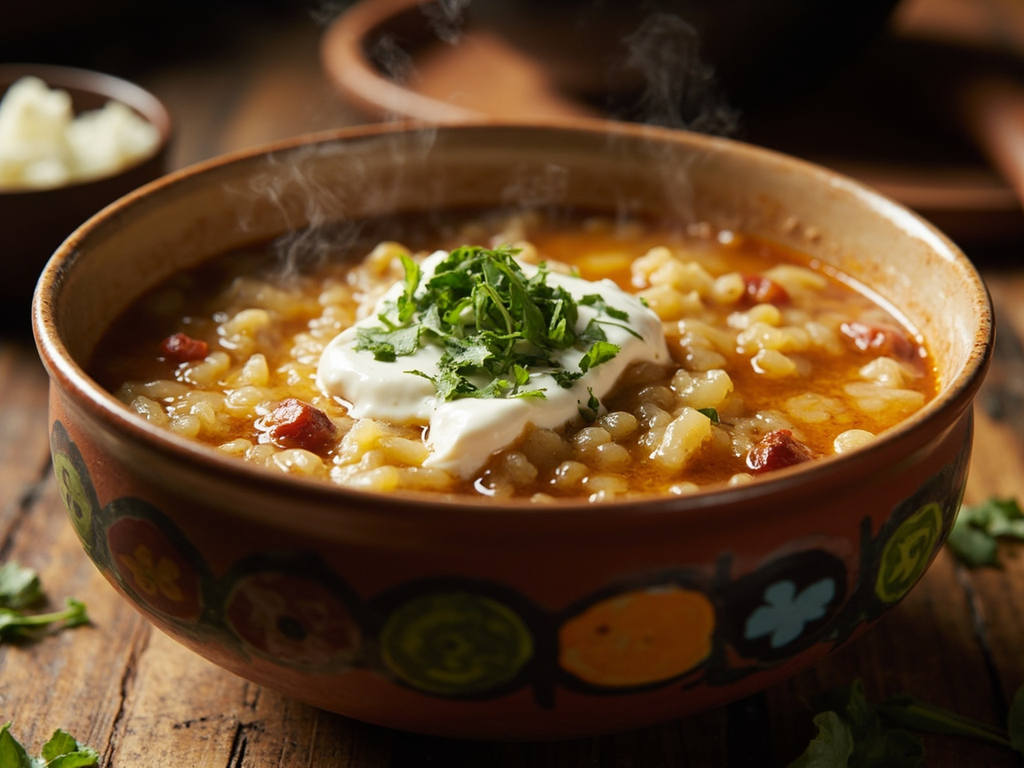
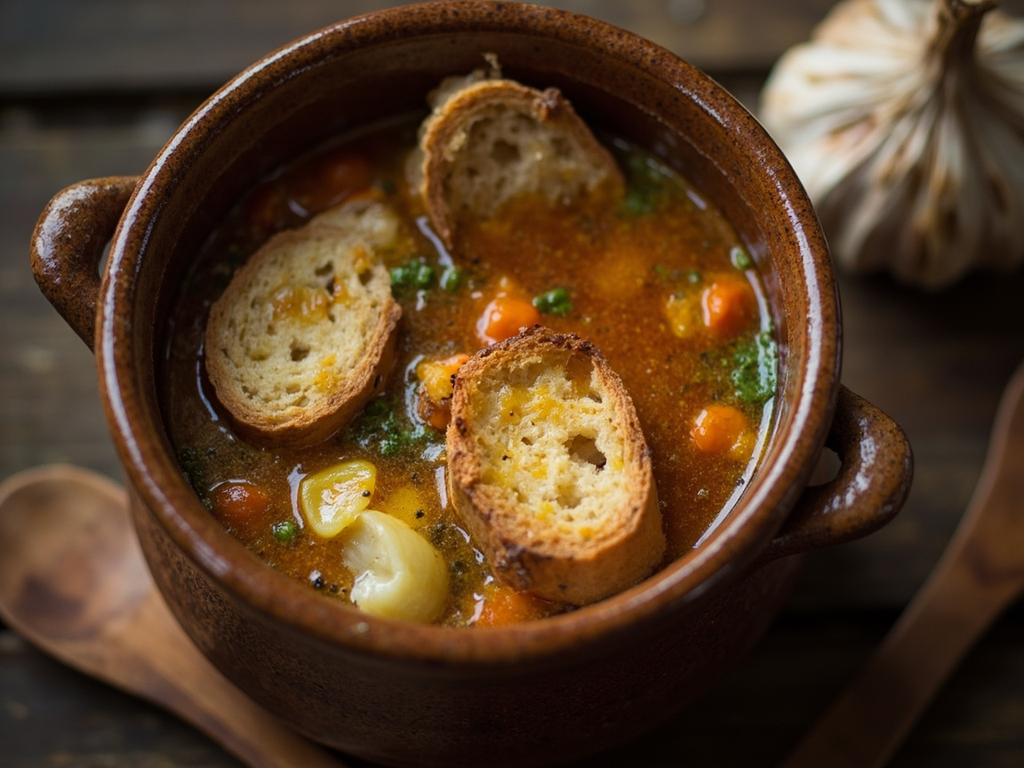
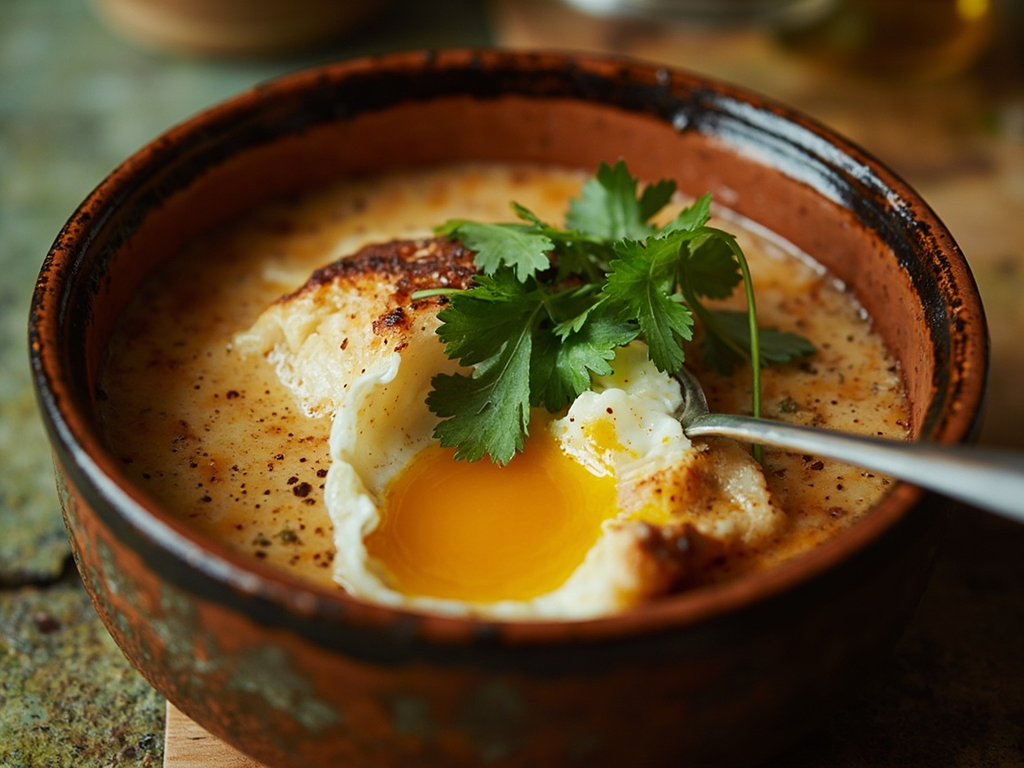
A panade: stale bread softened in hot water perfumed with crushed garlic, olive oil, coriander, and vinegar, often topped with a poached egg. Comforting, tangy, terribly clever to avoid waste.
Here is a poor man's dish that the rich would do well not to disdain. In our Portuguese countryside, one never throws away stale bread: one wakes it with hot water, pounds the garlic in a mortar, pours olive oil, and throws in a good handful of *coentro*, that green herb we love above all. Break an egg into it, let it barely set, and you have a meal that satisfies a man as well as a feast. Before the sails and the honors, this is how I fed myself — and I am not ashamed of it.
- •Stale bread — what remains from the day before (base)
- •Garlic — a few cloves, crushed (aromatic)
- •Olive oil — a good drizzle (fat)
- •Fresh coriander (coentro) — a handful (signature herb)
- •Vinegar — a dash (acidity)
- •Eggs — according to mouths (nourishing garnish)
Açorda de pão (garlic and coriander bread panade)
A panade: stale bread softened in hot water perfumed with crushed garlic, olive oil, coriander, and vinegar, often topped with a poached egg. Comforting, tangy, terribly clever to avoid waste.
Why this dish? Magellan's daily Portuguese life before honors: a bread-based cuisine that wastes nothing. *Açorda* transforms stale bread into a comforting meal with garlic, olive oil, and coriander — Portugal's signature herb. This is the humble dish that a son of minor nobility from the Alentejo knew by heart.
Here is a poor man's dish that the rich would do well not to disdain. In our Portuguese countryside, one never throws away stale bread: one wakes it with hot water, pounds the garlic in a mortar, pours olive oil, and throws in a good handful of *coentro*, that green herb we love above all. Break an egg into it, let it barely set, and you have a meal that satisfies a man as well as a feast. Before the sails and the honors, this is how I fed myself — and I am not ashamed of it.
Ingredients (period version)
- Stale bread — what remains from the day before (base)
- Garlic — a few cloves, crushed (aromatic)
- Olive oil — a good drizzle (fat)
- Fresh coriander (coentro) — a handful (signature herb)
- Vinegar — a dash (acidity)
- Eggs — according to mouths (nourishing garnish)
Ingredients
- Stale country bread — 200 g (base)
- Garlic — 3 cloves (aromatic)
- Olive oil — 4 tbsp (fat)
- Fresh coriander — 1 large bunch (signature herb)
- Wine vinegar — 1 tbsp (acidity)
- Eggs — 4 (garnish (poached))
- Boiling water — 1 litre (liquid)
- Salt — to taste (seasoning)
Method
- Pound the garlic with the coriander and salt in a mortar, then loosen with olive oil to obtain a green paste.
- Place this paste at the bottom of a large bowl or terrine.
- Poach the eggs in simmering water with a dash of vinegar, then set aside.
- Pour the hot poaching water over the garlic-coriander paste, whisking, add the crumbled stale bread and let swell for 2 minutes.
- Mix for a texture between soup and porridge, place the poached eggs on top, adjust salt, and serve immediately.
How it was made : *Açorda* descends from Mediterranean anti-waste panades based on bread, garlic, and olive oil, ubiquitous in Portugal. Coriander (*coentro*) has been its identity herb since the Middle Ages, a legacy of the Arab presence in the peninsula. It was the daily food of the common people and the rural minor nobility.
The contemporary twist : Served in a bowl with a perfectly poached egg in the center and a drizzle of extra virgin olive oil, it is a comfort food brunch that looks unassuming and wins everyone over.
Magellan · Charactorium