 flip
flipFish from the Pontine Marshes with Verjuice and Capers
Fish from the Pontine Marshes with Verjuice and Capers
Why this dish? The anchor expressly mentions “fish from the Pontine marshes” served at the papal table. As pope, Alexander VI had to observe the many lean days of the liturgical calendar: fish from his own fishponds, enlivened with a tangy sauce, was the refined everyday fare for those meatless days.
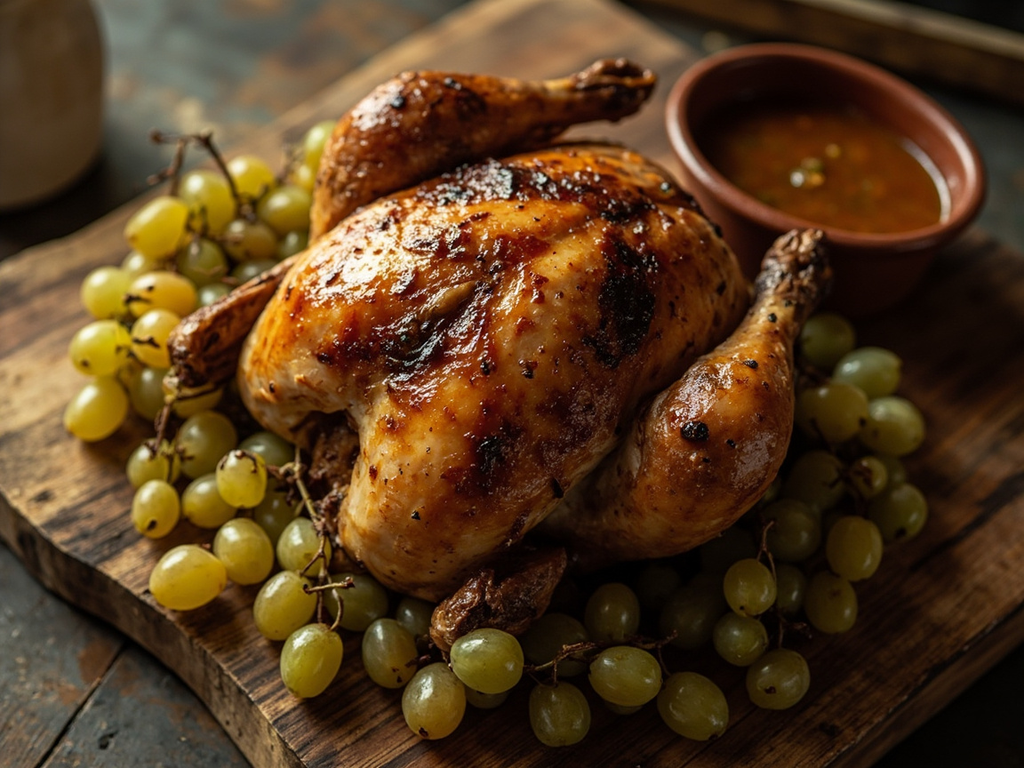
Freshwater fish pan-fried then coated with a lively sauce of verjuice (green grape juice), capers, and herbs — the typical sweet-sour of Renaissance sauces, which awakens delicate flesh without masking it.
Friday, Heaven wants us sober — but sobriety is not sadness, mark that. From our Pontine fishponds they bring us a fine fish; sear it just so, that it remains pearly. Then pour over it the verjuice, that green grape juice which prickles pleasantly, toss in capers and a little fresh herb: thus a lean day becomes worthy of a prince of the Church. Taste before serving, always — a cook who does not taste is as foolish as a prelate who does not pray.
- •Freshwater fish (tench, mullet, eel from the marshes) — one fine fish per guest (base)
- •Verjuice (green grape juice) — a goblet (acidity)
- •Salt-cured capers — a spoonful (salty and umami flavor)
- •Olive oil — as needed (cooking)
- •Parsley and mint — a bunch (freshness)
- •Cinnamon and ginger — a pinch (fine spices)
- •Salt — to taste (seasoning)
Fish from the Pontine Marshes with Verjuice and Capers
Freshwater fish pan-fried then coated with a lively sauce of verjuice (green grape juice), capers, and herbs — the typical sweet-sour of Renaissance sauces, which awakens delicate flesh without masking it.
Why this dish? The anchor expressly mentions “fish from the Pontine marshes” served at the papal table. As pope, Alexander VI had to observe the many lean days of the liturgical calendar: fish from his own fishponds, enlivened with a tangy sauce, was the refined everyday fare for those meatless days.
Friday, Heaven wants us sober — but sobriety is not sadness, mark that. From our Pontine fishponds they bring us a fine fish; sear it just so, that it remains pearly. Then pour over it the verjuice, that green grape juice which prickles pleasantly, toss in capers and a little fresh herb: thus a lean day becomes worthy of a prince of the Church. Taste before serving, always — a cook who does not taste is as foolish as a prelate who does not pray.
Ingredients (period version)
- Freshwater fish (tench, mullet, eel from the marshes) — one fine fish per guest (base)
- Verjuice (green grape juice) — a goblet (acidity)
- Salt-cured capers — a spoonful (salty and umami flavor)
- Olive oil — as needed (cooking)
- Parsley and mint — a bunch (freshness)
- Cinnamon and ginger — a pinch (fine spices)
- Salt — to taste (seasoning)
Ingredients
- Freshwater fish fillets (trout, pike-perch) or sea bream as substitute — 4 fillets (base)
- Verjuice (or green grape juice / lemon juice diluted with water) — 100 ml (acidity)
- Rinsed capers — 2 tbsp (salty/umami flavor)
- Olive oil — 3 tbsp (cooking)
- Chopped parsley and mint — 2 tbsp (freshness)
- Ground cinnamon + ginger — 1 pinch each (fine spices)
- Salt — to taste (seasoning)
Method
- Pat the fillets dry, lightly salt them.
- Heat olive oil and sear fillets skin-side down until golden, then flip briefly; keep warm.
- In the same pan, deglaze with verjuice, add capers and spices, let reduce 2 min.
- Off the heat, add chopped herbs and adjust salt.
- Spoon sauce over the fish and serve immediately.
How it was made : Sour sauces with verjuice dominated 15th-16th century cuisine, long before lemons came into common use; capers and herbs added pungency. Popes owned actual fishponds; fish was cooked over embers or in iron pans, and verjuice was stored in barrels for year-round use.
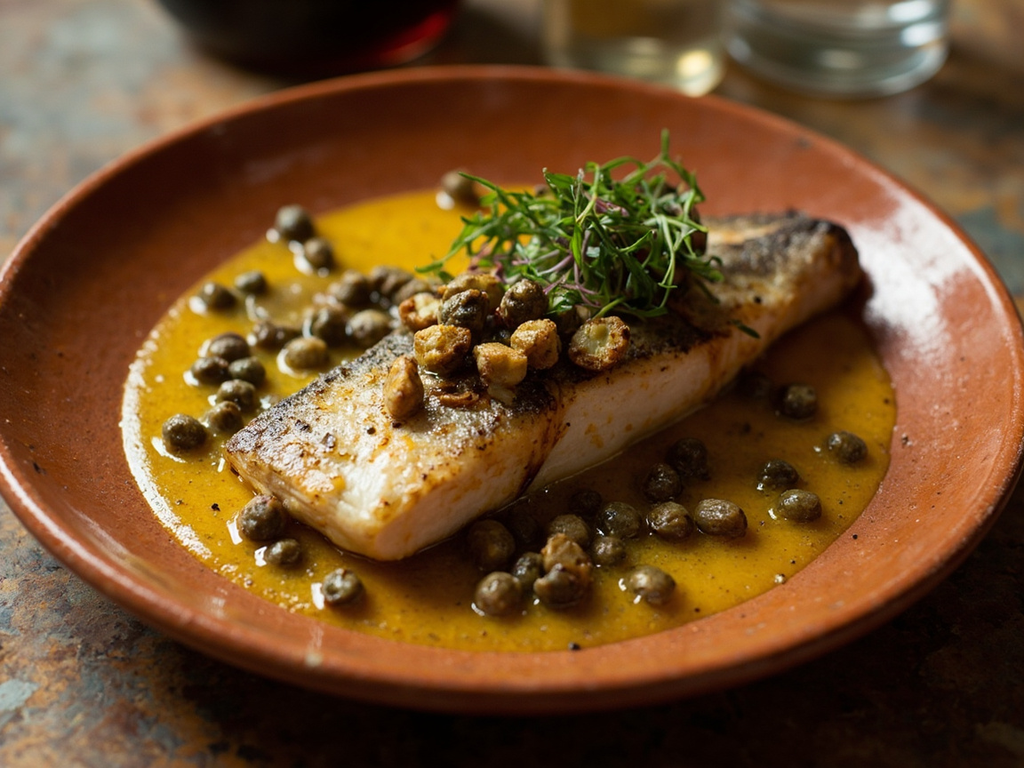
The contemporary twist : Plate the fillet on a streak of sauce, a few fried capers on top for crunch, and a mint leaf — the sweet-sour of Renaissance revisited as bistronomy.
Sources : Platina, De honesta voluptate et valetudine (1474) · Maestro Martino, Libro de arte coquinaria (XVe s.)
Alexander VI · Charactorium