 flip
flipPea pottage with bacon and verjus
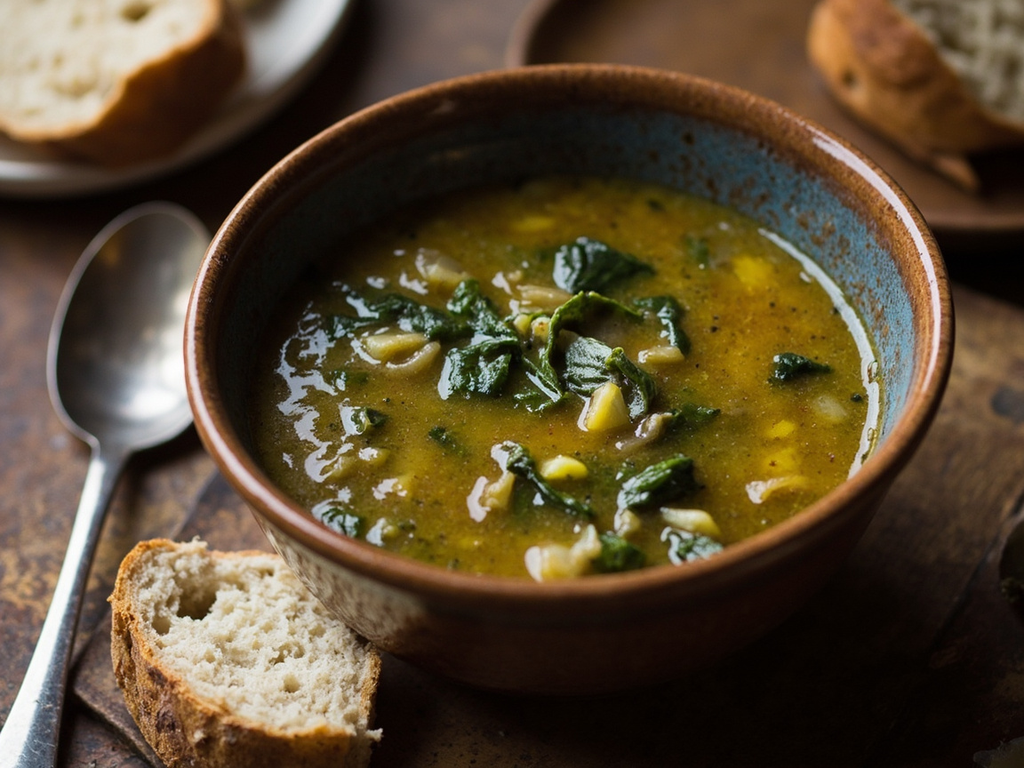
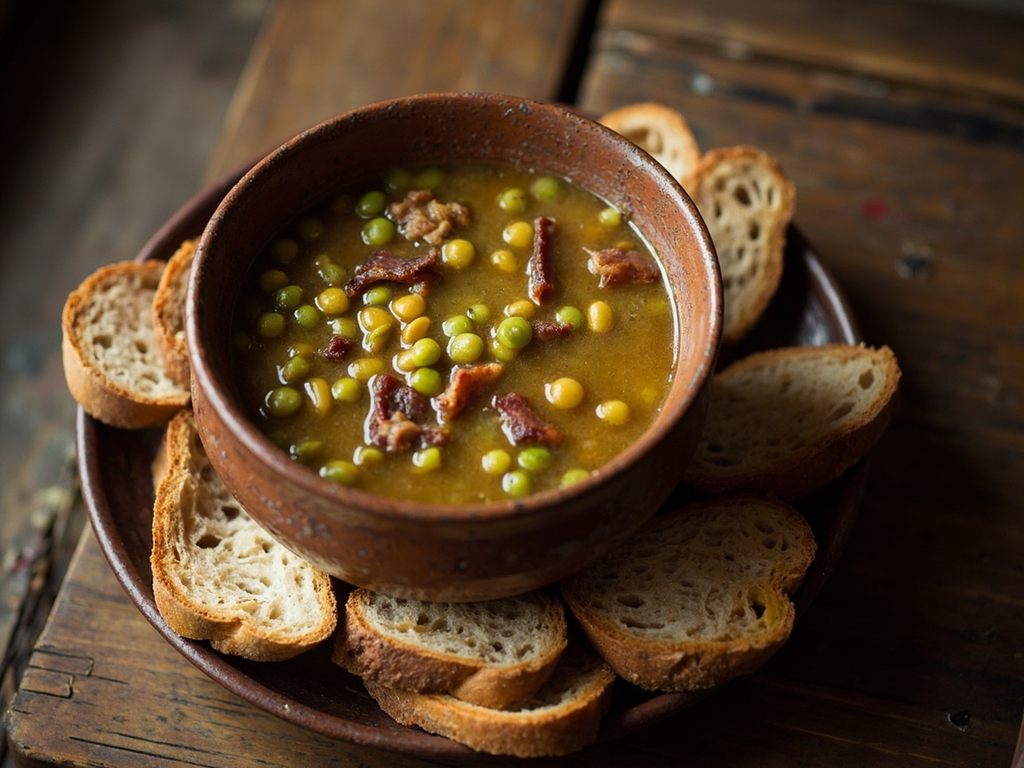
Pea pottage with bacon and verjus
Why this dish? At the Cordeliers convent in Fontenay-le-Comte, then during his years as a monk and poor student, Rabelais knew the monastic ordinary: pottage of dried legumes, eaten every day with bread. Peas were the nourishing foundation of modest tables in Touraine and Poitou.
Thick soup of dried peas long simmered with a piece of bacon, perfumed with garden herbs and brightened with a dash of verjus that wakes it all up. Simple, filling, it is the "pottage" in the true sense: what goes in the pot.
Mon bon, ne méprise point le pois, car il a rempli plus de ventres que toutes les viandes des princes ! Mets-moi tremper les pois dès la veille, puis fais-les cuire tout doucement avec un quartier de lard et quelques herbes du courtil, jusqu'à ce qu'ils se défassent en bouillie épaisse. Au moment de tirer le pot du feu, jettes-y un filet de verjus : il égaie la fadeur comme un bon mot égaie la table. Trempe ton pain dedans, et te voilà riche autant qu'un abbé.
- •Dried peas — full bowl (base)
- •Bacon — a quarter (fat and salt)
- •Onion and leek — as desired (aromatics)
- •Garden herbs (parsley, sage, lovage) — handful (perfume)
- •Verjus — a dash (signature souring agent)
- •Stale bread — slices (for dipping)
Pea pottage with bacon and verjus
Thick soup of dried peas long simmered with a piece of bacon, perfumed with garden herbs and brightened with a dash of verjus that wakes it all up. Simple, filling, it is the "pottage" in the true sense: what goes in the pot.
Why this dish? At the Cordeliers convent in Fontenay-le-Comte, then during his years as a monk and poor student, Rabelais knew the monastic ordinary: pottage of dried legumes, eaten every day with bread. Peas were the nourishing foundation of modest tables in Touraine and Poitou.
Mon bon, ne méprise point le pois, car il a rempli plus de ventres que toutes les viandes des princes ! Mets-moi tremper les pois dès la veille, puis fais-les cuire tout doucement avec un quartier de lard et quelques herbes du courtil, jusqu'à ce qu'ils se défassent en bouillie épaisse. Au moment de tirer le pot du feu, jettes-y un filet de verjus : il égaie la fadeur comme un bon mot égaie la table. Trempe ton pain dedans, et te voilà riche autant qu'un abbé.
Ingredients (period version)
- Dried peas — full bowl (base)
- Bacon — a quarter (fat and salt)
- Onion and leek — as desired (aromatics)
- Garden herbs (parsley, sage, lovage) — handful (perfume)
- Verjus — a dash (signature souring agent)
- Stale bread — slices (for dipping)
Ingredients
- Split peas (or whole dried peas) — 300 g (base)
- Smoked bacon or half-salt pork belly — 150 g (fat and salt)
- Onion — 1 (aromatic)
- Leek — 1 white part (aromatic)
- Parsley and sage (or lovage) — 1 small bouquet (perfume)
- Verjus (or green grape juice) — 2 tbsp (signature souring agent)
- Salt and pepper — to taste (seasoning)
- Stale country bread — a few slices (accompaniment)
Method
- If using whole peas, soak them overnight (not necessary for split peas).
- Sauté sliced onion and leek in a little fat, add the bacon.
- Add the peas and cover generously with water; add the herbs.
- Simmer for 1 h to 1 h 30 until the peas break down; salt cautiously (the bacon already seasons).
- Remove the bacon, cut into pieces, and return; add the verjus off the heat.
- Serve very hot over slices of stale bread placed at the bottom of the bowl.
How it was made : "Pottage" literally meant the contents of the pot simmering on the hearth: dried legumes, herbs, and a little salted meat. It was the basis of daily diet, from convents to peasant homes; it was often poured over bread (the "soupe" originally being the slice of bread soaked in it).
The contemporary twist : Blend half the pottage for a silky velouté, keep the other half chunky, and finish with a crouton of fouace and a grating of zest for freshness.
François Rabelais · Charactorium