 flip
flipBiscoito de bordo (ship's biscuit)
Biscoito de bordo (ship's biscuit)
Why this dish? This is the food of the circumnavigation. During the three-month non-stop crossing of the Pacific (1521), Magellan's crew had nothing left but this biscuit reduced to powder and crawling with weevils. Chronicler Pigafetta described this misery: no dish better tells the story of the voyage's exploit and suffering.
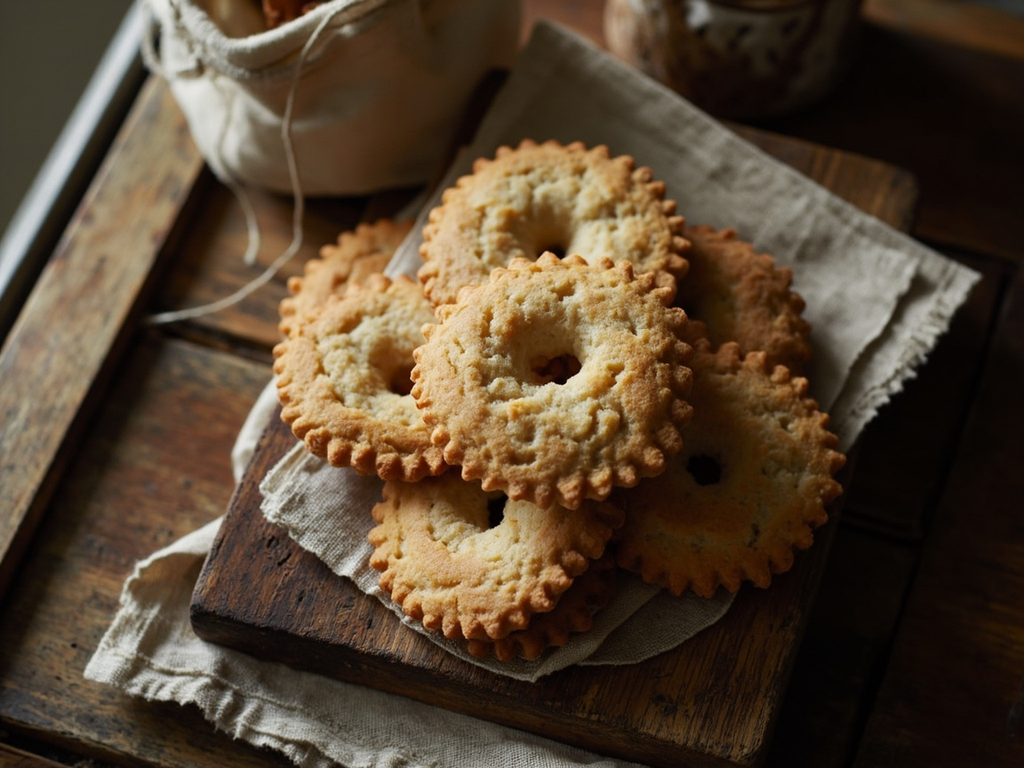
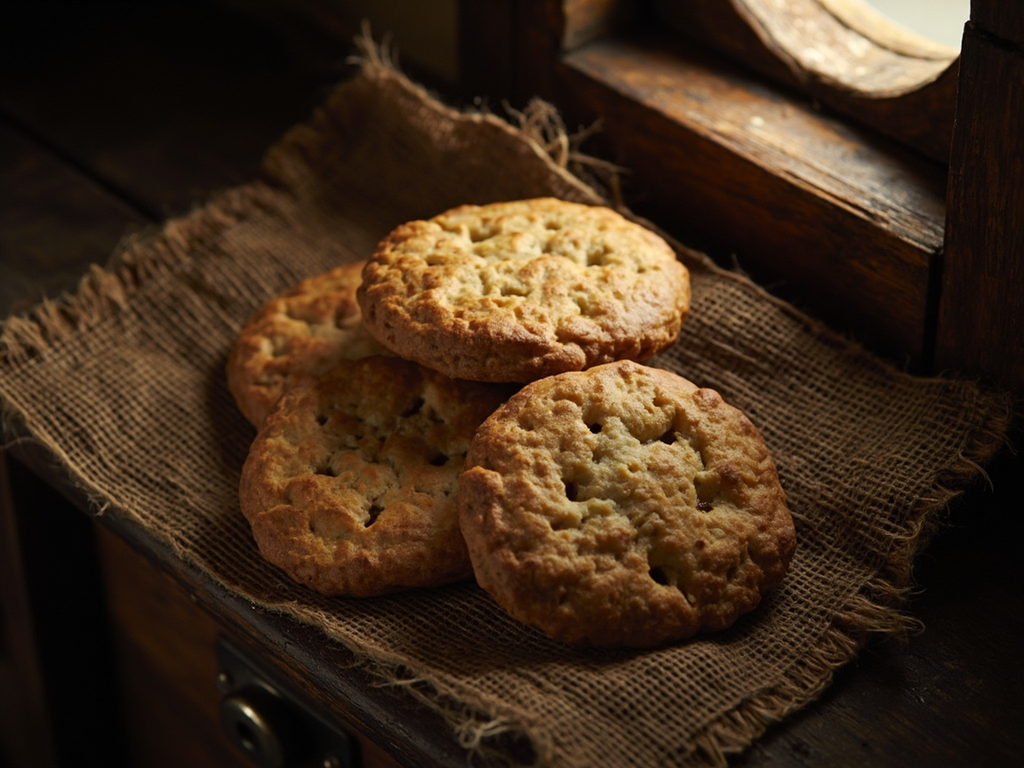
A flatbread of flour and water, unleavened, baked twice until hard as a board, to last months in the hold. It is the food that carried the first circumnavigation — austere, salty, made for survival, not for pleasure.
Expect no pleasure from this biscuit: it is made to last, not to delight the mouth. On the infinite sea we named Pacific, when we had nothing left, we ate this galley reduced to powder and full of worms, and the brackish water seemed sweet to us. I tell you plainly: dip it in broth or wine so that it yields to the bite. A man who has known only his home table cannot understand what a sailor owes to such poor bread.
- •Wheat flour — as needed (base)
- •Water — just enough to bind (binder)
- •Salt — a pinch (preservation and taste)
Biscoito de bordo (ship's biscuit)
A flatbread of flour and water, unleavened, baked twice until hard as a board, to last months in the hold. It is the food that carried the first circumnavigation — austere, salty, made for survival, not for pleasure.
Why this dish? This is the food of the circumnavigation. During the three-month non-stop crossing of the Pacific (1521), Magellan's crew had nothing left but this biscuit reduced to powder and crawling with weevils. Chronicler Pigafetta described this misery: no dish better tells the story of the voyage's exploit and suffering.
Expect no pleasure from this biscuit: it is made to last, not to delight the mouth. On the infinite sea we named Pacific, when we had nothing left, we ate this galley reduced to powder and full of worms, and the brackish water seemed sweet to us. I tell you plainly: dip it in broth or wine so that it yields to the bite. A man who has known only his home table cannot understand what a sailor owes to such poor bread.
Ingredients (period version)
- Wheat flour — as needed (base)
- Water — just enough to bind (binder)
- Salt — a pinch (preservation and taste)
Ingredients
- Wheat flour (T65) — 500 g (base)
- Water — about 200 ml (binder)
- Salt — 10 g (preservation and taste)
Method
- Mix flour and salt, add water little by little to obtain a firm, dry dough (no yeast).
- Knead thoroughly, then roll out to 1 cm thickness and cut into squares or rounds.
- Prick each biscuit all over with a fork so it dries through.
- Bake at 180°C for about 25 minutes until lightly colored.
- Lower the oven to 100°C and let dry for 1 to 2 hours with the door ajar, until the biscuit is hard and brittle. Store in a dry place.
How it was made : The *bizcocho/biscoito* (from Latin *bis coctus*, 'twice-cooked') was the staple of all Iberian navies. It was baked by the ton in royal ovens and could last for months. On board, it was dipped in wine, broth, or water to make it edible.
The contemporary twist : Served as an appetizer mignardise with a sardine spread, it becomes a historical cracker to tell a story before crunching.
Sources : Antonio Pigafetta, Relazione del primo viaggio intorno al mondo (1524-1525)
Magellan · Charactorium