 flip
flipFura — the rider's millet balls
Fura — the rider's millet balls
Why this dish? A warrior queen constantly on campaign between Zaria, Nupe, and Atagara, Amina needed food that travels. Fura, cooked and compact millet balls, is carried in the rider's saddlebag and diluted with a little water or milk at the stop: the ideal provisions for long Sahelian rides.
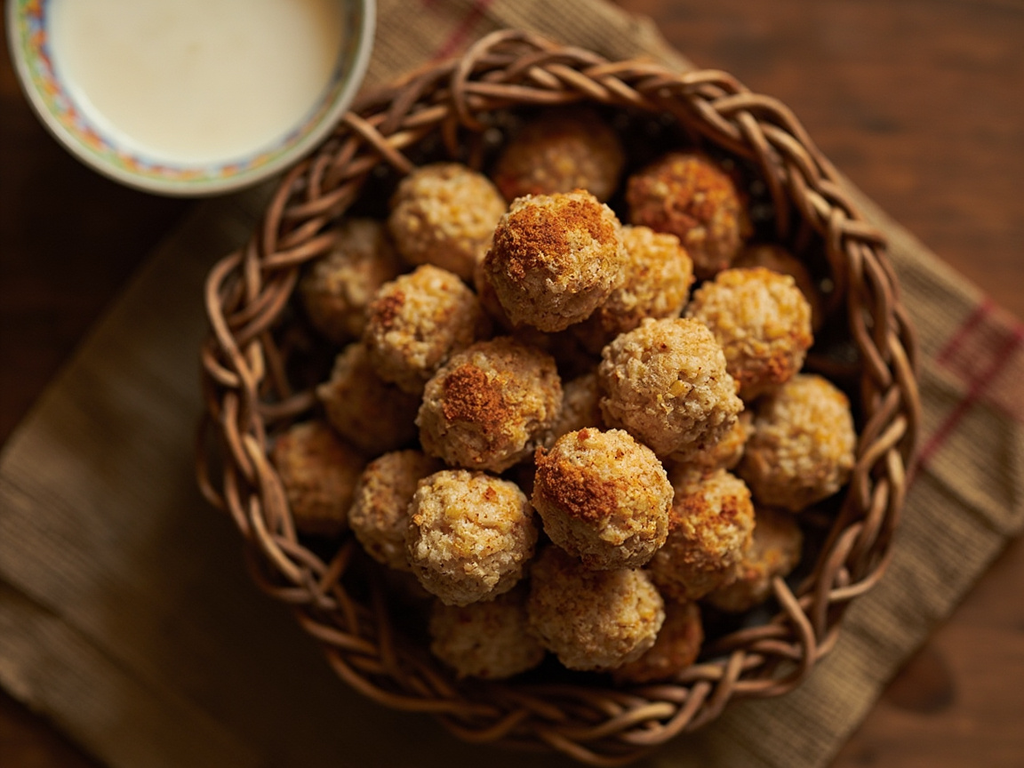
Dense balls of cooked millet, perfumed with local spices, rolled by hand and kept for several days. At a halt, they are crushed into water or soured milk to make a restorative porridge in an instant. The energy bar of the Sahel, 16th-century version.
A war leader does not stop to light a fire every time his belly cries out. My women rolled the fura before departure, tightly packed, and each rider slipped some into his saddlebag. At the halt, you crush one into a little milk from the herds, stir, and you are satisfied without really dismounting. It is with this handful of millet that I led my men far, to the lands of Nupe.
- •Cooked millet (gero) — a good amount, pounded (base)
- •Fresh pounded ginger — a piece (flavor and preservation)
- •Grains of Selim (citta, long pepper) — a few seeds (warming spice)
- •Local clove or kanwa (natron) — a pinch (seasoning and preservation)
- •Water — just enough (binding the dough)
Fura — the rider's millet balls
Dense balls of cooked millet, perfumed with local spices, rolled by hand and kept for several days. At a halt, they are crushed into water or soured milk to make a restorative porridge in an instant. The energy bar of the Sahel, 16th-century version.
Why this dish? A warrior queen constantly on campaign between Zaria, Nupe, and Atagara, Amina needed food that travels. Fura, cooked and compact millet balls, is carried in the rider's saddlebag and diluted with a little water or milk at the stop: the ideal provisions for long Sahelian rides.
A war leader does not stop to light a fire every time his belly cries out. My women rolled the fura before departure, tightly packed, and each rider slipped some into his saddlebag. At the halt, you crush one into a little milk from the herds, stir, and you are satisfied without really dismounting. It is with this handful of millet that I led my men far, to the lands of Nupe.
Ingredients (period version)
- Cooked millet (gero) — a good amount, pounded (base)
- Fresh pounded ginger — a piece (flavor and preservation)
- Grains of Selim (citta, long pepper) — a few seeds (warming spice)
- Local clove or kanwa (natron) — a pinch (seasoning and preservation)
- Water — just enough (binding the dough)
Ingredients
- Millet flour (or fine millet semolina) — 300 g (base)
- Ground ginger — 1 tsp (flavor)
- Grains of Selim or black pepper — 1/2 tsp (warming note)
- Ground clove — 1 pinch (spice)
- Salt — 1/2 tsp (seasoning and preservation)
- Boiling water — about 200 ml (cooking and binding)
Method
- Mix the millet flour with ginger, grains of Selim, clove, and salt.
- Gradually pour in the boiling water while stirring until you get a thick, firm dough.
- Cook this dough over low heat for 8-10 minutes, stirring, like a very firm polenta.
- Let cool slightly, then, with wet hands, roll into tightly packed balls the size of a small fist.
- Let them air-dry for a few hours: they will keep for several days for travel.
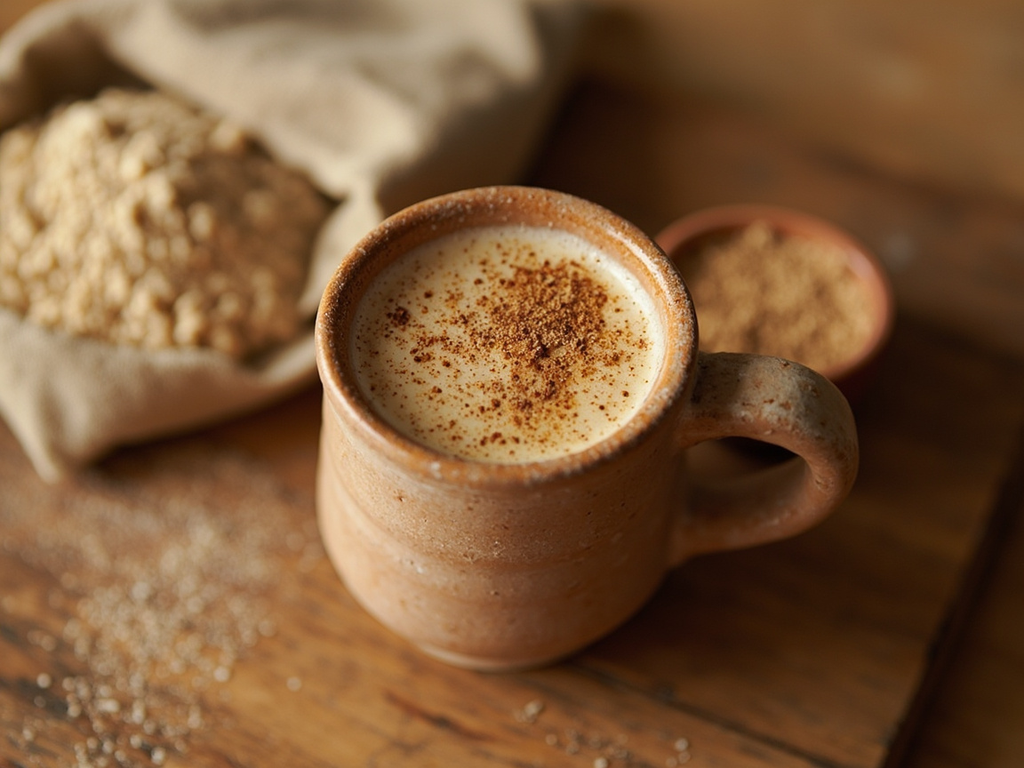
- When eating, crush a ball in a bowl with a little milk (preferably soured) or water, and beat into a porridge.
How it was made : Fura has remained to this day the nomadic food of the Hausa and Fulani: it is traditionally diluted in nono (soured milk) to make fura da nono. Before modern preservation, these balls of cooked and dried cereal, lightly spiced and salted with natron (kanwa), kept for several days under the dry Sahelian climate — ideal provisions for caravan merchants as well as armies on the move.
The contemporary twist : Roll bite-sized 'fura energy balls', coated in toasted millet, served with a small pot of tangy plain yogurt for dipping.
Amina de Zaria · Charactorium