 flip
flipItría with Sesame and Honey, Birth Cake
Itría with Sesame and Honey, Birth Cake
Why this dish? Sesame and honey cakes were offered at births and weddings, sesame symbolizing fertility. For Maia, who gave birth to Hermes in the cave of Cyllene, this birth cake is the most fitting offering: it celebrates the mother and the divine child.
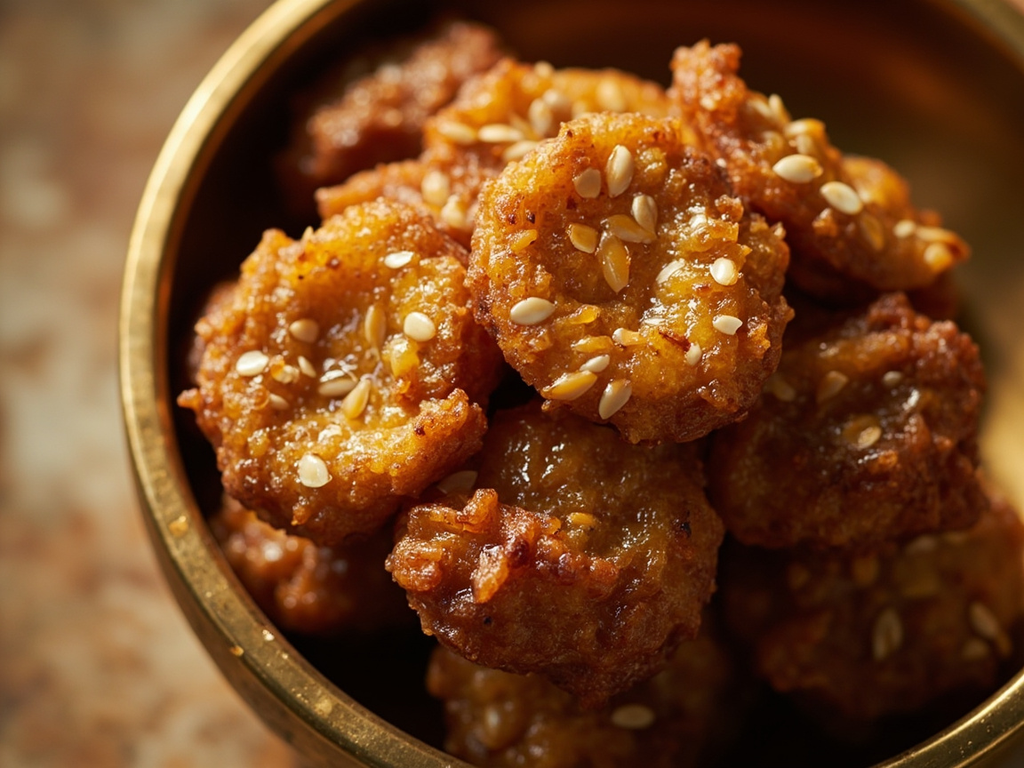
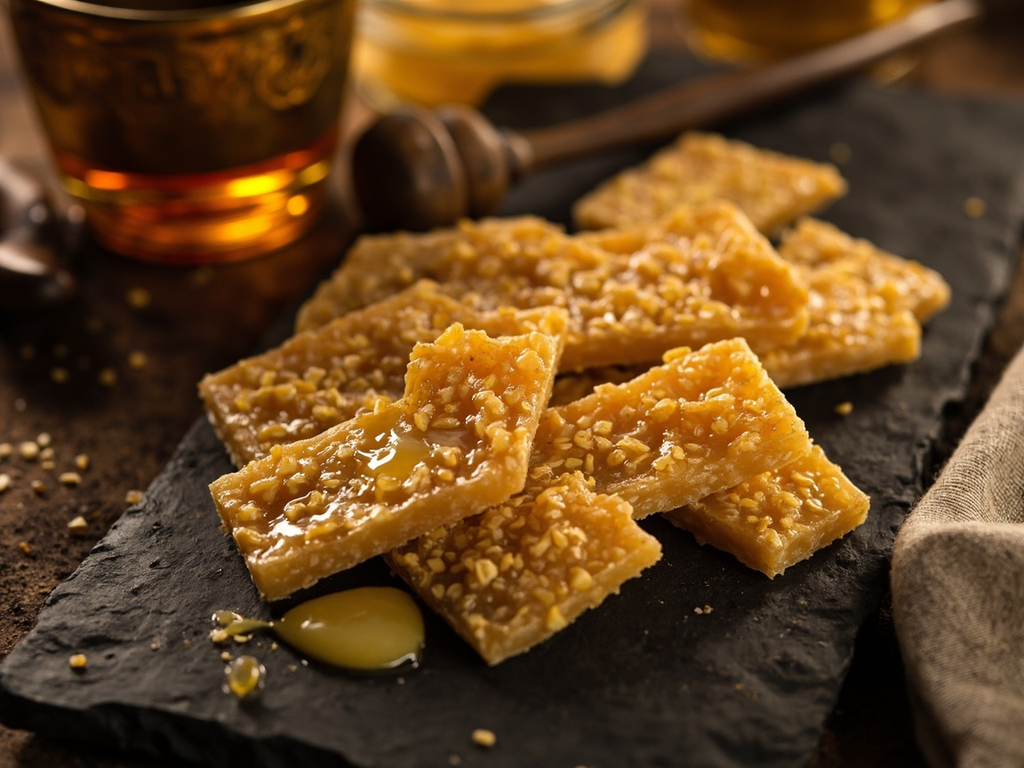
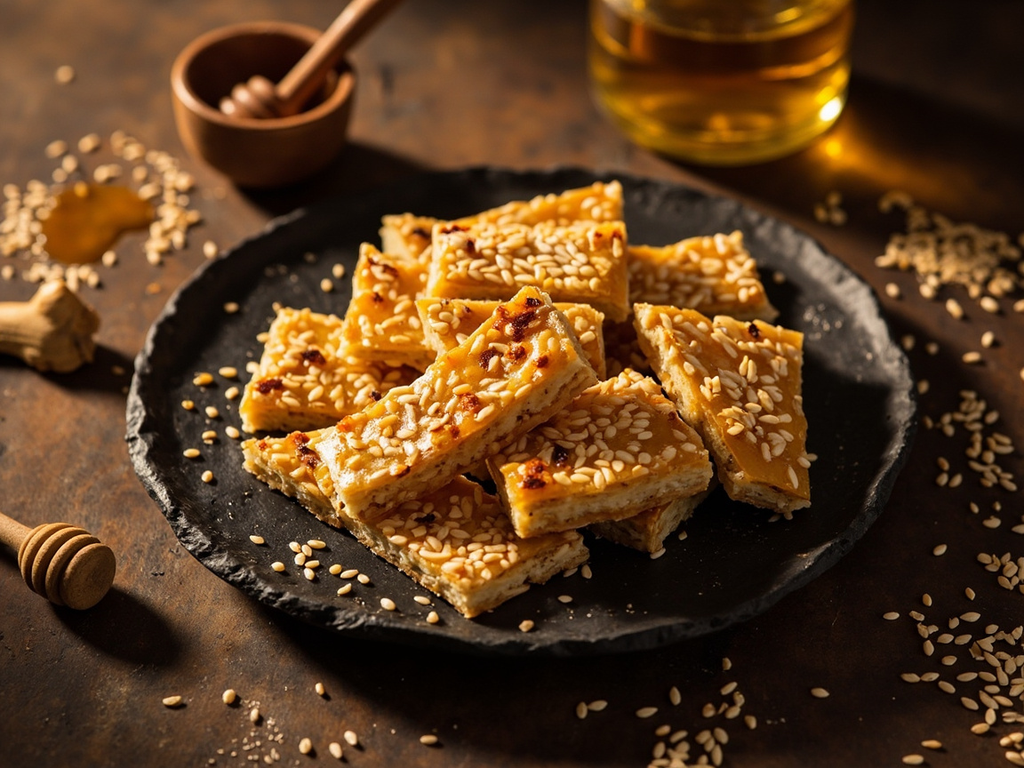
Thin, crunchy wafers of toasted sesame seeds bound in hot honey, hardened then broken: a festive confection, crunchy and fragrant, ancestor of all Mediterranean sesame brittles.
They say I am the most beautiful of the seven Pleiad sisters, but I prefer to be called mother. When a child is born, mortals toast the sesame—seed of fertility—and drown it in hot honey until it sets and cracks under the tooth. Thus they celebrated births, as they might have celebrated that of my Hermes in the shadow of Cyllene. Break off a shard, mortal, and may its sweetness remind you that every beginning deserves an offering.
- •Sesame seeds — a good measure (crunchy base)
- •Thyme honey — in generous parts (binder and sweetness)
Itría with Sesame and Honey, Birth Cake
Thin, crunchy wafers of toasted sesame seeds bound in hot honey, hardened then broken: a festive confection, crunchy and fragrant, ancestor of all Mediterranean sesame brittles.
Why this dish? Sesame and honey cakes were offered at births and weddings, sesame symbolizing fertility. For Maia, who gave birth to Hermes in the cave of Cyllene, this birth cake is the most fitting offering: it celebrates the mother and the divine child.
They say I am the most beautiful of the seven Pleiad sisters, but I prefer to be called mother. When a child is born, mortals toast the sesame—seed of fertility—and drown it in hot honey until it sets and cracks under the tooth. Thus they celebrated births, as they might have celebrated that of my Hermes in the shadow of Cyllene. Break off a shard, mortal, and may its sweetness remind you that every beginning deserves an offering.
Ingredients (period version)
- Sesame seeds — a good measure (crunchy base)
- Thyme honey — in generous parts (binder and sweetness)
Ingredients
- Sesame seeds — 150 g (base)
- Thyme or heather honey — 120 g (binder)
- Pinch of salt — 1 pinch (balance)
Method
- Toast the sesame seeds dry in a pan, stirring, until golden and fragrant (watch out, they burn quickly).
- In a saucepan, heat the honey over low heat until it simmers and thickens slightly.
- Off the heat, pour in the toasted sesame and a pinch of salt, mix vigorously.
- Immediately spread in a thin layer on an oiled surface or baking sheet, flatten with a wet spatula.
- Let set and harden, then break into irregular shards.
How it was made : Sesame and honey cakes (sêsamê, itría) are mentioned in Greek sources as festive foods, especially at weddings, with sesame considered to promote fertility. They were prepared without an oven, by simply cooking the honey—a technique preserved today in Greek pastéli.
The contemporary twist : Pour the mixture into small rings for 'star medallions' and dust with a touch of lemon zest: a nod to the star Maia in the Pleiades cluster.
Sources : Athenaeus of Naucratis, The Deipnosophists, Book XIV (sesame and honey cakes) · Andrew Dalby, Siren Feasts, Routledge, 1996 (sesame and fertility)
Maia · Charactorium