 flip
flipTraining Grill Lamb Chops
Training Grill Lamb Chops
Why this dish? Margaret Court was one of the first players to follow a real strength-training program and watch her diet — rare for a woman in the 1960s. Her dumbbells stood next to her wooden racket. A grilled meat rich in protein, like Australian lamb, was the logical meal for a sportswoman who had to endure endless matches under the Kooyong sun.
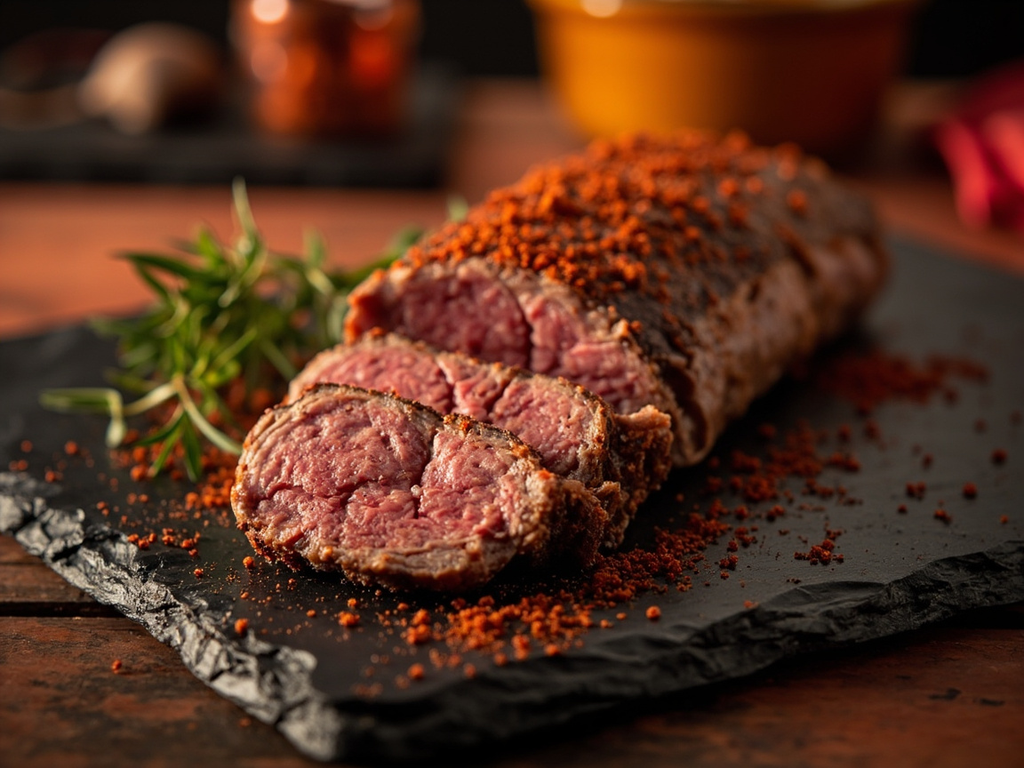
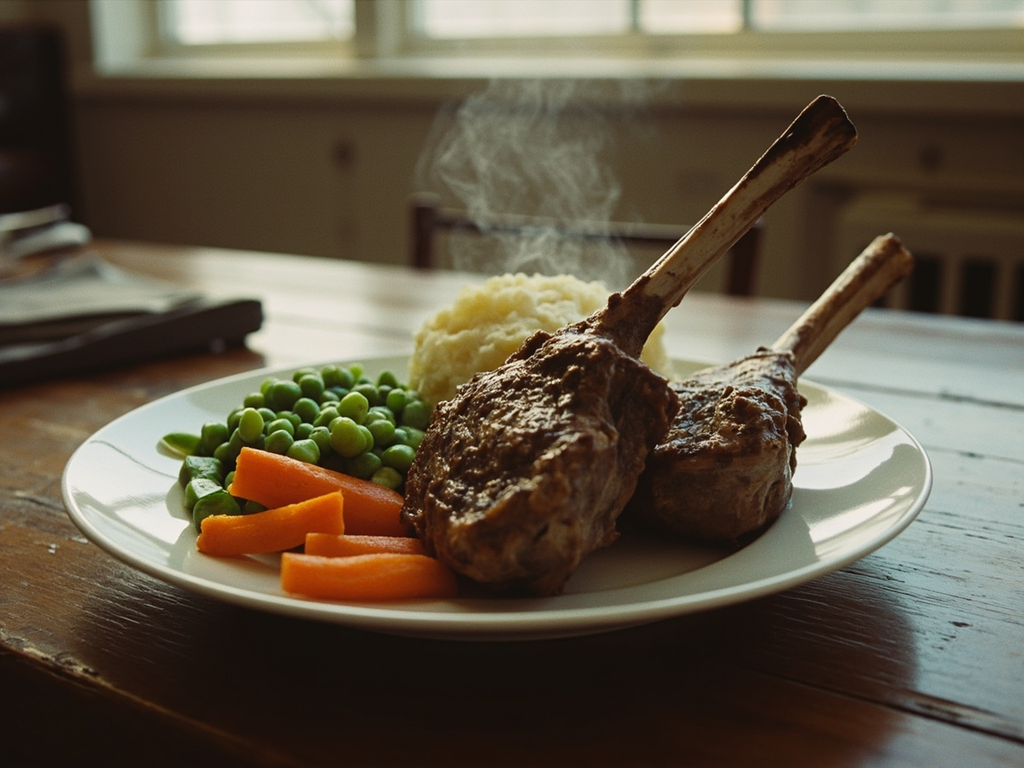
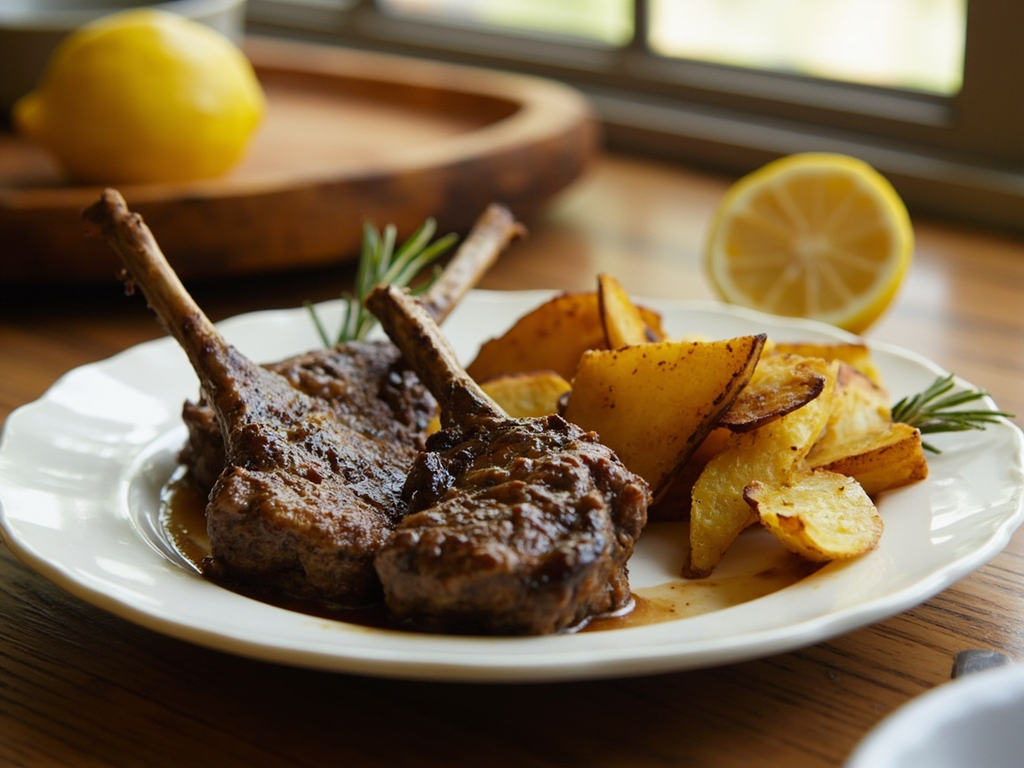
Lamb chops seared over high heat, simply salted, served with a squeeze of lemon juice and a few potatoes. An honest, nourishing meal, calibrated for effort, as eaten in Australian bush homes.
When I was a kid in Albury, nobody talked about “sports nutrition” — that word didn’t exist yet. But I learned one thing fast: if you want to chase every ball for three sets without flagging, you need good meat in your belly. I’d sear my chops hard in the pan, a little salt, a squeeze of lemon, and potatoes on the side — nothing fancy. The work happens on the court, not on the plate: the plate is just there to give you the strength to do your duty well.
- •Lamb chops — a few per person (main protein)
- •Salt — a pinch (seasoning)
- •Lemon — half (acidity, freshness)
- •Potatoes — as many as you like (energy, starch)
- •Butter or suet — a little (cooking fat)
Training Grill Lamb Chops
Lamb chops seared over high heat, simply salted, served with a squeeze of lemon juice and a few potatoes. An honest, nourishing meal, calibrated for effort, as eaten in Australian bush homes.
Why this dish? Margaret Court was one of the first players to follow a real strength-training program and watch her diet — rare for a woman in the 1960s. Her dumbbells stood next to her wooden racket. A grilled meat rich in protein, like Australian lamb, was the logical meal for a sportswoman who had to endure endless matches under the Kooyong sun.
When I was a kid in Albury, nobody talked about “sports nutrition” — that word didn’t exist yet. But I learned one thing fast: if you want to chase every ball for three sets without flagging, you need good meat in your belly. I’d sear my chops hard in the pan, a little salt, a squeeze of lemon, and potatoes on the side — nothing fancy. The work happens on the court, not on the plate: the plate is just there to give you the strength to do your duty well.
Ingredients (period version)
- Lamb chops — a few per person (main protein)
- Salt — a pinch (seasoning)
- Lemon — half (acidity, freshness)
- Potatoes — as many as you like (energy, starch)
- Butter or suet — a little (cooking fat)
Ingredients
- Lamb chops — 4 to 6 (approx. 600 g) (main protein)
- Salt and pepper — to taste (seasoning)
- Lemon — 1 (acidity, freshness)
- Potatoes — 500 g (starch)
- Olive oil or butter — 2 tbsp (cooking)
- Fresh rosemary — 2 sprigs (aromatic)
Method
- Take the chops out 30 minutes before cooking to bring them to room temperature.
- Cook quartered potatoes in boiling salted water or bake in the oven with a little oil.
- Heat a pan (or grill) very hot with a drizzle of oil.
- Sear the chops for 2 to 3 minutes on each side for pink meat, adding rosemary at the end.
- Season with salt and pepper, squeeze a little lemon over them, and rest for 3 minutes.
- Serve immediately with the potatoes.
How it was made : In post-war rural Australia, meat grilled in a cast-iron pan or over coals was everyday fare — the country was one of the world’s highest meat consumers. The idea of eating “for performance” was in its infancy: Margaret Court was among the pioneering athletes who began to see their plate as a training tool.
The contemporary twist : Serve the chops as ‘lamb cutlet sleeves’ seared in the style of an Australian backyard ‘barbie’, with a mint and parsley salsa verde as a nod to the national mint sauce.
Margaret Court · Charactorium