 flip
flipRosół z kury — restorative chicken broth
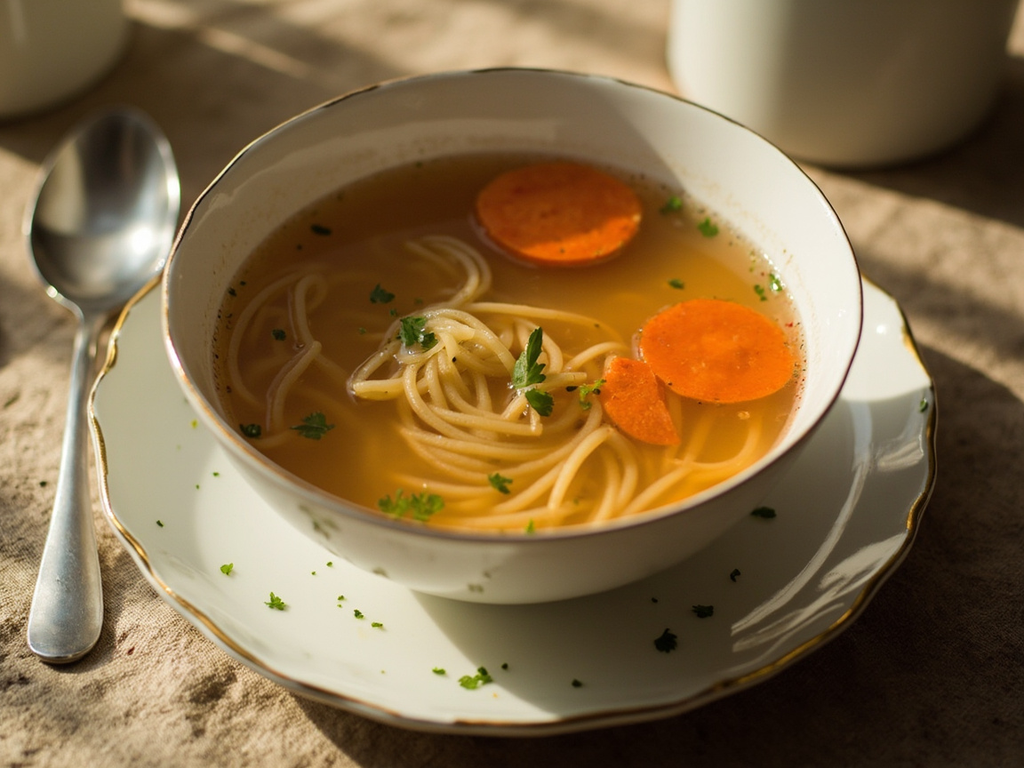
Rosół z kury — restorative chicken broth
Why this dish? As a student in Paris in a freezing garret, Maria fainted from hunger, living on tea and buttered bread, too absorbed in her studies to cook. Her sister Bronia and brother-in-law, both doctors, would bring her home to 'fatten her up' with real meals — and rosół, the clear chicken broth of Polish Sundays, is precisely the remedy dish that every family served to convalescents and the starving.
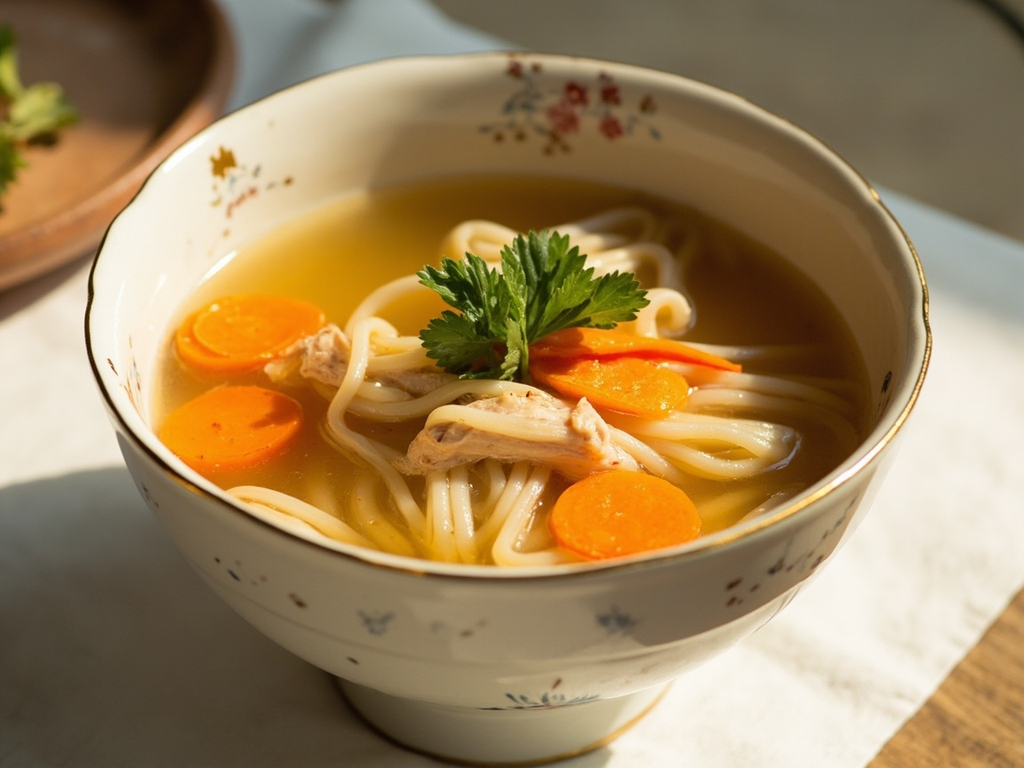
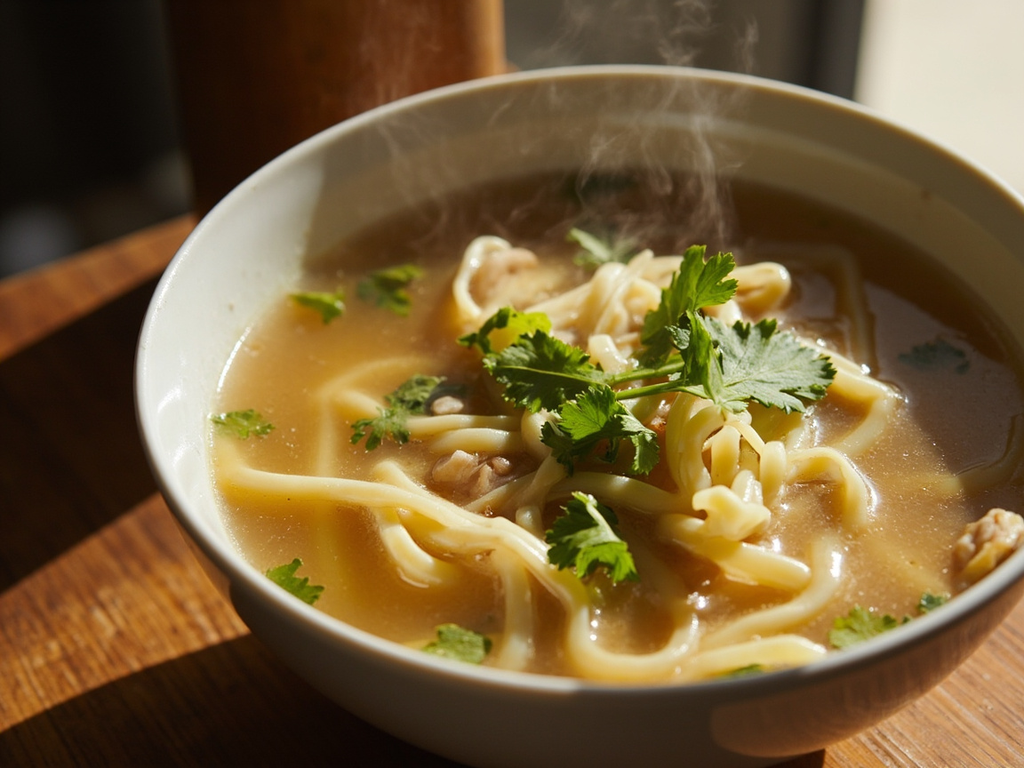
A golden-clear chicken broth, long-simmered with root vegetables, served over fine noodles. The Sunday and comfort dish, gentle on the stomach as on the heart.
I must confess a weakness: during my student years in Paris, I forgot to eat, and more than once I found myself faint on my chair, half-unconscious. My sister Bronia, who is a doctor, did not joke about such things: she would take me home and make me swallow her rosół, that clear broth of chicken and roots that we prepare whenever a loved one is wasting away. A good rosół, she said, is worth more than many prescriptions. I believe she was right; nothing ever restored me as surely as that steaming bowl and those fine noodles.
- •Stewing hen — half (broth base)
- •Carrots — a few (sweetness and color)
- •Parsley root — 1 (characteristic Polish flavor)
- •Celeriac — a piece (aromatic base)
- •Leek — 1 (flavor)
- •Onion — 1 (burnt on the stove for color)
- •Peppercorns, allspice, bay leaf — a few (aromatics)
- •Homemade noodles — as needed (garnish)
- •Fresh parsley — a bunch (finishing)
Rosół z kury — restorative chicken broth
A golden-clear chicken broth, long-simmered with root vegetables, served over fine noodles. The Sunday and comfort dish, gentle on the stomach as on the heart.
Why this dish? As a student in Paris in a freezing garret, Maria fainted from hunger, living on tea and buttered bread, too absorbed in her studies to cook. Her sister Bronia and brother-in-law, both doctors, would bring her home to 'fatten her up' with real meals — and rosół, the clear chicken broth of Polish Sundays, is precisely the remedy dish that every family served to convalescents and the starving.
I must confess a weakness: during my student years in Paris, I forgot to eat, and more than once I found myself faint on my chair, half-unconscious. My sister Bronia, who is a doctor, did not joke about such things: she would take me home and make me swallow her rosół, that clear broth of chicken and roots that we prepare whenever a loved one is wasting away. A good rosół, she said, is worth more than many prescriptions. I believe she was right; nothing ever restored me as surely as that steaming bowl and those fine noodles.
Ingredients (period version)
- Stewing hen — half (broth base)
- Carrots — a few (sweetness and color)
- Parsley root — 1 (characteristic Polish flavor)
- Celeriac — a piece (aromatic base)
- Leek — 1 (flavor)
- Onion — 1 (burnt on the stove for color)
- Peppercorns, allspice, bay leaf — a few (aromatics)
- Homemade noodles — as needed (garnish)
- Fresh parsley — a bunch (finishing)
Ingredients
- Chicken thighs and carcass (or whole chicken) — 1 kg (broth base)
- Carrots — 3 (sweetness)
- Parsley root (or parsnip) — 1 (Polish flavor)
- Celeriac — 1/4 (aromatic base)
- Leek — 1 white part (flavor)
- Onion — 1 (charred dry to color the broth)
- Bay leaf + allspice + peppercorns — 1 + 3 + 6 (aromatics)
- Vermicelli or fine egg noodles — 200 g (garnish)
- Chopped flat-leaf parsley — 2 tbsp (finishing)
Method
- Cover the chicken with cold water (about 2.5 L), bring gently to a simmer, and carefully skim off the gray foam.
- Cut the onion in half and char the cut side dry in a skillet: this gives the amber color.
- Add all root vegetables, leek, burnt onion, and aromatics. Season moderately with salt.
- Simmer on very low heat, partially covered, for 2 to 2.5 hours — it must never boil vigorously, or it will become cloudy.
- Strain. Cook the noodles separately, divide among bowls, and pour the boiling broth over.
- Sprinkle with fresh parsley. Serve with a few carrot slices from the broth.
How it was made : Sunday rosół was often started on Saturday evening, simmering for hours on the corner of the coal stove. The noodles were rolled and cut by hand by the children of the house. Nothing was wasted: the boiled chicken became the main dish, and the root vegetables, mashed, accompanied the second course.
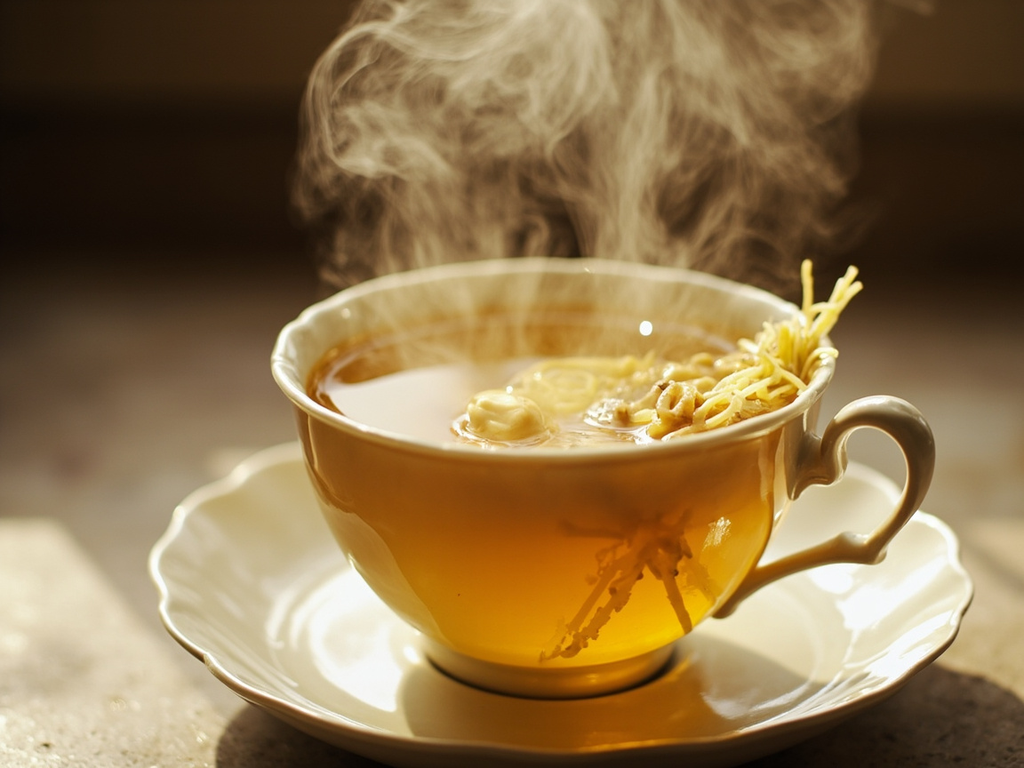
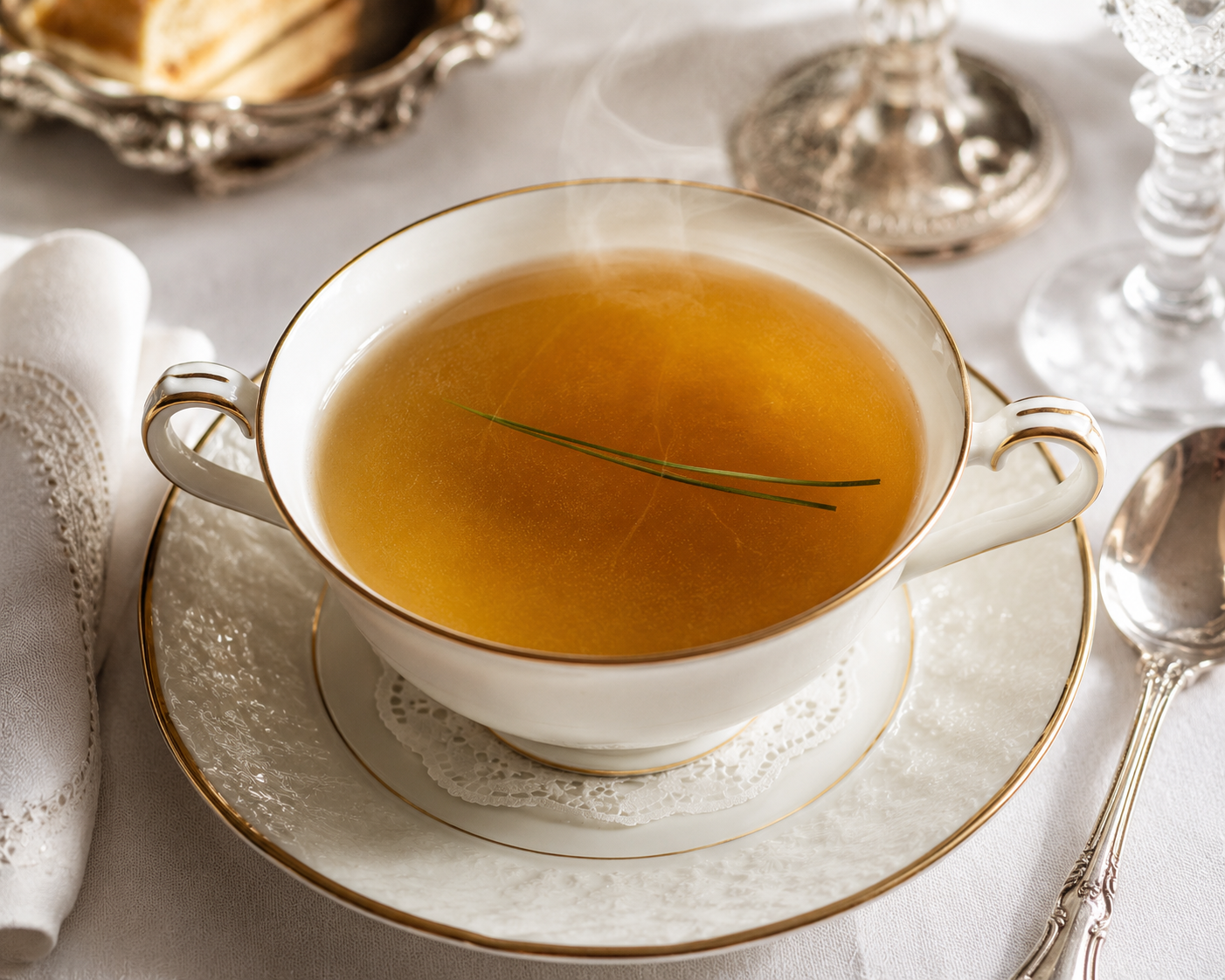
The contemporary twist : Serve the rosół as an appetizer consommé in a teacup, with a few noodles and a drizzle of parsley oil — a nod to the tea that was, alas, the only meal on many of Maria's student evenings.
Sources : Lucyna Ćwierczakiewiczowa, 365 obiadów, Warsaw, 1860 · Ève Curie, Madame Curie, Gallimard, 1937 (episodes of malnutrition and undernourishment in Paris)
Marie Curie · Charactorium