
A Christian mystic and pious laywoman of the diocese of Liège, Marie of Oignies (c. 1177–1213) was a founding figure of the Beguine movement in the Meuse region. Her life, written by Jacques de Vitry, made her a model of feminine holiness grounded in penance, voluntary poverty, and Eucharistic devotion.
Marie of Oignies(1177 — 1213)
Marie of Oignies
5 min read
Frequently asked questions
Key Facts
- Born around 1177 in Nivelles, in the Duchy of Brabant
- Renounces married life with her husband to embrace poverty and the care of lepers at Willambroux
- Settles around 1207 at the priory of Oignies-sur-Sambre, where she leads a life of seclusion and prayer
- Inspires the preacher Jacques de Vitry, who writes her biography (*Vita Mariae Oigniacensis*) around 1215 after her death
- Dies in 1213; she is regarded as a pioneer of the Beguine movement
Works & Achievements
Marie became the living model for the beguines, laywomen living in community in chastity, poverty, and labor, without entering a monastic order.
Together with her husband, she devoted years to serving the sick who had been cast out by society, embodying evangelical charity.
She guided this influential preacher, who then made the holy women of Liège known throughout Christendom.
Her intense devotion to the sacrament contributed to the rise of Eucharistic piety, which would lead to the Feast of Corpus Christi, established at Liège in 1246.
Her life, written by Jacques de Vitry, became a reference text for defending and legitimizing lay female sainthood.
Anecdotes
Marie d'Oignies, born into a well-off family from Nivelles, persuaded her husband to give up married life so they could lead an existence of chastity and service to lepers at Willambroux together. This radical choice, made while her husband was still alive, scandalized part of those around her.
It is said that she wept so abundantly during Mass and the meditation on the Passion of Christ that her face was constantly wet. Her tears of devotion became a celebrated feature of her reputation for holiness.
To mortify her body, she eventually withdrew into a cell near the priory of Oignies, on the banks of the Sambre, where she lived in extreme poverty and rigorous fasting. Her reputation drew many visitors seeking spiritual guidance.
The preacher Jacques de Vitry was so struck by Marie that he took her as his spiritual guide and wrote her biography shortly after her death. This *Vita* became a manifesto defending the movement of pious women against suspicions of heresy.
According to tradition, Marie is said to have received the gift of prophecy and to have foreseen certain events, such as the crusade against the Albigensians. These accounts were meant to show that lay female holiness was authentically inspired by God.
Primary Sources
She shed tears so abundant that the floor of the church was wet with them, and no one could stop her, so ablaze was her heart with the love of Christ.
Many came to her as to a wellspring of wisdom, for the Spirit spoke through her mouth and her counsel brought sinners back to repentance.
In the diocese of Liège there lived holy women who, scorning the riches of the world, chose voluntary poverty and served God in chastity.
Key Places
Town in Brabant where Marie was born around 1177 into a well-off middle-class family.
Near Nivelles, the place where Marie and her husband devoted themselves to caring for lepers while living in destitution.
On the banks of the Sambre, a monastery of canons near which Marie withdrew as a recluse and where she died in 1213.
Seat of the diocese to which Marie belonged; a major center of the Beguine movement and of Eucharistic devotion in the 13th century.
Typical Objects

A simple, undyed garment worn by pious women to signal their voluntary poverty and their break with luxury.

The Eucharistic bread at the heart of Marie's devotion, which she received in communion with intense fervor. The cult of the Eucharist was then flourishing.

A garment or belt of rough horsehair worn next to the skin to inflict bodily mortification. Marie practiced severe penances.

Spinning tools with which Marie earned a modest living through manual labor, in the manner of the beguines.

A collection of the psalms that devout lay people recited to give rhythm to their daily prayers. Marie nourished her contemplation with these texts.
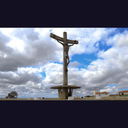
An image of Christ on the cross before which Marie meditated on the Passion, shedding abundant tears of compassion.
📷 CC BY-SA 2.0 · Wikimedia Commons ↗School Curriculum
Vocabulary & Tags
Key Vocabulary
Tags
Daily Life
Morning
Marie rose before dawn to attend Mass and receive Communion, the central moment of her day. She spent long hours in silent prayer before the crucifix, often in tears.
Afternoon
The afternoon was divided between manual labor — spinning wool to provide modestly for her needs — and receiving the visitors who came seeking counsel. She also cared for the poor and the sick.
Evening
In the evening, she prolonged her prayers and her meditation on the Scriptures late into the night, sleeping very little. Her extended vigils were part of her ascetic practices.
Food
Her diet was extremely frugal: black bread, vegetables, and water, with long fasts. She refused meat and any food considered too delicate, as a form of mortification.
Clothing
She wore a coarse garment of gray or brown wool, undyed, a sign of voluntary poverty. Beneath her clothes, she sometimes wore a hair shirt to mortify her flesh.
Housing
After her life at the leper house, she lived in a small recluse's cell near the priory of Oignies. This bare dwelling reflected her total renunciation of worldly goods.
Historical Timeline
Period Vocabulary
Liens externes & ressources
Références
Œuvres
Fondation spirituelle du mouvement béguinal mosan
vers 1195-1213
Soin des lépreux à Willambroux
vers 1195
Direction spirituelle de Jacques de Vitry
vers 1210-1213
Promotion du culte de l'Eucharistie
début XIIIe siècle
Inspiration de la Vita Mariae Oigniacensis
vers 1215