 flip
flipCornbread
Cornbread
Why this dish? Cornbread accompanies every Southern meal and keeps for days: a robust, inexpensive bread that could feed marchers and activists on the move, from the boycotted buses of Montgomery to the marches of Selma. It is the daily bread of King's community.
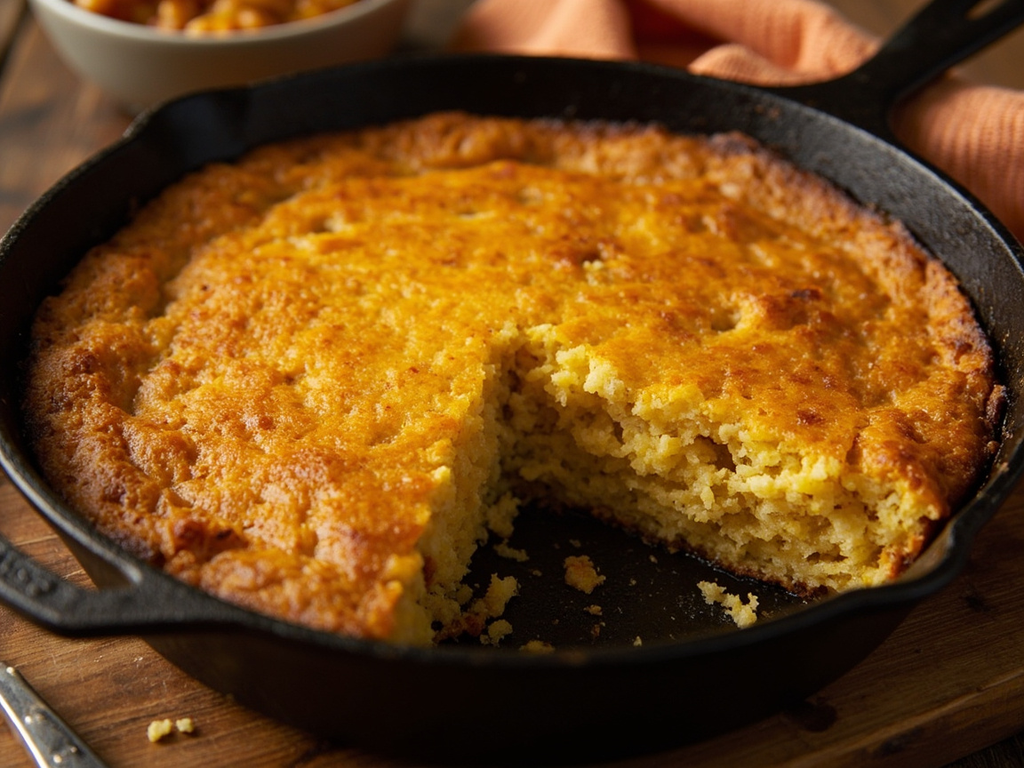
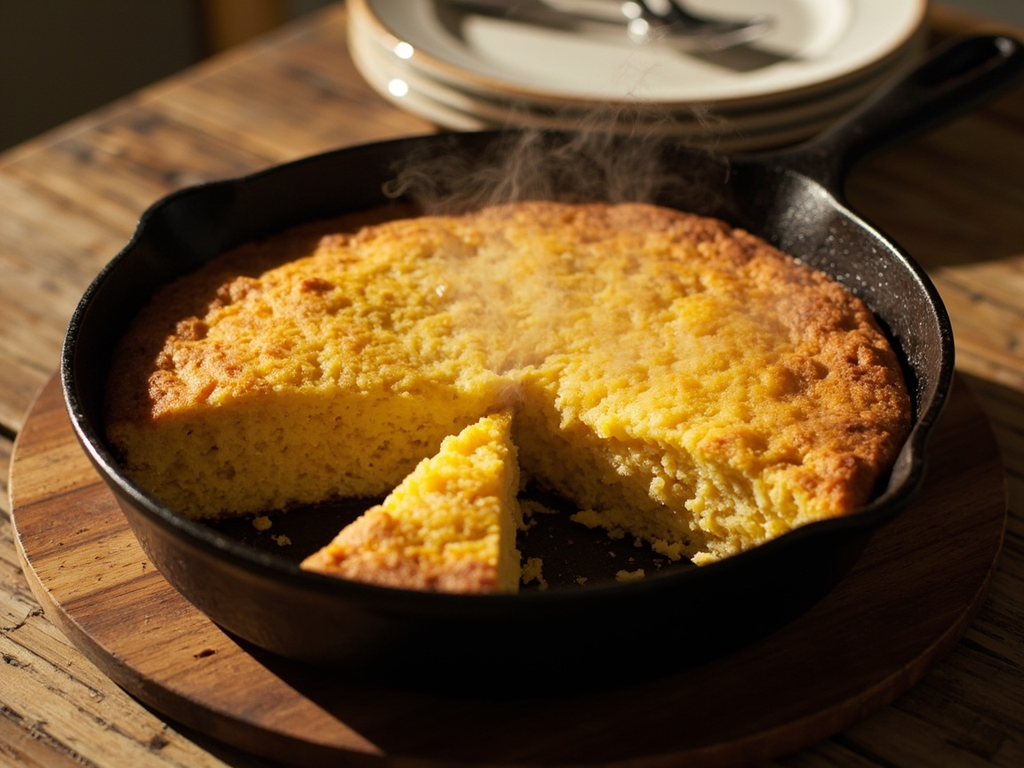
A golden cornmeal bread, baked in a cast-iron skillet, with a crunchy crust and a tender, slightly sweet crumb. It is broken by hand to sop up the pot likker from greens or wrapped in a cloth to take along.
This bread, my friends, makes no fuss. A handful of cornmeal, a little buttermilk, and there it is, browning in the hot cast-iron skillet and singing. We wrapped it in a cloth for the long roads, for a man marching for justice needs a bread that fits in his pocket and his belly. Break it by hand, never with a knife — and dip it in the vegetable juice: that is a king's meal for those who see riches in simplicity.
- •Cornmeal — the base (main grain)
- •Buttermilk — for the batter (binder and tenderness)
- •Egg — 1 (binder)
- •Lard or butter — a little (fat and crust)
- •Salt, pinch of sugar, baking soda — to taste (seasoning and leavening)
Cornbread
A golden cornmeal bread, baked in a cast-iron skillet, with a crunchy crust and a tender, slightly sweet crumb. It is broken by hand to sop up the pot likker from greens or wrapped in a cloth to take along.
Why this dish? Cornbread accompanies every Southern meal and keeps for days: a robust, inexpensive bread that could feed marchers and activists on the move, from the boycotted buses of Montgomery to the marches of Selma. It is the daily bread of King's community.
This bread, my friends, makes no fuss. A handful of cornmeal, a little buttermilk, and there it is, browning in the hot cast-iron skillet and singing. We wrapped it in a cloth for the long roads, for a man marching for justice needs a bread that fits in his pocket and his belly. Break it by hand, never with a knife — and dip it in the vegetable juice: that is a king's meal for those who see riches in simplicity.
Ingredients (period version)
- Cornmeal — the base (main grain)
- Buttermilk — for the batter (binder and tenderness)
- Egg — 1 (binder)
- Lard or butter — a little (fat and crust)
- Salt, pinch of sugar, baking soda — to taste (seasoning and leavening)
Ingredients
- Fine cornmeal — 200 g (base)
- Wheat flour — 60 g (structure)
- Buttermilk — 250 ml (tenderness)
- Egg — 1 (binder)
- Melted butter — 50 g (richness)
- Baking powder + baking soda — 1 tsp + 1/2 tsp (leavening)
- Salt and sugar — 1 tsp each (seasoning)
Method
- Preheat the oven to 220°C and place a cast-iron skillet with a knob of butter inside to heat.
- Mix the dry ingredients (cornmeal, flour, baking powder, baking soda, salt, sugar).
- In a separate bowl, whisk the buttermilk, egg, and melted butter, then fold into the dry ingredients without overmixing.
- Pour the batter into the hot skillet (it should sizzle) to create a golden crust.
- Bake for 20-25 minutes until a knife comes out clean and the top is golden.
- Unmold, let cool slightly, and break into wedges.
How it was made : Corn, a grain of the Americas, was the bread of poor Southern families long before wheat: ground into meal, it was cooked without leavening in a cast-iron skillet directly on the embers (hoecake) or in the oven. Economical and nourishing, it accompanied absolutely everything.
The contemporary twist : Baked as individual muffins with a honey center, for portable servings to slip into a hiking bag — a "marching bread" spirit.
Sources : Adrian Miller, Soul Food, 2013 · Jessica B. Harris, High on the Hog, 2011
Martin Luther King · Charactorium