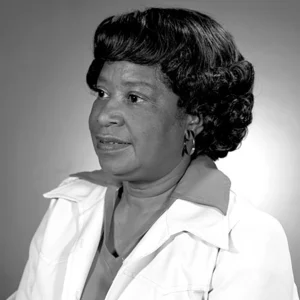

American mathematician and aerospace engineer, Mary Jackson was the first Black female engineer at NASA. A member of the “Hidden Figures,” she contributed to the calculations for the first American space missions and fought for equal rights within the agency.
Mary Jackson(1910 — 2005)
Mary Jackson
États-Unis
8 min read
Frequently asked questions
Key Facts
- 1921: Born in Hampton, Virginia, in a context of racial segregation
- 1951: Joins the NACA (future NASA) as a “human computer”
- 1958: Becomes the first Black female engineer at NASA
- 1979: Dedicates herself to promoting women and minorities within NASA
- 2019: Posthumously awarded the Congressional Gold Medal
Works & Achievements
In 1958, Mary Jackson became the first Black female engineer at NASA after completing special engineering courses. This pioneering achievement was the result of years of work and a personal fight against segregation.
Mary Jackson took part in aerodynamic experiments in the wind tunnels at Langley Research Center, contributing to technical reports that supported American aerospace programs throughout the Space Race.
After voluntarily stepping down from her position as a senior engineer, Mary Jackson took over NASA's Equal Employment Opportunity program, working to improve the hiring and promotion prospects of women and minorities within the agency.
Throughout her life, Mary Jackson dedicated herself to science education programs for young people, including leading science workshops for the Boy Scouts to inspire vocations among girls and children from minority communities.
Mary Jackson was posthumously awarded the Congressional Gold Medal, the highest civilian honor in the United States, alongside Katherine Johnson, Dorothy Vaughan, and Christine Darden, in recognition of their role in the early years of the American space age.
Anecdotes
To access the engineering courses required for her advancement at NASA, Mary Jackson had to personally petition the city of Hampton, Virginia, for permission to attend classes at a whites-only school. She won her case and became one of the first Black women to walk through those doors, proving that perseverance could bring down the walls of segregation.
In 1958, Mary Jackson officially became NASA's first Black female engineer — a title she had spent years earning against the combined barriers of racism and sexism. Her promotion was recognized internally, but remained largely unknown to the general public for a long time, her contributions having been overlooked for decades.
In the late 1970s, having reached the highest grade available to an engineer without moving into management, Mary Jackson made a decision that surprised her colleagues: she voluntarily accepted a pay cut to become manager of NASA's equal opportunity programs. She chose to open doors for others rather than protect her own advantages.
Mary Jackson was part of the group of Black women mathematicians known as the “colored computers” at NACA's Langley Research Center. These women performed complex aerodynamic calculations by hand, in offices segregated from white employees, even using separate restrooms — a reality long hidden from the history of the American space race.
In 2019, NASA's headquarters building in Washington was officially renamed the “Mary W. Jackson NASA Headquarters” in her honor, forty years after she left her engineering role to dedicate herself to workplace equality. It is a symbolic, long-overdue recognition for a woman whose name had nearly faded into obscurity.
Primary Sources
Mary Jackson is among the engineers who contributed to aerodynamic drag calculations in the supersonic wind tunnels at Langley, work documented in the technical archives of the NACA and later NASA.
Mary Jackson submitted a formal request to the city of Hampton to be admitted to an engineering training program restricted to white students, arguing on the basis of her qualifications and the absence of an equivalent segregated alternative.
NASA records document Mary Jackson's promotion to the title of aerospace engineer in 1958, making her the first Black woman to hold that position at the agency.
Mary Jackson describes her years in the West Area Computing unit, the operation of the wind tunnels, and working conditions under segregation, offering a firsthand account of that era.
Key Places
Mary Jackson's hometown and lifelong home, where she was born in 1921 and died in 2005. It is also where she received her education and built her entire career.
The research center where Mary Jackson spent her entire career, first as a mathematician and then as an aerospace engineer. It is the geographical and professional heart of her whole story.
The school where Mary Jackson received exceptional permission to attend engineering courses that were at the time restricted to white students — a decisive step toward her promotion to engineer at NASA.
NASA's headquarters, renamed in 2019 in honor of Mary Jackson. The building stands as an official — and long overdue — recognition of her pioneering role in the history of the American space agency.
The museum where oral archives and testimonies related to the "Hidden Figures" are preserved, and which has helped keep alive and share the memory of Mary Jackson and her colleagues.
Typical Objects

Before electronic calculators, Mary Jackson and her colleagues used slide rules to perform complex mathematical operations. This instrument symbolizes the meticulous, hands-on work of the NACA's human computers.
Langley's engineers filled entire notebooks with aerodynamic formulas computed by hand. These documents formed the foundation of engineering decisions for America's earliest space missions.
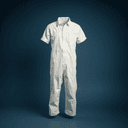
In NASA's wind tunnels and laboratories, engineers wore standardized white coats or coveralls. For Mary Jackson, this garment represented the culmination of a long struggle to be recognized as a full-fledged engineer.

Mary Jackson worked on experiments in Langley's supersonic wind tunnels, using detailed technical blueprints to analyze the behavior of fluids around high-speed aircraft.
The administrative document through which Mary Jackson applied to attend courses at a segregated school in Hampton stands as an emblem of her fight: turning an injustice into an opportunity through legal channels and perseverance.
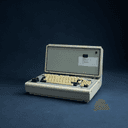
In the 1960s, NASA began introducing computers such as the IBM 7090. Mary Jackson helped bridge the transition from human computation to machine computation, also training other employees on these new tools.
School Curriculum
Vocabulary & Tags
Key Vocabulary
Tags
Daily Life
Morning
Mary Jackson started her day early in the morning in Hampton, getting her children ready before driving to the Langley center or carpooling with colleagues. Upon arriving at the office, she would review the day's priorities with her team and organize the calculations needed for the planned wind tunnel experiments.
Afternoon
Afternoons were often devoted to experiments in the supersonic wind tunnels — meticulous tests where every pressure and flow measurement had to be recorded and verified. Mary Jackson then spent hours analyzing the results, cross-checking her calculations with those of her colleagues to ensure their accuracy before drafting the technical reports.
Evening
In the evenings, Mary Jackson returned home to her family in the Newsome Park neighborhood of Hampton. She was active in her community, sometimes leading science workshops for young people or taking part in her church's activities. Reading and discussions about scientific and political news filled her evenings.
Food
Like many African American families in the South during the 1950s and 1960s, Mary Jackson's diet was rooted in the tradition of “soul food”: rice, slow-cooked vegetables, poultry, cornbread, and sweet potatoes. Family meals were a central part of daily life, often shared with friends and neighbors.
Clothing
At work, Mary Jackson wore neat, understated professional attire — suits, blouses, and mid-length skirts in keeping with NASA's formal dress codes of the 1950s and 1960s. She sometimes wore a white lab coat in technical areas. Her appearance reflected a determination to assert herself professionally in an environment dominated by white men.
Housing
Mary Jackson spent her entire life in Hampton, in the Newsome Park neighborhood — a working-class community built for Black workers during World War II. Her home was modest but comfortable, typical of postwar American bungalow architecture, with a yard where neighborhood and community life played an essential role.
Historical Timeline
Period Vocabulary
Visual Style
Esthétique documentaire des années 1950-1960, entre laboratoires d'ingénierie en noir et blanc contrasté et architecture fédérale américaine mid-century, avec la palette Kodachrome caractéristique de l'ère spatiale.
Sound Ambience
L'atmosphère sonore du centre Langley dans les années 1950-1960 : souffleries vrombissantes, machines à calculer mécaniques et effervescence feutrée d'une équipe d'ingénieurs au travail.
Liens externes & ressources
Références
Œuvres
Promotion au grade d'ingénieure aérospatiale à la NASA
1958
Contributions aux études de soufflerie supersonique à Langley
1958-1979
Programme d'égalité professionnelle à la NASA (EEO)
1979-1985
Engagement dans les organisations de jeunesse et les Scouts
1970-2005
Reconnaissance posthume — Congressional Gold Medal
2019