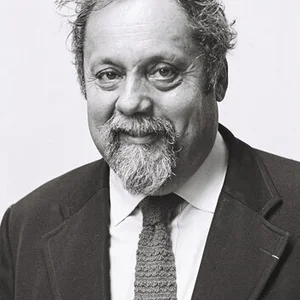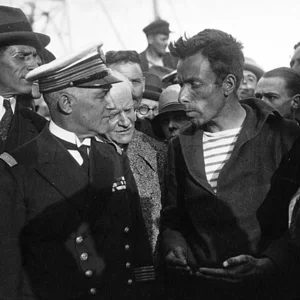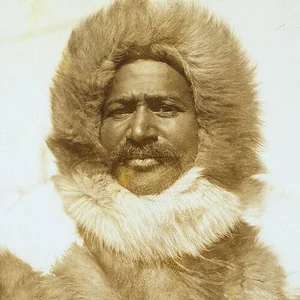

African-American explorer and companion of Robert Peary on the 1909 North Pole expedition. He was most likely the first man to reach the geographic North Pole, arriving a few minutes ahead of Peary.
Matthew Henson(1866 — 1955)
Matthew Henson
États-Unis
9 min read
Frequently asked questions
Key Facts
- 1866: Born in Charles County, Maryland
- 1909: Takes part in the Peary expedition and most likely reaches the North Pole first
- 1937: Admitted to the Explorers Club after decades of racial exclusion
- 1988: Reinterred with honors at Arlington National Cemetery, alongside Peary
- 2000: Congressional Gold Medal awarded posthumously
Works & Achievements
An autobiographical account in which Henson describes his multiple Arctic expeditions and his central role in the conquest of the North Pole. It is one of the rare firsthand testimonies from an African-American explorer of that era, and a valuable document in the history of polar exploration.
Henson's most celebrated expedition, which resulted in the probable attainment of the geographic North Pole on April 6, 1909. Henson played a decisive role: building the sleds, communicating with the Inuit guides, and leading the dog teams during the final push.
Over these seven preparatory expeditions, Henson refined his Arctic survival techniques and Inuit skills, laying the groundwork for the ultimate success of 1909. These missions also made it possible to map regions of the Far North that were then unknown to Western geographers.
Through his mastery of Inuktitut and his long immersion within Inuit communities, Henson assembled a unique body of observations on the hunting, construction, and navigation techniques of these peoples. This material, scattered throughout his writings, represents a scientific contribution that is often overlooked.
Anecdotes
Orphaned at the age of seven, Matthew Henson set sail at twelve as a cabin boy aboard the merchant ship Katie Hines. Captain Childs took him under his wing and taught him navigation, geography, and reading — giving this boy without a family an education he could never have received otherwise.
During the Arctic expeditions, Henson learned the Inuit language, Inuktitut, and mastered the art of driving dog sled teams better than any other member of the crew. The Inuit gave him the nickname Mahri-Pahluk, meaning 'Matthew the Kind', a testament to the deep respect they held for him and one that set him clearly apart from other Western explorers.
On April 6, 1909, Henson was likely the first human being to set foot exactly at the geographic North Pole, arriving approximately forty-five minutes ahead of Peary. He planted the expedition's flag in the ice, but it was Peary who, in his journal, claimed the glory of the discovery for himself, deliberately pushing his companion into the background.
Back in the United States, Henson was largely ignored by the press and scientific institutions due to the racial segregation then in force. For twenty-three years, he worked as a simple clerk at the New York Customs House, nearly forgotten by everyone, before belated recognition of his achievements was finally granted in the last years of his life.
In 1937, at the age of seventy-one, Henson became the first Black man admitted to the Explorers Club of New York, one of the most prestigious exploration organizations in the world. In 1954, a few months before his death, he was received at the White House by President Eisenhower — a symbolic but terribly overdue acknowledgment of his contributions to polar exploration.
Primary Sources
I was in the lead that had overshot the mark a couple of miles. We went back then and I could see that my footprints had been the first at the spot.
The Pole at last. The prize of three centuries. My dream and goal for twenty years. Mine at last!
Henson, the most efficient dog driver among the Eskimos and members of the expedition, was indispensable to the success of the polar journey.
I have been to the top of the world and I have seen it. No man of any race has the right to deny what I have seen and what I have done in the service of exploration.
Key Places
The birthplace of Matthew Henson in 1866, in a state still bearing the scars of slavery and the tensions of Reconstruction. His humble origins in the rural South stand in stark contrast to the heights he would reach during his polar explorations.
The starting point of the final, decisive expedition toward the North Pole in 1909. Henson and Peary organized the last stages of their advance across the Arctic ice pack from this forward camp.
On April 6, 1909, Henson was likely the first person to set foot on this most extreme point on Earth — the culmination of a lifetime of expeditions and sacrifice. This place symbolizes the ultimate frontier of polar exploration in the early twentieth century.
Henson spent most of his adult life in New York, particularly in Harlem, where he worked as a federal customs clerk for twenty-three years. It was in this city that he died in 1955, having gradually received recognition for his remarkable achievements.
In 1988, Matthew Henson's remains were transferred to Arlington National Cemetery and reinterred with full military honors — a symbol of the posthumous recognition granted to the explorer by the American nation.
Typical Objects

Henson was more skilled than anyone at driving Inuit dog teams, the only effective means of transport on the Arctic ice. He built and repaired the sleds himself using techniques learned from his Inuit companions.

Through his training with the Inuit, Henson wore survival garments made entirely from Arctic animal skins, far better suited to extreme temperatures than the Western equipment of the time.

Henson learned to hunt seal and polar bear with the traditional Inuit harpoon, a vital skill for feeding expedition members during the long crossings of the ice pack.

These precision instruments made it possible to calculate latitude and find direction in the vast white expanse of the Arctic. Henson used them to measure the expedition's progress and verify their position relative to the Pole.

A survival ration made from dried meat mixed with animal fat, pemmican was the expedition's staple food. Henson carefully managed these supplies, whose precise rationing determined the success or failure of successive attempts to reach the Pole.

These tools allowed the team to cross broken ice fields known as hummocks and make progress over extremely rugged terrain. Mastery of this equipment, combined with Inuit techniques, enabled Henson to guide the group through the most difficult passages.
School Curriculum
Vocabulary & Tags
Key Vocabulary
Tags
Daily Life
Morning
During polar expeditions, Henson rose before dawn to feed the sled dogs and check the harnesses. He then prepared the day's equipment with the Inuit guides, assessing ice conditions and deciding on the route to take in order to avoid areas of broken ice.
Afternoon
Days of progress across the ice pack sometimes lasted sixteen hours in the polar summer, making the most of the permanent sunlight. Henson often led the advance group, drawing on his navigation skills and knowledge of Arctic terrain to forge a path through the chaotic pressure ridges that slowed their push toward the Pole.
Evening
At the end of the day, Henson and the Inuit would build igloos where the entire team could warm up and sleep. He prepared meals from pemmican or freshly hunted seal meat, then repaired damaged sleds before falling asleep in his fur sleeping bags, ready for another day of marching.
Food
On expeditions, the diet relied mainly on pemmican, hardtack, and seal or polar bear meat hunted along the way. Henson had adopted Inuit eating habits and sometimes ate meat raw or barely cooked, which supplied the fats and vitamins essential for survival in the Far North.
Clothing
Henson wore garments made entirely using Inuit techniques: caribou-skin anoraks and trousers, and sealskin mittens and boots waterproofed with animal fat. This outfit, far more effective than European gear, allowed him to endure temperatures as low as fifty degrees below zero Celsius.
Housing
During expeditions, Henson lived in igloos he built himself, reinforced Arctic tents, or aboard the ship *Roosevelt*, which served as a forward base. Back in New York, he lived in a modest apartment in Harlem with his wife Lucy Ross, far from the frozen world that had defined most of his life as an explorer.
Historical Timeline
Period Vocabulary
Liens externes & ressources
Références
Œuvres
A Negro Explorer at the North Pole
1912
Huitième expédition arctique Peary-Henson — atteinte du pôle Nord
1909
Premières expéditions arctiques au Groenland avec Peary
1891-1906
Contributions ethnographiques sur la culture inuite
1891-1909