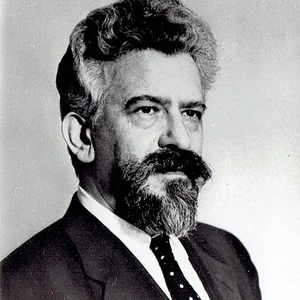
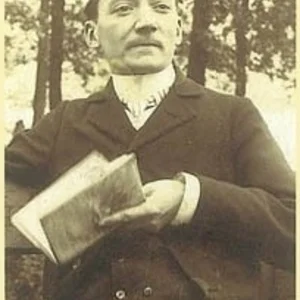
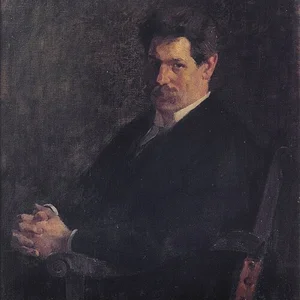
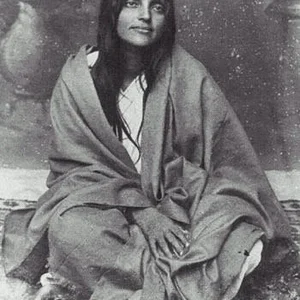
Mirra Alfassa (1878-1973), known as “the Mother,” was the spiritual collaborator of Sri Aurobindo and the leader of the Pondicherry ashram. In 1968 she founded the utopian city of Auroville, near Pondicherry in India.
Mother Mirra Alfassa
Mirra Alfassa, known as “the Mother”
5 min read
Frequently asked questions
Key Facts
- Born in Paris on 21 February 1878 into a family of Sephardic Jewish origin
- Settled permanently in Pondicherry in 1920 alongside Sri Aurobindo
- Took over the leadership of Sri Aurobindo's ashram from 1926 onward
- Founded the international city of Auroville on 28 February 1968
- Died in Pondicherry on 17 November 1973
Works & Achievements
A collection of her intimate spiritual notations, which became a reference text of integral yoga.
A philosophical review co-founded with Sri Aurobindo and Paul Richard, in which Aurobindo's major works first appeared.
Talks given to students and disciples, addressing education, yoga and the inner life.
A school founded at the ashram, experimenting with an “integral education” of the body, the mind and the spirit.
The creation of an international city meant to achieve human unity beyond nations and religions.
A golden globe-temple at the centre of Auroville, whose inner architecture she dictated as a place of concentration.
Thirteen volumes of conversations gathered by Satprem, a journal of her experiences on the transformation of the body.
Anecdotes
Born in Paris in 1878 into a Sephardic Jewish family, Mirra Alfassa was first an accomplished artist: she painted, played the organ, and frequented the Parisian studios, even exhibiting at the Salon of the Société Nationale des Beaux-Arts before turning toward spirituality.
In 1914, during her first stay in Pondicherry, she met **Sri Aurobindo** and noted in her diary that she recognized in him the master she had seen in visions for years; this meeting decided the rest of her life.
Every morning at the ashram, hundreds of disciples gathered beneath her balcony for the “balcony darshan”: the Mother would appear for a few minutes in silence, a simple gaze the community regarded as a blessing.
Passionate about flowers, she gave “spiritual names” to hundreds of species (such as “Aspiration” for one variety and “Tenderness” for another) and handed them out daily to visitors as silent messages.
In **1968**, at the age of 90, she founded **Auroville**, the “city of dawn”: at the inaugural ceremony, young people from 124 countries placed a handful of soil from their nation into a lotus-shaped urn.
Primary Sources
Let Thy will be done and not mine. Thou art the light, Thou art the guide, Thou art the path and the goal.
The aim of life is not to become rich or powerful, but to discover and manifest the divine hidden within each of us.
The body has an unlimited capacity for progress if one knows how to put it in contact with the force that creates the universe.
Auroville belongs to nobody in particular. Auroville belongs to humanity as a whole.
Key Places
Mirra Alfassa's birthplace, where she grew up, trained as a painter, and frequented artistic and spiritual circles.
Where she stayed with Max Théon, deepening her study of occultism and inner experiences.
She lived here from 1916 to 1920 during the First World War before returning to India.
The center of her spiritual life from 1920 onward; she led the community there for nearly half a century and died there in 1973.
The universal utopian city she founded in 1968 near Pondicherry, intended to embody human unity.
Typical Objects

The Mother gave a spiritual meaning to hundreds of flowers, which she handed out as silent messages to disciples and visitors.

An accomplished musician, the Mother played the organ, and her meditative improvisations were recorded and listened to by the community.

At the ashram, the Mother wore saris and light-colored or symbolically colored garments, associated with purity and aspiration.

An artist by training, she painted from her youth in Paris and continued to draw, exhibiting at the Salon of the Société Nationale des Beaux-Arts.

The Mother designed the Matrimandir, a golden sphere housing a meditation hall at the heart of Auroville, whose interior architecture she detailed precisely.

Attentive to the body's progress, the Mother played tennis into old age and organized sporting activities for the young people of the ashram.
School Curriculum
Vocabulary & Tags
Key Vocabulary
Tags
Daily Life
Morning
The Mother rose early and devoted her mornings to meditation, to correspondence with her disciples, and to the distribution of flowers carrying spiritual meanings. The “balcony darshan” gathered the community for a few minutes of silent presence.
Afternoon
Her afternoons were filled with individual interviews, the running of the ashram, and, for many years, physical activities such as tennis. She kept a close eye on the school and on the young people of the community.
Evening
In the evening, she gave talks (the Entretiens), played the organ during meditative sessions, or withdrew into silence. Her musical improvisations were heard as a form of spiritual support.
Food
Her diet was frugal and vegetarian, in keeping with ashram life in India, consisting of rice, vegetables, and fruit. She paid great attention to simplicity and to the discipline of the body.
Clothing
She wore saris and light-colored garments, sometimes chosen for their symbolic color. Her attire, simple and neat, reflected the ashram's ideal of purity and aspiration.
Housing
She lived in the buildings of the Sri Aurobindo Ashram, in the heart of Pondicherry, in plain apartments surrounded by gardens. These places were both her residence and the nerve center of the community.
Historical Timeline
Period Vocabulary
Liens externes & ressources
Références
Œuvres
Prières et Méditations
1912-1917
Revue Arya
1914
Entretiens (Questions et Réponses)
1950-1958
Centre international d'éducation Sri Aurobindo
1943-1951
Fondation d'Auroville
1968
Conception du Matrimandir
1970-1971
L'Agenda de Mère
1951-1973