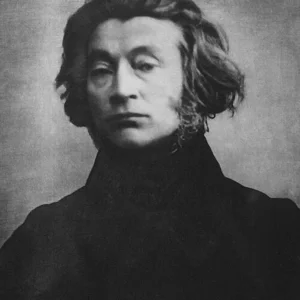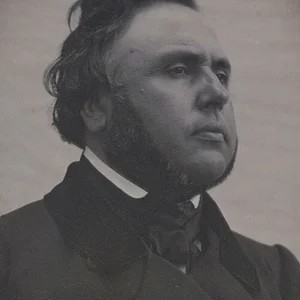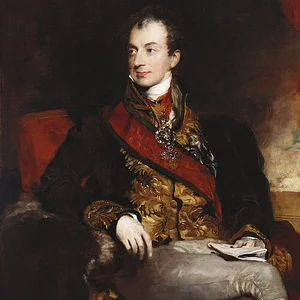

Austrian statesman and diplomat, Chancellor of the Austrian Empire. The architect of the Congress of Vienna (1815), he was the central figure of the conservative European order after the fall of Napoleon, a defender of the balance of power and an opponent of liberal and national revolutions.
Metternich(1773 — 1859)
Klemens Wenzel von Metternich
Saint-Empire romain germanique, empire d'Autriche
6 min read
Frequently asked questions
Famous Quotes
« When France sneezes, Europe catches a cold»
« Italy is a geographical expression»
Key Facts
- Becomes Foreign Minister of the Austrian Empire in 1809
- Plays a central role at the Congress of Vienna (1814-1815) to reorganize Europe after Napoleon
- Mastermind of the Holy Alliance and the system for repressing liberal movements (the Metternich system)
- Appointed Chancellor of Austria in 1821
- Forced to resign and go into exile during the 1848 revolution in Vienna
Works & Achievements
Reorganization of Europe after Napoleon, of which Metternich was the principal architect. He established borders and a balance of power that would partly endure until 1914.
Coalition of the conservative monarchies (Austria, Prussia, Russia) intended to maintain order and to stifle liberal and national revolutions across Europe.
Measures for press censorship and surveillance of universities within the German Confederation, a symbol of Metternich's repressive policy.
A series of meetings of the great powers to collectively resolve European crises and coordinate intervention against revolutions.
Network of espionage and mail interception placed at the service of political control, which became a model for the police state of the Restoration.
Posthumous collection of his papers and recollections, a major source for understanding his conservative thought and the diplomacy of his time.
Anecdotes
During the Congress of Vienna (1814-1815), Metternich organized an unbroken succession of balls, hunts, and concerts to entertain the sovereigns and diplomats. A prince of the day summed up the atmosphere in a phrase that has remained famous: “The congress dances, but it does not march.” Behind these festivities, Metternich was in fact conducting tough negotiations.
Metternich so detested revolutionary ideas that he set up a genuine surveillance system: his “black cabinet” in Vienna secretly opened the mail of diplomats and suspects, copied it, then carefully resealed it before forwarding it. Very few letters escaped his spies.
He is credited with the scathing remark: “Italy is merely a geographical expression.” For Metternich, there was no Italian nation but simply a collection of states, several of them under Austrian influence. This phrase scandalized the Italian patriots who dreamed of unity.
In March 1848, when revolution broke out in the streets of Vienna, the all-powerful chancellor, then 74 years old, was forced to resign and flee in disguise. He took refuge in England — he who had dominated European diplomacy for nearly forty years, driven into exile by the peoples he had fought so hard against.
In June 1813, Napoleon and Metternich had a stormy meeting lasting several hours in Dresden. According to Metternich, the emperor, furious at being spoken to of peace, threw his hat to the ground; the Austrian chancellor refused to pick it up, a sign that Austria would not bend.
Primary Sources
The Powers which signed the Treaty of Paris... having expressed the desire to combine in a single transactional instrument the various provisions agreed upon among them, in order to give them the character of a definitive act.
The political repose of Europe rests on the maintenance of the balance between the great powers and on respect for existing treaties.
No publication appearing in the form of daily sheets or pamphlets may be sent to print without the prior consent of the authorities of the State.
The three contracting monarchs will remain united by the bonds of a true and indissoluble brotherhood, and, regarding themselves as fellow countrymen, they will on every occasion lend one another assistance and aid.
Key Places
Rhineland city where Metternich was born in 1773, then part of the Holy Roman Empire.
Capital of the Austrian Empire where Metternich held power for nearly forty years and where he died in 1859. Setting of the Congress of 1814-1815.
Institution where the young Metternich studied law and diplomacy in the late 1780s.
Saxon city where the decisive and stormy meeting between Metternich and Napoleon took place in June 1813.
Metternich's refuge after his flight from Vienna during the revolution of 1848.
Rhineland wine estate given to Metternich in 1816, famous for its Riesling and a symbol of his roots in the landed aristocracy.
Typical Objects

The diplomat's everyday tool, used to write the immense correspondence and secret dispatches that kept European diplomacy running.

A seal used to authenticate and close official letters. A symbol of the State's authority and a guarantee of the secrecy of correspondence.

An official document recording agreements between powers, such as the Final Act of Vienna. A cornerstone of the European order envisioned by Metternich.

A small precious box holding snuff tobacco, a prestige item often given as a diplomatic gift between sovereigns and ministers in the 19th century.

Orders and decorations, including the Order of the Golden Fleece, worn at official ceremonies. They displayed one's rank and loyalty to the sovereign.

A horse-drawn carriage that made long journeys between Vienna, Paris and the congress cities possible. Essential to a diplomacy conducted in person.
School Curriculum
Vocabulary & Tags
Key Vocabulary
Daily Life
Morning
Metternich devoted his mornings to reading the abundant diplomatic correspondence and the reports from his spies. Methodical, he annotated the dispatches arriving from all over Europe and dictated his replies to his secretaries.
Afternoon
His afternoons were taken up with audiences, councils with the emperor, and meetings with foreign ambassadors. There he displayed his famous art of conversation and political maneuvering.
Evening
In the evening, the chancellor entertained guests in the aristocratic salons of Vienna and hosted or attended balls and concerts. For him, these social occasions were genuine instruments of diplomatic work.
Food
At the table of a great Austrian lord, refined cuisine inspired by French and Viennese traditions was served, accompanied by fine wines. Metternich, owner of the Johannisberg estate, was especially fond of the great Rieslings of the Rhine.
Clothing
He wore the elegant attire of the early-nineteenth-century nobility: a frock coat or embroidered coat, waistcoat, breeches or trousers, and for ceremonies the court uniform adorned with his decorations, such as the Order of the Golden Fleece.
Housing
Metternich lived in vast residences and palaces in Vienna and owned several estates, including Johannisberg Castle on the Rhine. These dwellings reflected the splendor of the high imperial aristocracy.
Historical Timeline
Period Vocabulary
Liens externes & ressources
Références
Œuvres
Congrès de Vienne
1814-1815
Sainte-Alliance et système de Metternich
1815
Décrets de Karlsbad
1819
Système des congrès (Aix-la-Chapelle, Troppau, Laybach, Vérone)
1818-1822
Cabinet noir et police de surveillance
années 1810-1840
Mémoires, documents et écrits divers
publiés 1880-1884