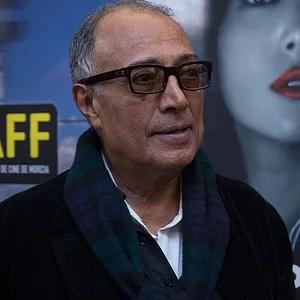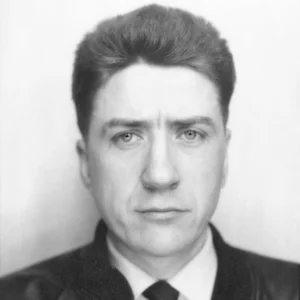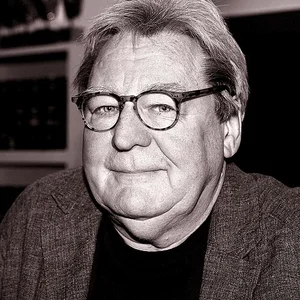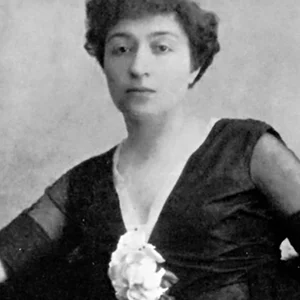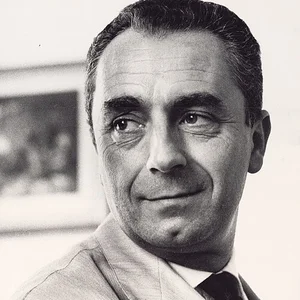

A major Italian filmmaker of the post-war era, Michelangelo Antonioni (1912-2007) reinvented the language of cinema by exploring the inability to communicate and the existential emptiness of modern life. His films break with classical storytelling in favor of dead time and visual composition.
Michelangelo Antonioni(1912 — 2007)
Michelangelo Antonioni
Italie, royaume d'Italie
7 min read
Frequently asked questions
Key Facts
- Born in 1912 in Ferrara (Italy), died in 2007 in Rome
- Directed L'Avventura in 1960, booed and then awarded a prize at the Cannes Film Festival, a manifesto for a new cinematic language
- Created the “trilogy of incommunicability” with L'Avventura (1960), La Notte (1961) and L'Eclisse (1962)
- Shot Blow-Up in 1966, winning the Palme d'Or at Cannes in 1967, his first film in English
- Received an Honorary Oscar for his lifetime achievement in 1995
Works & Achievements
Antonioni's first feature-length fiction film, already focused on a couple and the unease of feelings within the modern bourgeoisie.
Booed and then awarded a prize at Cannes, this film about a disappearance that is never solved opens the “trilogy of incommunicability” and reveals the actress Monica Vitti.
The second part of the trilogy, it follows a couple in crisis over the course of a single night in Milan. Golden Bear at Berlin.
The conclusion of the trilogy, famous for its final sequence almost devoid of characters, a pure portrait of the emptiness of the modern city.
Antonioni's first colour film, where the painting of the sets conveys the anguish of facing the industrial world. Golden Lion at Venice.
Shot in London, this film about a photographer and an uncertain murder won the Palme d'Or at Cannes in 1967 and became a cult classic.
Shot in the United States, this film about rebellious youth and the consumer society marks his American period.
Starring Jack Nicholson, the story of a journalist who swaps his identity with a dead man; a high point of his cinema of wandering and doubt.
Anecdotes
At Cannes in 1960, the screening of "L'Avventura" turned into a scandal: the audience whistled and jeered at this film in which a young woman vanishes, is never found, and the mystery is never solved. A few months later, the very same film was hailed as a masterpiece, and a group of filmmakers signed a statement to defend Antonioni. The jury ultimately awarded him a Special Prize.
In 1966, Antonioni shot "Blow-Up" in London, at the height of the Beatles era and "swinging" fashion. The story of a photographer who believes he has captured a murder in one of his photos fascinated the whole world, and the film won the Palme d'Or at Cannes in 1967. It is one of his rare English-language films.
In 1985, a stroke left him partly paralyzed and unable to speak. Yet he kept making films with assistance, indicating his choices through gestures and drawings. In this way he co-directed "Beyond the Clouds" in 1995 with the German filmmaker Wim Wenders.
In 1995, at over 80 years old, he received an Honorary Oscar for his lifetime achievement, presented by the actor Jack Nicholson. A striking detail: the statuette was once stolen and then recovered. Antonioni, who could no longer speak, accepted the award without a word, standing beside his wife.
Antonioni died on July 30, 2007, the same day as another giant of European cinema, the Swede Ingmar Bergman. The coincidence struck the film world: two masters of modernity, who had left their mark on the 1960s, passed away within hours of each other.
Primary Sources
Today the world is dominated by a rigid morality that we know to be archaic, and yet we abide by it. Modern man bears the weight of a morality he no longer has the strength to uphold.
I begin a film without knowing exactly how I am going to develop it. I cannot bear the idea of having everything planned in advance; I want to leave room for what reality brings me during the shoot.
All these stories are merely starting points; they are images that surfaced one day and that I never filmed, but which already contain the substance of a film.
I wanted to paint the film the way one paints a picture. I even had the trees, the grass, and the street repainted to obtain exactly the colors that expressed my character’s state of mind.
Key Places
City on the Po Plain where Antonioni was born in 1912. Its mists and deserted streets would leave a lasting mark on his taste for empty, silent landscapes.
Here Antonioni studied economics and business before turning to cinema and film criticism.
The Italian capital, where the film industry centers around the Cinecittà studios. Antonioni worked here for most of his career and died here in 2007.
Site of the scandal surrounding “L'Avventura” in 1960, then of the triumph of “Blow-Up”, winner of the Palme d'Or in 1967.
The setting of “Blow-Up” (1966), a film that captures the buzz of British youth and fashion in the 1960s.
The California desert that gives its title to “Zabriskie Point” (1970), Antonioni's film about rebellious American youth.
Typical Objects

The filmmaker's central tool, with which Antonioni shot long static takes or very slow movements. He used it to stretch time and capture the emptiness between characters.

The medium on which images were recorded before the digital era. With *Red Desert*, Antonioni used color like a painter, going so far as to repaint the real sets.

A shooting notebook where dialogue and instructions were written. Antonioni deliberately left room for improvisation and altered his shots during filming.

At the heart of *Blow-Up*, the fashion photographer's camera turns into an investigation: by enlarging his shots, he believes he has uncovered a crime. An emblematic object of the gaze and of doubt.

Antonioni literally had grass, trees, or walls painted to obtain the exact hues he wanted on screen. For him, cinema became a visual art.

An American film award that Antonioni received in 1995 for his lifetime achievement. Deprived of speech, he accepted it in silence — a symbol of belated worldwide recognition.
School Curriculum
Vocabulary & Tags
Key Vocabulary
Daily Life
Morning
A methodical mind, Antonioni loved to prepare his shooting days meticulously. In the morning, he would study his framing, scout the light and discuss the composition of each shot with his director of photography, like a painter before his canvas.
Afternoon
The afternoon was devoted to the actual filming. Demanding, he could reshoot a scene a great many times and keep his actors waiting at length, seeking the right attitude rather than a spectacular effect.
Evening
In the evening, he would watch the footage shot that day (the *rushes*), think about the editing and read. He also moved in Italian intellectual and artistic circles, exchanging ideas with writers, painters and other filmmakers.
Food
Antonioni shared the diet of the Italy of his time: Mediterranean cuisine based on pasta, vegetables, olive oil and wine. On set, meals were often eaten quickly, to the rhythm of the work.
Clothing
He took care of his appearance with a sober, understated elegance: well-cut suits, light-coloured shirts, in the refined style of the cultivated Italian bourgeoisie of the 1950s and 1960s.
Housing
He lived mainly in Rome, in modern, light-filled apartments tastefully furnished. The way he inhabited his spaces reflected his attraction to the clean lines and spare settings found in his films.
Historical Timeline
Period Vocabulary
Liens externes & ressources
Références
Œuvres
Chronique d'un amour (Cronaca di un amore)
1950
La Nuit (La Notte)
1961
L'Éclipse (L'Eclisse)
1962