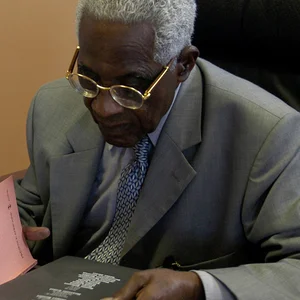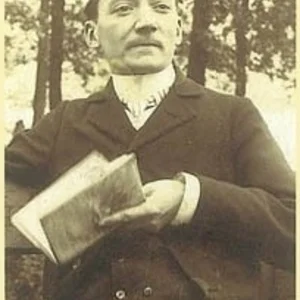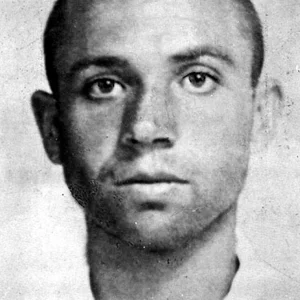

Spanish poet and playwright born in 1910 in Orihuela into a modest family of goatherds. A committed supporter of the Republican side during the civil war, he died of tuberculosis in 1942 in Franco's prisons. He embodies the popular, militant poetry of his generation.
Miguel Hernández(1910 — 1942)
Miguel Hernández
Espagne
6 min read
Frequently asked questions
Famous Quotes
« Llegó con tres heridas: la del amor, la de la muerte, la de la vida.»
« Tristes guerras si no es amor la empresa.»
Key Facts
- Born on 30 October 1910 in Orihuela, a self-taught man from a peasant background
- Published 'El rayo que no cesa' in 1936, the major collection of his poetic maturity
- Joined the Republican army during the civil war (1936-1939)
- Wrote 'Nanas de la cebolla' from prison, addressed to his son
- Died of tuberculosis on 28 March 1942 in the Alicante prison
Works & Achievements
First collection, composed of royal octaves with a baroque inspiration (Góngora). It reveals the virtuosity of the young self-taught poet.
A collection of loving and despairing sonnets that established his reputation. It contains the famous Elegía to Ramón Sijé.
Committed and militant poetry written during the civil war, including Vientos del pueblo me llevan and Aceituneros. A manifesto of poetry in the service of the people.
A collection marked by the bitterness of war and suffering, written in the final days of the conflict.
A posthumous collection written partly in prison, of great intimate intensity. It contains the Nanas de la cebolla.
A verse play defending peasants against injustice. It bears witness to his social commitment.
Anecdotes
As a child, Miguel left school around the age of fourteen to herd his father's goats in the countryside around Orihuela. Between flocks, he would secretly read Góngora, Garcilaso and the Bible, and composed his first verses. He was nicknamed “the goatherd poet” when he began to publish.
His childhood friend Ramón Sijé, who had encouraged him to write, died in 1935 at just 22 years old. Devastated, Miguel dedicated to him the “Elegía,” one of the most famous elegiac poems in the Spanish language, in which he declares himself ready to become “the weeping gardener” of the earth that covers his friend.
In prison in 1939, he received a letter from his wife Josefina saying that she and their baby had nothing to eat but bread and onion. From this detail were born the deeply moving “Nanas de la cebolla” (Onion Lullabies), a lullaby written for a son he would barely see grow up.
Sentenced to death and then pardoned, he was transferred from prison to prison. Stricken with tuberculosis, he died in Alicante on 28 March 1942, at just 31 years old. It is said that his eyes remained open after his death and that a fellow inmate had to close them.
Before he died, he is said to have carved farewell verses on the wall of his cell: “Adiós, hermanos, camaradas, amigos: despedidme del sol y de los trigos” (Farewell brothers, comrades, friends: bid me goodbye to the sun and the wheat fields).
Primary Sources
Yo quiero ser llorando el hortelano / de la tierra que ocupas y estercolas, / compañero del alma, tan temprano.
Vientos del pueblo me llevan, / vientos del pueblo me arrastran, / me esparcen el corazón / y me aventan la garganta.
La cebolla es escarcha / cerrada y pobre: / escarcha de tus días / y de mis noches.
No cesará este rayo que me habita / el corazón de exasperadas fieras / y de fraguas coléricas y herreras / donde el metal más fresco se marchita.
Key Places
The poet's birthplace, in the province of Alicante. He grew up here, herded goats, and discovered poetry.
The capital where Hernández settled in the 1930s and mingled with the Generation of '27. The hub of Republican literary and political life.
The Andalusian region of olive groves that he celebrates in the poem Aceituneros (“Andaluces de Jaén”), which became a local anthem.
The site of his final imprisonment, where he died of tuberculosis on 28 March 1942. He wrote his last verses here.
Typical Objects

The curved staff of the shepherd who tended the goat herds around Orihuela. It was while watching over the animals that young Miguel composed his first verses.

Books of classical Spanish poetry that the self-taught poet read avidly between pastures. They shaped his baroque yet popular writing.

Canvas-and-rope shoes worn by Spanish peasants and workers. They symbolize the poet's humble origins.

The humble food of the poor, which became the heart of the Nanas de la cebolla. It embodies the hunger and the tenderness of a father imprisoned, writing for his child.

Notebooks and loose sheets on which Hernández wrote, in detention, the poems of the Cancionero y romancero de ausencias. His manuscripts were saved and handed down after his death.

Blue canvas overalls worn by Republican volunteers and militiamen during the civil war. Hernández put them on as a poet-soldier of the Popular Front.
School Curriculum
Vocabulary & Tags
Key Vocabulary
Daily Life
Morning
As a teenager in Orihuela, Miguel rises at dawn to lead the herd of goats up into the hills. He carries a hunk of bread and a book hidden in his satchel to read between one pasture and the next.
Afternoon
The afternoon is spent watching over the animals under the sun of the Spanish Levant. It is there, lying in the grass, that he scribbles verses and memorizes poems by Góngora and Lope de Vega.
Evening
In the evening, back in the village, he meets up with his friend Ramón Sijé and the literary circle of Orihuela. They discuss poetry and read aloud in the back room of a bookshop.
Food
His diet is that of the modest families of southeastern Spain: bread, onion, olive oil, vegetables, goat cheese, and occasionally a little meat. In prison, food becomes scarce and insufficient.
Clothing
Simple peasant clothing: canvas trousers, a shirt, a scarf, and espadrilles (alpargatas). During the war, he wears the blue of a Republican militiaman.
Housing
He first lives in a modest house in Orihuela adjoining the animal pen. His life ends in the harshness of prison cells, cold and overcrowded.
Historical Timeline
Period Vocabulary
Liens externes & ressources
Références
Œuvres
Perito en lunas
1933
El rayo que no cesa
1936
Viento del pueblo
1937
El hombre acecha
1939
Cancionero y romancero de ausencias
1938-1941
El labrador de más aire
1937