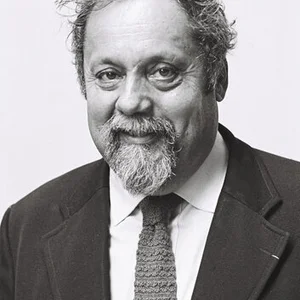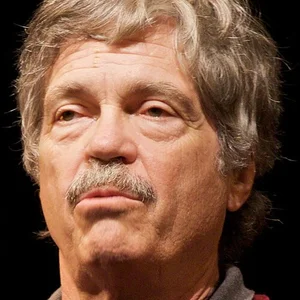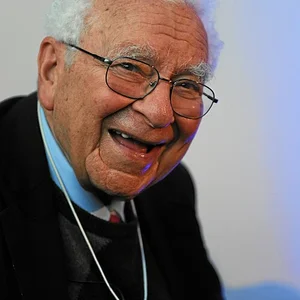

Murray Gell-Mann was an American physicist, a theorist of particle physics. He proposed the existence of quarks, the elementary building blocks of matter, and received the Nobel Prize in Physics in 1969.
Murray Gell-Mann(1929 — 2019)
Murray Gell-Mann
États-Unis
6 min read
Frequently asked questions
Key Facts
- Born on September 15, 1929, in New York, died on May 24, 2019, in Santa Fe
- Introduced the concept of “strangeness” in 1953 to classify particles
- Proposed the “Eightfold Way” in 1961, a classification of elementary particles
- Postulated the existence of quarks in 1964, the constituents of protons and neutrons
- Received the Nobel Prize in Physics in 1969 for his work on elementary particles
Works & Achievements
A new quantum property introduced to explain the behavior of “strange” particles and their unexpectedly long lifetime.
A classification system for particles based on the SU(3) mathematical symmetry, comparable to a periodic table of particles.
His theory predicted a still-unknown particle, discovered experimentally in 1964 — a striking confirmation of the model.
A revolutionary proposal that protons and neutrons are made up of more elementary particles, called quarks, carrying fractional charges.
Awarded for his contributions to the classification of elementary particles and their interactions.
Work on the theory of the strong force that binds quarks together, through the exchange of gluons and the notion of “color.”
A popular science book in which he explores the links between the simple laws of physics and the complexity of the living world.
Anecdotes
In 1964, Murray Gell-Mann proposed that protons and neutrons are made of even smaller particles. To name them, he borrowed a word invented by the writer James Joyce in *Finnegans Wake*: “Three quarks for Muster Mark!” And so quarks owe their name to a nearly unreadable novel.
Gell-Mann was a true child prodigy: he entered Yale University at just 15 years old. It is said that he sometimes corrected his professors' pronunciation, for he was passionate about linguistics and knew dozens of languages and dialects.
To classify the abundance of particles discovered in the 1950s, Gell-Mann invented in 1961 a system he humorously named the “Eightfold Way,” an expression borrowed from Buddhism. This arrangement into families of eight worked so well that it allowed him to predict a still-unknown particle.
In 1962, his theory predicted the existence of a never-observed particle, the omega-minus. Two years later, in 1964, physicists at the Brookhaven laboratory detected it exactly as predicted: a spectacular triumph that proved the soundness of his model.
Passionate about birds, ancient languages, and archaeology as much as physics, Gell-Mann co-founded in 1984 the Santa Fe Institute, a center dedicated to the study of complex systems, where biologists, economists, and physicists work together.
Primary Sources
It is assuming that the lowest baryon configuration gives just the representations 1, 8, and 10 that have been observed... A simpler and more elegant scheme can be constructed if we allow non-integral values for the charges.
We here propose that the strong interactions are invariant under a unitary symmetry group SU(3), which classifies the baryons and mesons into supermultiplets.
The quark is a mathematical entity proposed as a building block... whether they have an independent existence is a question that experiment must decide.
The word 'quark' came from a passage in Finnegans Wake by James Joyce: 'Three quarks for Muster Mark!'
Key Places
Birthplace of Murray Gell-Mann, where he grew up in a family of Jewish immigrants from Central Europe.
He entered at age 15 and earned his bachelor's degree in physics in 1948, revealing his precocious genius very early on.
He earned his doctorate in physics here in 1951, at just 21 years old.
The center of his career from 1955 onward, where he worked alongside Richard Feynman and developed his major theories on particles.
A research center on complex systems that he co-founded in 1984; he worked and lived there until his death.
Typical Objects

The theoretical physicist's everyday working tool, covered with equations and diagrams. It was here that Gell-Mann developed his symmetry models.

A hexagon-shaped chart classifying particles according to their properties. It revealed the hidden order of matter, like a periodic table of particles.

An enormous machine that hurls particles at very high speed to smash them apart and study their components. It was thanks to these machines that Gell-Mann's predictions were confirmed.

A gold medal awarded by the Royal Swedish Academy of Sciences. Gell-Mann received it in 1969 for his classification of elementary particles.

A detector filled with liquid where the passage of particles leaves trails of tiny bubbles. It was in such a device that the omega-minus was spotted in 1964.

The everyday vessel for the researcher's intuitions, calculations, and sketches. Gell-Mann, a true scholar, sometimes mixed physics notes with observations about languages or birds.
School Curriculum
Vocabulary & Tags
Key Vocabulary
Tags
Daily Life
Morning
The morning of a theoretical physicist like Gell-Mann often began at the office or at home, in front of sheets covered with calculations. He read scientific journals and discussed the latest discoveries from particle accelerators with his colleagues.
Afternoon
The afternoon was spent at Caltech, between seminars, exchanges at the blackboard, and lively debates, sometimes with Richard Feynman. This was the time for great insights and long discussions about the structure of matter.
Evening
In the evening, his curiosity reached far beyond physics: he studied languages, history, and archaeology, or went birdwatching. A great lover of conversation, he enjoyed dining while talking about a thousand scholarly subjects.
Food
Living in the prosperous America of the 20th century, he had access to a varied and abundant diet. Meals at universities and scientific conferences set the rhythm of his social life.
Clothing
Like the academics of his time, he wore a suit, shirt, and tie, the usual attire of professors and researchers in the mid-20th century. Glasses completed this intellectual's silhouette.
Housing
He lived in comfortable houses near his workplaces, in Pasadena, California, and later in Santa Fe, New Mexico, surrounded by books, journals, and objects brought back from his many travels.
Historical Timeline
Period Vocabulary
Liens externes & ressources
Références
Œuvres
Concept d'« étrangeté »
1953
La voie octuple (Eightfold Way)
1961
Prédiction de l'oméga-moins
1962
Le modèle des quarks
1964
Prix Nobel de physique
1969
Contributions à la chromodynamique quantique (QCD)
1973
Le Quark et le Jaguar
1994