 flip
flipKhao lam (ข้าวหลาม) — sticky rice cooked in bamboo
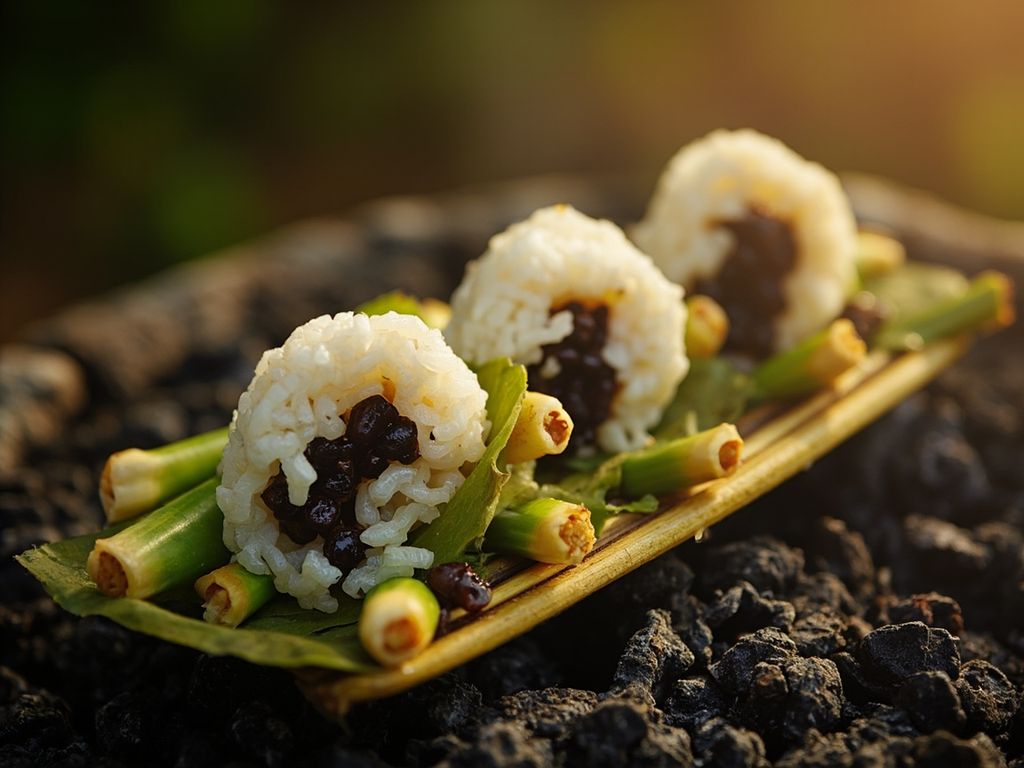
Khao lam (ข้าวหลาม) — sticky rice cooked in bamboo
Why this dish? Naresuan's armies marched through the forests of the central plain and northern mountains. Khao lam — sticky rice cooked directly in a bamboo segment cut in the forest — is the perfect field ration: the bamboo serves as container, pot, and packaging. The forest itself becomes the soldier's kitchen.
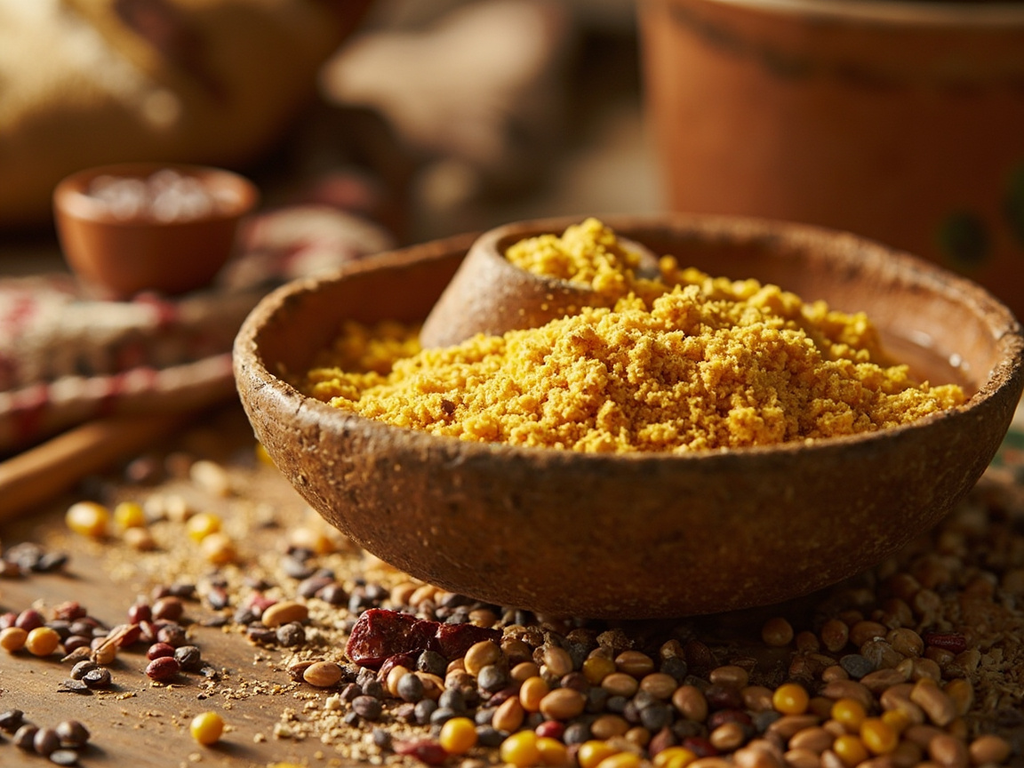
Sticky rice mixed with coconut milk and palm sugar, sealed inside a green bamboo tube and slowly cooked over embers. The bamboo perfumes the rice with a unique woody, herbaceous flavor. Once cooked, the tube is split open and the rice cylinder is eaten directly.
In the forest, when we march toward Nong Sarai, my men cut bamboo and slide in the rice with a little coconut. We lay the tubes in the campfire embers and sleep. By morning, the rice is cooked, fragrant with green wood, and each soldier carries his ration without bowl or basket. It is the forest that feeds and equips us. A good commander knows how to wage war with what the land gives him.
- •Sticky rice — enough to fill the tubes (base)
- •Fresh coconut milk — enough to soak the rice (creaminess)
- •Palm sugar — one piece per tube (sweetness)
- •Salt — a pinch (balance)
- •Black beans (optional) — a handful (protein garnish)
- •Fresh green bamboo tubes — several 30 cm sections (container and cooking vessel)
Khao lam (ข้าวหลาม) — sticky rice cooked in bamboo
Sticky rice mixed with coconut milk and palm sugar, sealed inside a green bamboo tube and slowly cooked over embers. The bamboo perfumes the rice with a unique woody, herbaceous flavor. Once cooked, the tube is split open and the rice cylinder is eaten directly.
Why this dish? Naresuan's armies marched through the forests of the central plain and northern mountains. Khao lam — sticky rice cooked directly in a bamboo segment cut in the forest — is the perfect field ration: the bamboo serves as container, pot, and packaging. The forest itself becomes the soldier's kitchen.
In the forest, when we march toward Nong Sarai, my men cut bamboo and slide in the rice with a little coconut. We lay the tubes in the campfire embers and sleep. By morning, the rice is cooked, fragrant with green wood, and each soldier carries his ration without bowl or basket. It is the forest that feeds and equips us. A good commander knows how to wage war with what the land gives him.
Ingredients (period version)
- Sticky rice — enough to fill the tubes (base)
- Fresh coconut milk — enough to soak the rice (creaminess)
- Palm sugar — one piece per tube (sweetness)
- Salt — a pinch (balance)
- Black beans (optional) — a handful (protein garnish)
- Fresh green bamboo tubes — several 30 cm sections (container and cooking vessel)
Ingredients
- Sticky rice — 300 g, soaked 4 h (base)
- Coconut milk — 200 ml (creaminess)
- Palm sugar or brown sugar — 3 tbsp (sweetness)
- Salt — 1/4 tsp (balance)
- Black beans (optional) — 50 g, soaked and pre-cooked (garnish)
- Banana leaves — 4 large leaves (wrapping (bamboo substitute))
Method
- Soak sticky rice in cold water for at least 4 hours, then drain.
- Mix drained rice with coconut milk, grated palm sugar, and salt. Let absorb for 15 minutes.
- If using black beans, stir them into the rice.
- Spread a banana leaf, place a portion of rice in the center. Roll into a tight cylinder and fold ends. Tie if necessary.
- Steam for 45 minutes to 1 hour, until rice is tender and sticky.
- Oven alternative: wrap cylinders in aluminum foil over the banana leaf and bake at 180°C for 50 minutes.
- Let cool slightly, open the leaf, and slice the rice cylinder into rounds. Serve warm or at room temperature.
How it was made : Khao lam is a cooking technique attested throughout mainland Southeast Asia for centuries. Green bamboo, cut between two nodes, forms a naturally watertight container. Placed in embers, it steam-cooks the rice while imparting a woody aroma. It was a typical cooking method for armies on the move and forest-dwelling populations, requiring no kitchen utensils.
The contemporary twist : Serve the rice rounds on a wooden board, accompanied by a slightly salted coconut cream dip, and sprinkled with toasted black sesame.
Sources : Penny Van Esterik, “Food Culture in Southeast Asia”, 2008, Greenwood Press · Naomi Duguid, “Hot Sour Salty Sweet: A Culinary Journey Through Southeast Asia”, 2000, Artisan
Naresuan · Charactorium