 flip
flipFestival Honey Bread with Dates and Nuts (Offering Shenes)
Festival Honey Bread with Dates and Nuts (Offering Shenes)
Why this dish? The cult of Aten, which Nefertiti promoted alongside Akhenaten, relied on immense offering tables covered with breads, fruits, and honey cakes exposed to the sun. These small sweet breads, inspired by offering cakes (shenes), evoke this gesture of devotion to the solar disk — without reproducing the sacred ritual.
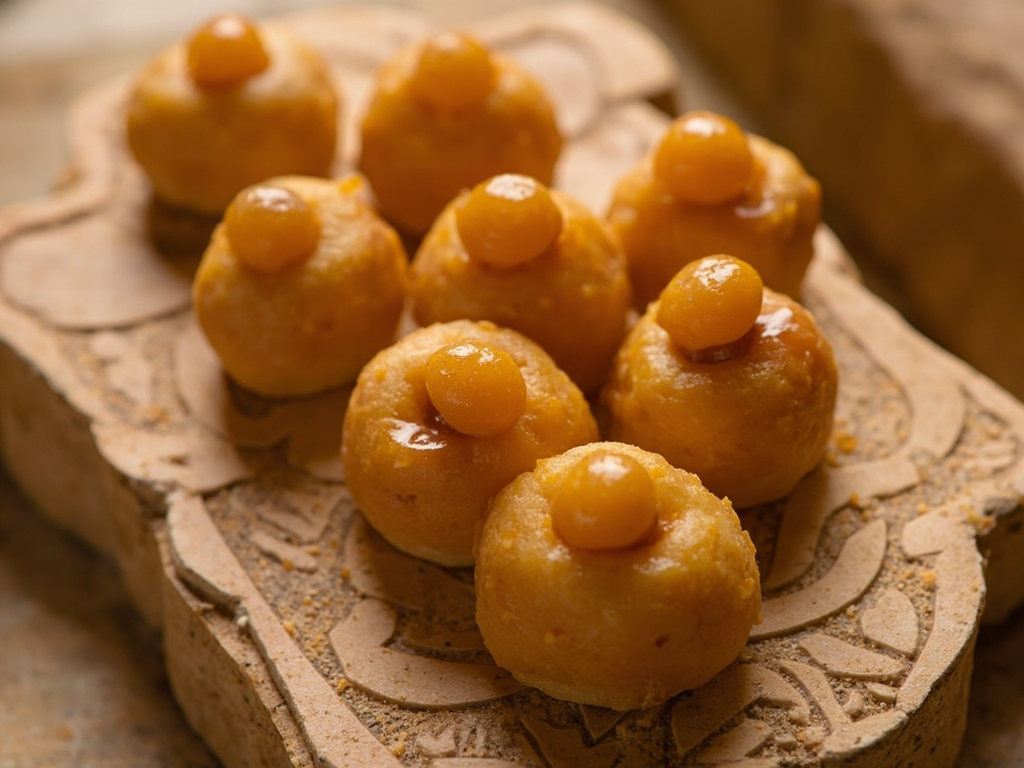
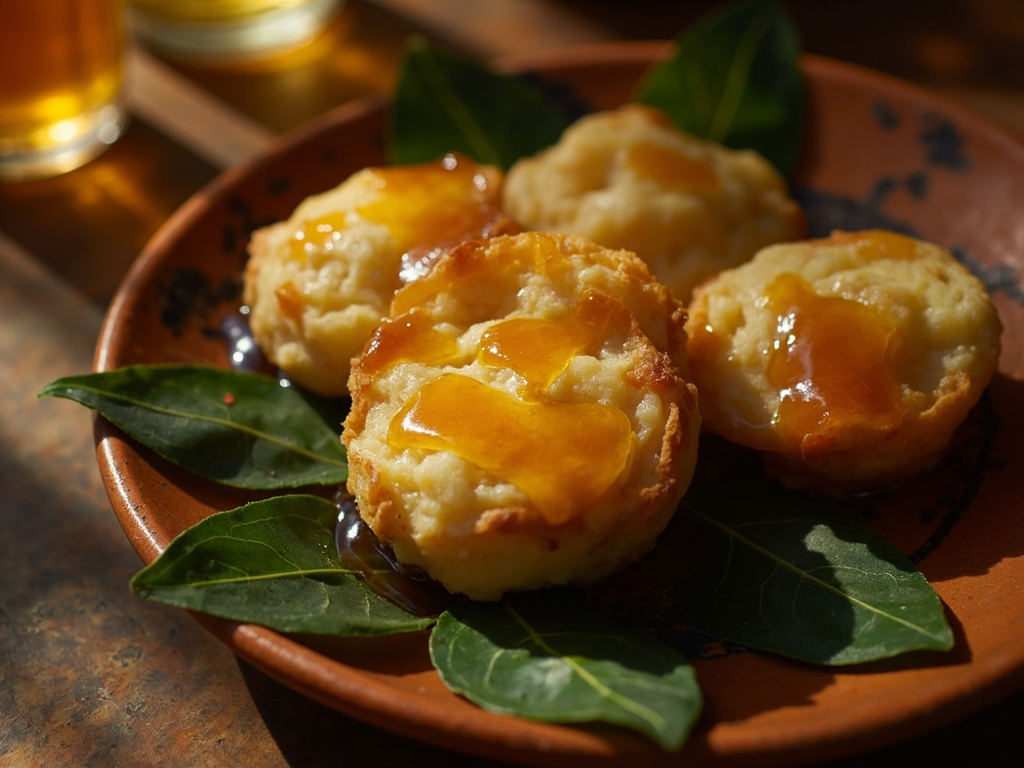
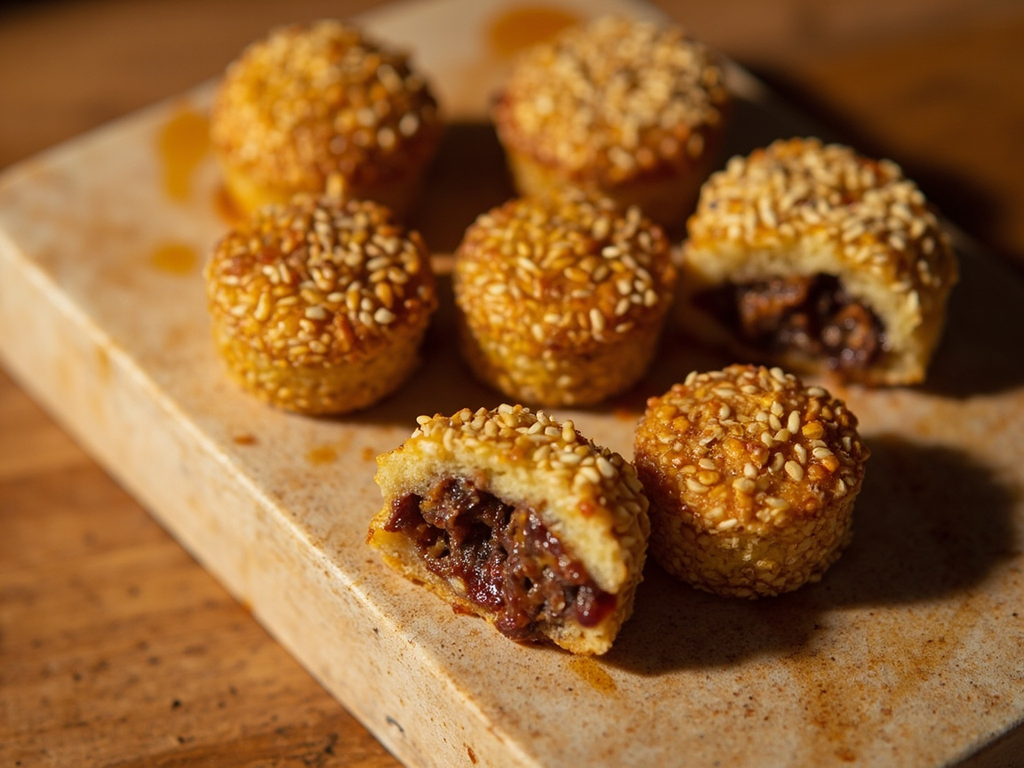
Small round, dense, and soft breads, packed with honey, dates, and crushed nuts. A sweet presented to the sun before being broken and shared with family.
When the disk rises in the morning, we set the tables and present these honey cakes to it. My hands lift these small breads heavy with dates and nuts toward Aten, for it is he who ripens the palm and swells the grain. Then, having received his light, we break them and share. Taste them: they are sweet as the favor of the god who keeps us alive.
- •Emmer flour — a basket (base)
- •Honey — abundantly (main sweetness)
- •Crushed dates — a scattering (filling)
- •Nuts — a handful (crunch)
- •Goose fat or moringa oil — a little (softness)
- •Oriental cinnamon (rare) — a pinch (precious aroma)
Festival Honey Bread with Dates and Nuts (Offering Shenes)
Small round, dense, and soft breads, packed with honey, dates, and crushed nuts. A sweet presented to the sun before being broken and shared with family.
Why this dish? The cult of Aten, which Nefertiti promoted alongside Akhenaten, relied on immense offering tables covered with breads, fruits, and honey cakes exposed to the sun. These small sweet breads, inspired by offering cakes (shenes), evoke this gesture of devotion to the solar disk — without reproducing the sacred ritual.
When the disk rises in the morning, we set the tables and present these honey cakes to it. My hands lift these small breads heavy with dates and nuts toward Aten, for it is he who ripens the palm and swells the grain. Then, having received his light, we break them and share. Taste them: they are sweet as the favor of the god who keeps us alive.
Ingredients (period version)
- Emmer flour — a basket (base)
- Honey — abundantly (main sweetness)
- Crushed dates — a scattering (filling)
- Nuts — a handful (crunch)
- Goose fat or moringa oil — a little (softness)
- Oriental cinnamon (rare) — a pinch (precious aroma)
Ingredients
- Spelt flour — 300 g (base)
- Honey — 120 g (main sweetness)
- Pitted and chopped dates — 150 g (filling)
- Chopped walnuts — 80 g (crunch)
- Olive oil (or butter) — 60 ml (softness)
- Cinnamon — 1/2 tsp (aroma)
- Egg — 1 (binder)
Method
- Mix the flour and cinnamon in a bowl.
- Beat the honey, oil, and egg, then incorporate into the dry ingredients.
- Add the chopped dates and walnuts; the dough should be soft and sticky.
- Shape into small flattened balls and place on a baking sheet.
- Bake at 170°C for 18 to 20 minutes, until golden.
- Brush with a little warm honey right out of the oven and let cool.
How it was made : Reliefs from Amarna show altars laden with conical breads, fruits, and cakes exposed to the open air for the solar disk. Egyptians made offering cakes sweetened with honey and dates, sometimes molded into symbolic shapes. Since sugar was unknown, honey, dates, and carob provided all the sweetness.
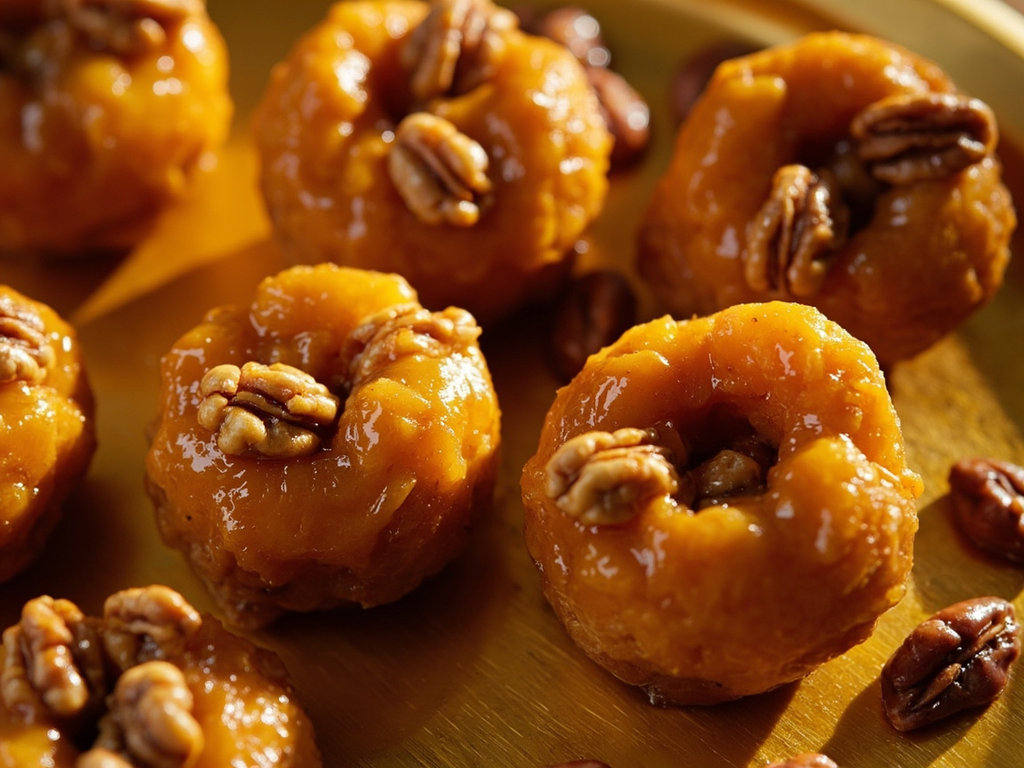
The contemporary twist : Arrange in a pyramid on a golden tray, drizzle with honey and a few edible flower petals, 'Table of Aten' style.
Sources : Pierre Tallet, La cuisine des pharaons (Actes Sud, 2015) · Barry Kemp, The City of Akhenaten and Nefertiti (Thames & Hudson, 2012)
Nefertiti · Charactorium