 flip
flipHoney and Tiger Nut Cakes (inspired by offerings to Amun-Ra)
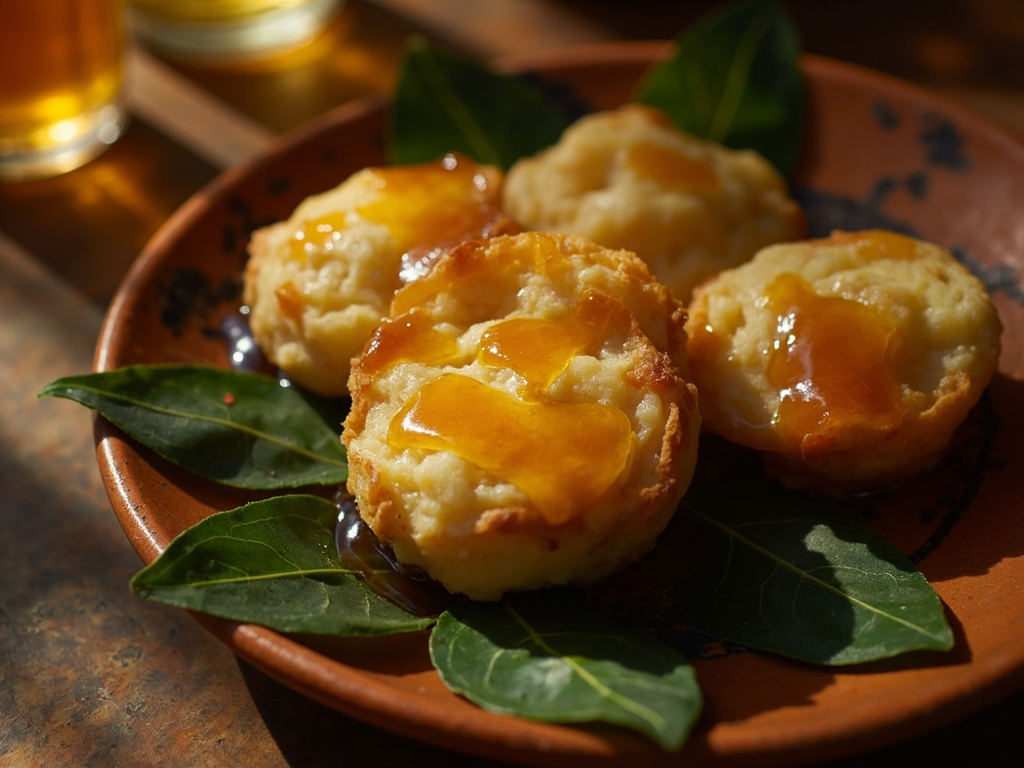
Honey and Tiger Nut Cakes (inspired by offerings to Amun-Ra)
Why this dish? An indefatigable builder of temples (Karnak, Abu Simbel, the Ramesseum), Ramesses II had mountains of food offerings placed daily before the divine statues. These little honey and tiger nut cakes, attested by funerary archaeology, are among the sweet gifts offered to gods and the dead.
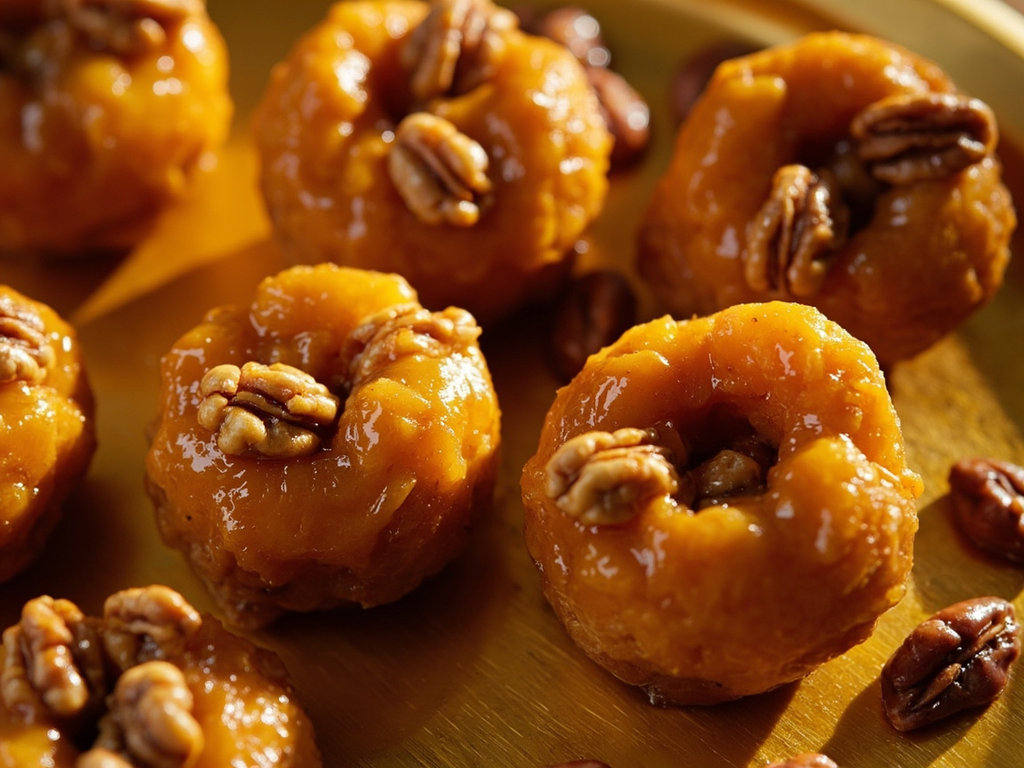
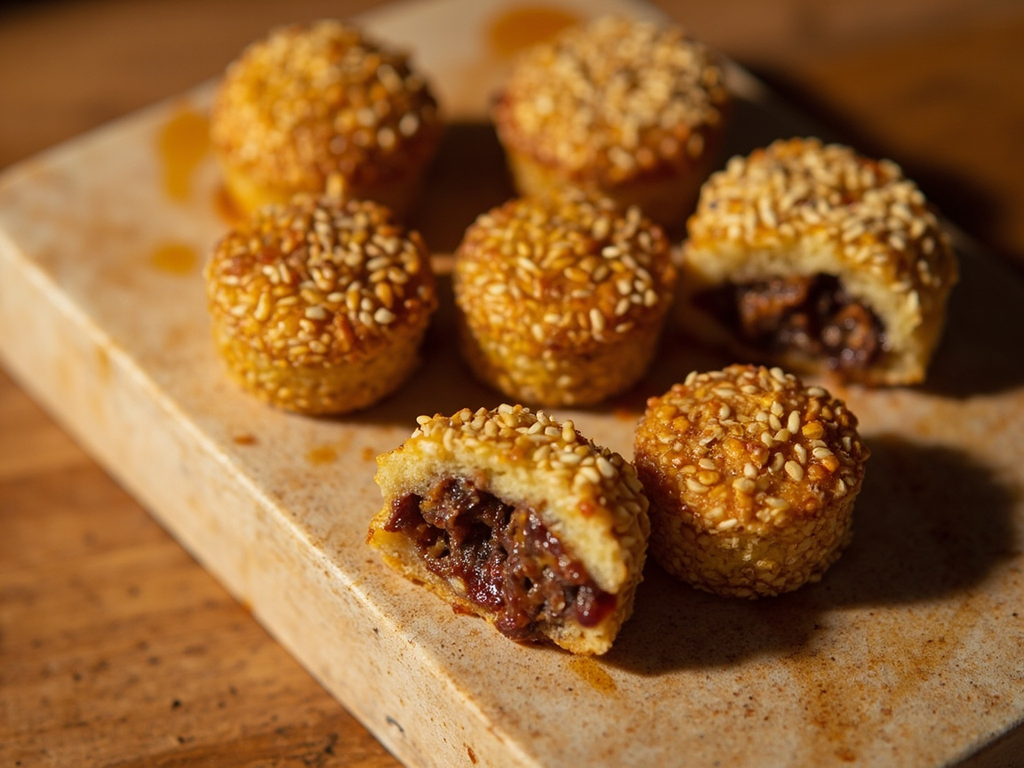
Small round cakes, soft and very sweet, made from flour, honey, and ground tiger nut. Inspired by food offerings—not a ritual reproduction, but an echo of these sacred sweets.
I have covered Egypt with temples so that the house of the gods lacks nothing. Each day, before Amun-Ra, bread, beer, and these honey cakes made with tiger nut, sweet as almond, are laid out. I give to the gods what I give to my own mouth, for thus the Son of Ra maintains Maat and the Nile rises faithfully. Taste them: what delights the Immortals may well delight the living.
- •Emmer flour — one measure (base)
- •Ground tiger nut — one part (sweetness / binder)
- •Honey — generous (sweetener)
- •Fat (moringa oil or goose fat) — a little (softness)
- •Pounded dates — a few (filling)
Honey and Tiger Nut Cakes (inspired by offerings to Amun-Ra)
Small round cakes, soft and very sweet, made from flour, honey, and ground tiger nut. Inspired by food offerings—not a ritual reproduction, but an echo of these sacred sweets.
Why this dish? An indefatigable builder of temples (Karnak, Abu Simbel, the Ramesseum), Ramesses II had mountains of food offerings placed daily before the divine statues. These little honey and tiger nut cakes, attested by funerary archaeology, are among the sweet gifts offered to gods and the dead.
I have covered Egypt with temples so that the house of the gods lacks nothing. Each day, before Amun-Ra, bread, beer, and these honey cakes made with tiger nut, sweet as almond, are laid out. I give to the gods what I give to my own mouth, for thus the Son of Ra maintains Maat and the Nile rises faithfully. Taste them: what delights the Immortals may well delight the living.
Ingredients (period version)
- Emmer flour — one measure (base)
- Ground tiger nut — one part (sweetness / binder)
- Honey — generous (sweetener)
- Fat (moringa oil or goose fat) — a little (softness)
- Pounded dates — a few (filling)
Ingredients
- Spelt flour — 200 g (base)
- Tiger nut flour (or almond flour) — 100 g (sweetness / binder)
- Honey — 120 g (sweetener)
- Olive oil (or butter) — 60 g (softness)
- Date paste — 100 g (filling)
- Water — if needed (binder)
Method
- Mix both flours, honey, and oil into a crumbly then bound dough (add a little water if necessary).
- Divide into small balls, make a well, and fill with a bit of date paste; close.
- Flatten slightly into round pucks.
- Bake 18–20 min at 170 °C until golden.
- Upon removal, brush with a veil of warm honey for the shine of offerings.
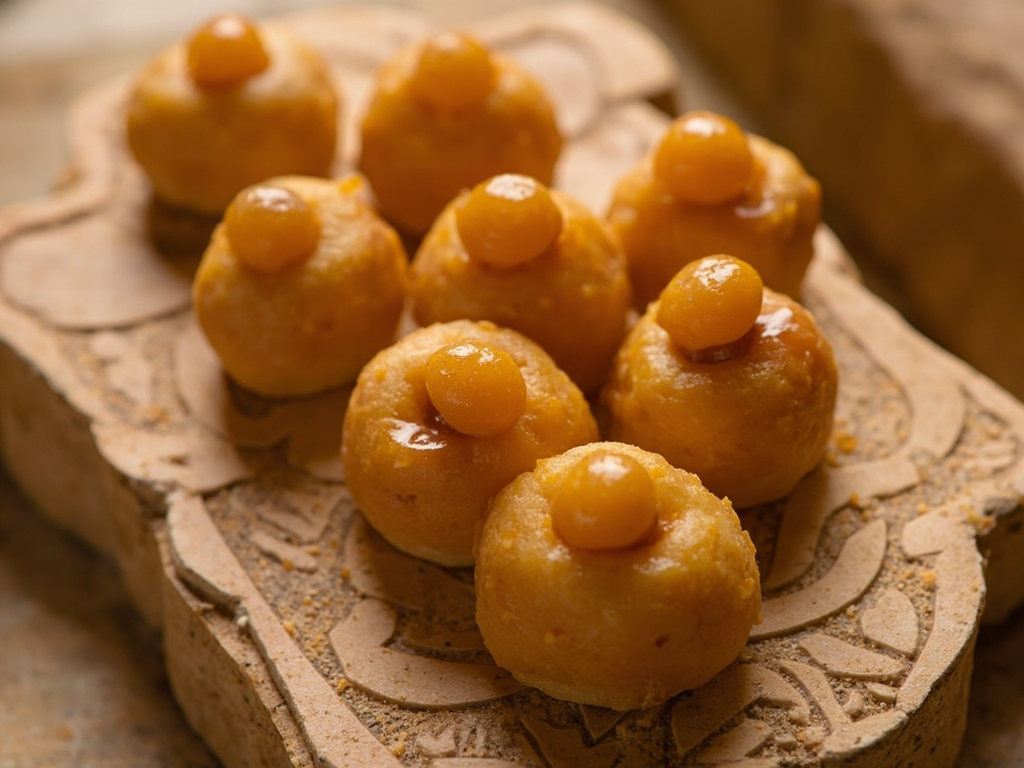
How it was made : Honey and tiger nut cakes have been found in tombs (especially New Kingdom), sometimes shaped as cones or spirals. Tiger nut, a small sweet tuber cultivated on the Nile banks, served as sweetener and energy food. Food offerings were later, through the practice of “reversal of offerings,” redistributed to priests.
The contemporary twist : Shape into small cones (nod to offering loaves) and dust with a pinch of ground coriander.
Sources : William J. Darby, Paul Ghalioungui & Louis Grivetti, Food: The Gift of Osiris (1977) · Mary Anne Murray, “Cereal production and processing”, in Ancient Egyptian Materials and Technology
Ramesses II · Charactorium