 flip
flipBarley Porridge with Curdled Milk and Date Syrup
Barley Porridge with Curdled Milk and Date Syrup
Why this dish? Before the Flood as after, Noah is first a man of the soil and herds. The story describes him as a worker of the ground, and barley porridge drizzled with the milk of his animals was the first meal of the Mesopotamian peasant: the food that opens each day on the Ark as in the field.
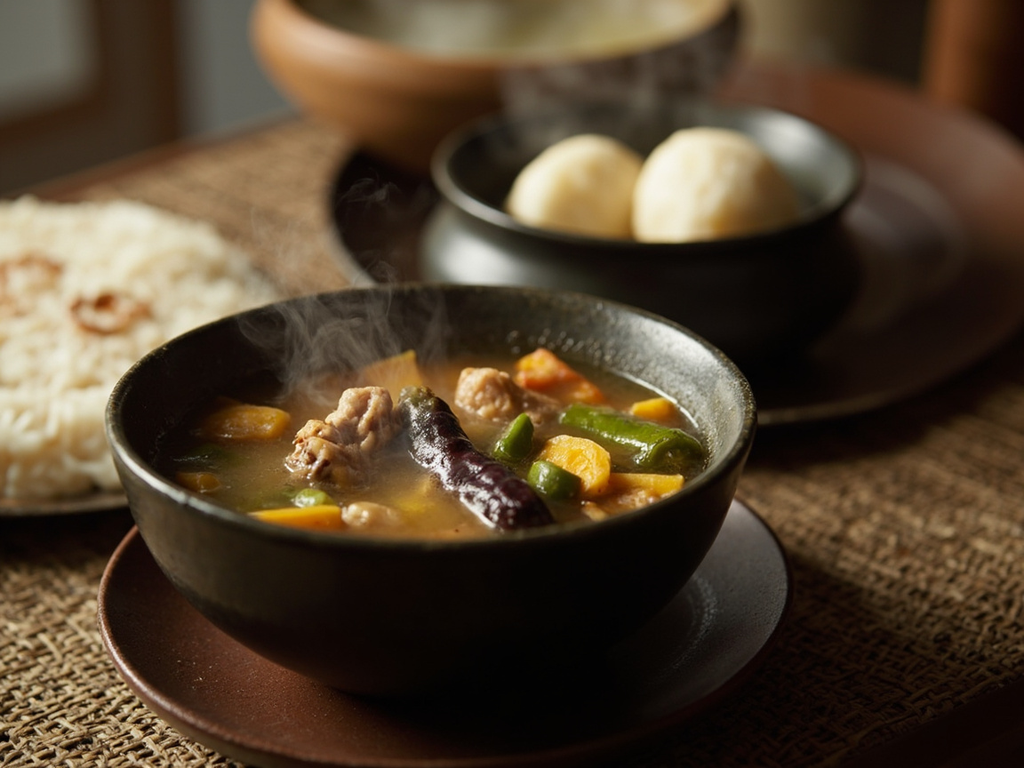
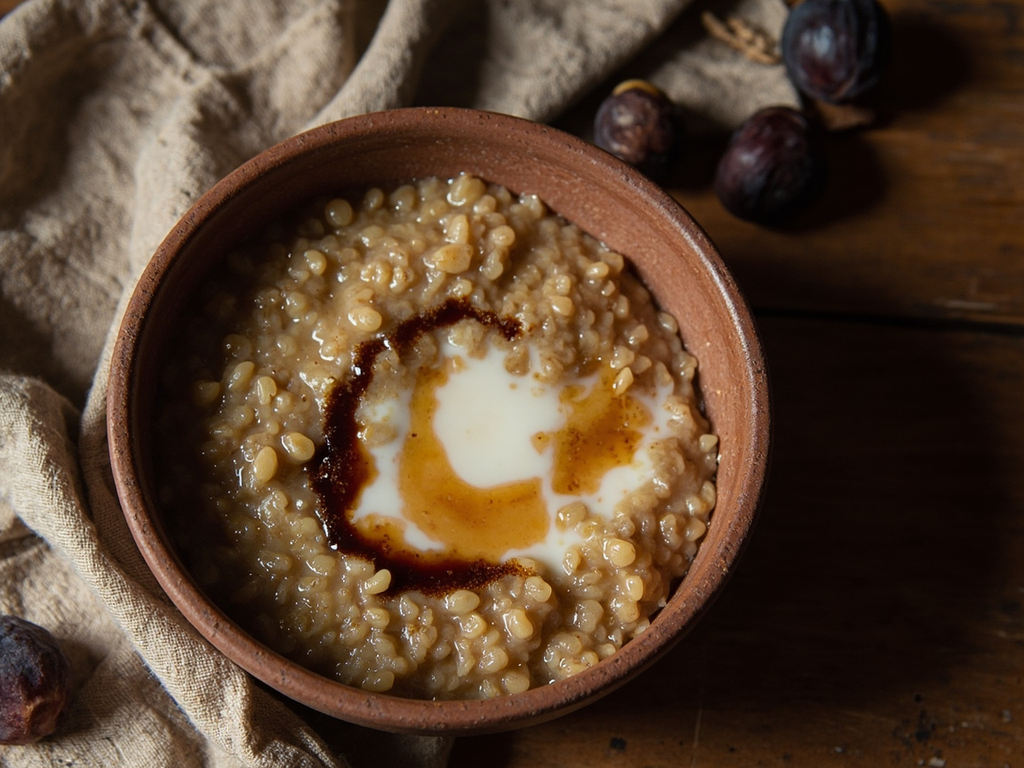
A thick porridge of cracked barley, long-simmered, sweetened with a drizzle of date syrup and topped with slightly tangy curdled milk. Humble and nourishing, it is the breakfast that sustains the body before a long day of labor.
Draw near, and break your fast with me before the sun climbs over the Euphrates. My sons pounded the barley in the mortar at dawn, and the grain has swollen long on the embers until it became soft as cloth. Pour over it the milk the goat gave this night, and a stream of this palm honey I keep in the jar—for the Most High gives the grain, but it is for us to make it good. Eat slowly, child: he who has known hunger on the waters never wastes a mouthful.
- •Cracked barley (groats) — two handfuls per person (grain base)
- •Curdled goat's milk — one bowl (tangy binder)
- •Date syrup — to taste (signature sweetness)
- •Salt — a pinch (seasoning)
Barley Porridge with Curdled Milk and Date Syrup
A thick porridge of cracked barley, long-simmered, sweetened with a drizzle of date syrup and topped with slightly tangy curdled milk. Humble and nourishing, it is the breakfast that sustains the body before a long day of labor.
Why this dish? Before the Flood as after, Noah is first a man of the soil and herds. The story describes him as a worker of the ground, and barley porridge drizzled with the milk of his animals was the first meal of the Mesopotamian peasant: the food that opens each day on the Ark as in the field.
Draw near, and break your fast with me before the sun climbs over the Euphrates. My sons pounded the barley in the mortar at dawn, and the grain has swollen long on the embers until it became soft as cloth. Pour over it the milk the goat gave this night, and a stream of this palm honey I keep in the jar—for the Most High gives the grain, but it is for us to make it good. Eat slowly, child: he who has known hunger on the waters never wastes a mouthful.
Ingredients (period version)
- Cracked barley (groats) — two handfuls per person (grain base)
- Curdled goat's milk — one bowl (tangy binder)
- Date syrup — to taste (signature sweetness)
- Salt — a pinch (seasoning)
Ingredients
- Pearl barley or barley flakes — 200 g (grain base)
- Fermented milk / plain yogurt — 150 g (tangy binder)
- Date syrup (from Middle Eastern grocery) — 4 tbsp (signature sweetness)
- Water — 700 ml (cooking liquid)
- Salt — 1 pinch (seasoning)
Method
- Rinse the barley and place it in a saucepan with the water and a pinch of salt.
- Bring to a simmer and cook over low heat for 35–45 minutes, stirring occasionally, until thick and creamy.
- Remove from heat and let cool for a few minutes.
- Serve in bowls, top with a spoonful of fermented milk in the center, and drizzle generously with date syrup.
How it was made : In Mesopotamia, barley was the people's grain (wheat, rarer, was reserved for feasts). It was mostly eaten as porridge (pappasu) rather than bread, since fine milling was expensive. Milk was preserved curdled or as buttermilk due to lack of refrigeration, and date syrup replaced the unknown sugar everywhere.
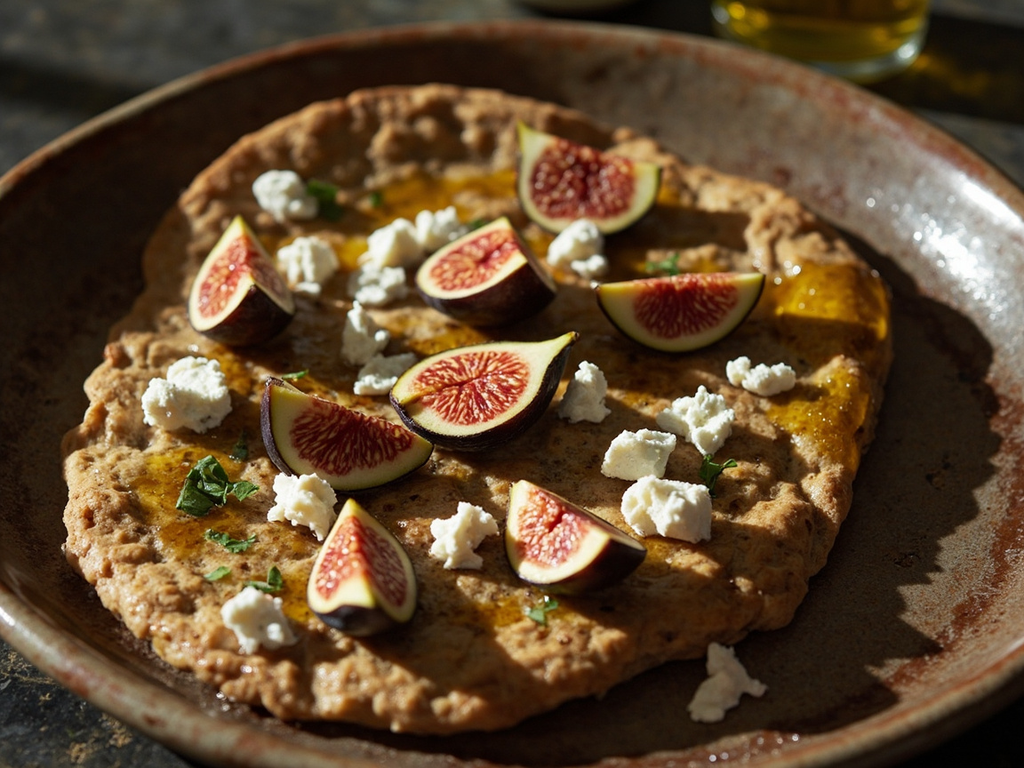
The contemporary twist : Served warm in a clay bowl, sprinkled with a few cut fresh figs and a pinch of toasted sesame seeds: an 'original porridge' that rivals today's breakfast bowls.
Sources : Jean Bottéro, La plus vieille cuisine du monde (2002)
Noah · Charactorium