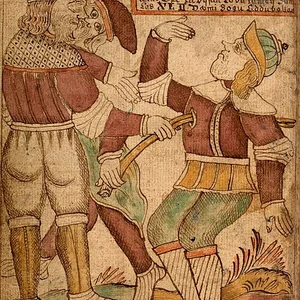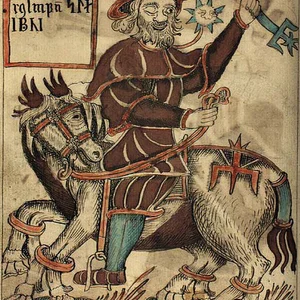

Odin is the chief god of Norse mythology, king of Asgard and father of all the gods. God of wisdom, war, and magic, he was worshipped by Germanic and Scandinavian peoples throughout Antiquity and the Middle Ages. He sacrifices his eye to gain knowledge and presides over the cosmic order embodied by Yggdrasil, the World Tree.
Frequently asked questions
Key Facts
- King of Asgard and chief of the Norse pantheon, as described in the Poetic Edda and the Prose Edda (13th century)
- Sacrificed his eye at Mimir's well to gain wisdom and knowledge of the past and future
- Presides over Yggdrasil, the cosmic tree connecting the nine worlds of Norse mythology
- God of war, magic (seidr), and poetry in Scandinavian mythology
- Worshipped by Germanic and Viking peoples from the 1st to the 11th century, attested in both archaeological and literary sources
Works & Achievements
Odin sacrifices himself by hanging from Yggdrasil for nine nights to obtain wisdom and the runes. This act of self-mutilation symbolizes the endless quest for knowledge and establishes Odin as the supreme god of wisdom in Norse mythology.
Odin gains knowledge of the runes — a magical and divinatory writing system — following his sacrifice. The runes become the instrument of magic (seidr) and divine power, widely used by Germanic and Scandinavian peoples.
Odin steals the sacred mead guarded by the giants, which grants the gift of poetry and eloquence. This mythical feat represents the victory of wisdom over brute strength and establishes Odin as the patron of poets and skalds.
Odin founds and rules Asgard, the realm of the gods, establishing cosmic order and the divine hierarchy. His reign ensures harmony among the nine worlds connected by the world-tree Yggdrasil.
Odin masters the arts of divination and magic, particularly the consultation of völvas (Norse prophetesses). He uses these powers to foresee the future and influence events, including Ragnarök.
Odin establishes the codes of war and martial glory, inspiring the warrior traditions of the Norse peoples. He presides over battles and welcomes those who die honorably in combat to Valhalla.
Anecdotes
To obtain supreme wisdom, Odin willingly sacrificed one of his eyes at the well of Mimir, guardian of universal knowledge. This act is recounted in the Prose Edda by the Icelandic poet Snorri Sturluson in the 13th century. He drank from the well and received in return a complete understanding of the cosmos — but had to relinquish the sight of his right eye forever.
According to the Old Norse poem Hávamál, Odin hung himself from Yggdrasil, the cosmic tree, for nine days and nine nights, pierced by his own spear and without food or drink. This voluntary ordeal allowed him to discover the runes, a system of writing and magic that was fundamental to Germanic and Scandinavian culture.
Odin possessed two ravens named Huginn (Thought) and Muninn (Memory), whom he sent out each morning to travel across the nine worlds. Each evening they returned to perch on his shoulders and report everything they had seen and heard. This image is attested in the Prose Edda and in several skaldic poems, underscoring his role as the all-knowing god.
Together with his brothers Vili and Vé, Odin is said to have fashioned the first human beings from two trees found on the shore: Ask (the ash) and Embla (the elm). He breathed life into them, Vili gave them intelligence and emotions, and Vé gave them the senses. This creation myth, recorded in the Völuspá and the Prose Edda, presents a vision of the world in which humanity is intimately bound to nature.
Primary Sources
Odin is the oldest and greatest of the gods. He governs all things, and however powerful the other gods may be, they all serve him as children serve their father. He is called the Allfather, for he created mankind and gave them the spirit that animates them.
I know that I hung on the wind-swept tree for nine full nights, wounded by my own spear, consecrated to Odin, myself to myself.
I remember the giants born in the earliest times, those who long ago reared me. I remember nine worlds, nine realms beneath the earth that nourishes all.
Among the gods, it is Mercury whom the Germanic peoples honor above all others. On certain days, they deem it fitting to offer him sacrifices, even of human beings.
Key Places
The realm of the gods in Norse mythology, ruled by Odin. It is the heart of the divine cosmos, home to Odin's hall Gladsheim, where the gods gather at Yggdrasil.
The world of fire in Norse cosmology. Odin and his brothers are said to have fought the giant Ymir there to create the world, establishing the cosmic order.
The world tree connecting the nine realms in Norse mythology. Odin presides over this central cosmic order and gains wisdom there by sacrificing himself.
The historical region where Odin was primarily worshipped among Germanic and Scandinavian peoples from the 1st to the 13th centuries. The Vikings and other Nordic societies revered Odin as the supreme god.
The world of the Vanir in Norse mythology. Odin plays a central role in the war between the Aesir and the Vanir, a conflict that shaped the divine order.
The world of humans, created by Odin and his brothers. Odin watches over this realm and maintains a constant relationship with mortals, especially warriors and kings.
Typical Objects
Odin's magical spear, one of the most powerful weapons in Norse mythology. It is said to always hit its target and symbolizes the power and authority of the king of the gods.
📷 CC BY-SA 4.0 · Wikimedia Commons ↗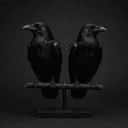
Odin's two ravens, who fly across the nine worlds every day to bring him news. They represent thought and memory, reflections of divine wisdom.

Odin's eight-legged horse, capable of galloping between worlds. This mythical creature embodies shamanic travel and the god's ability to cross all realms.
📷 CC BY-SA 2.0 · Wikimedia Commons ↗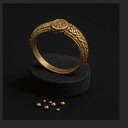
A magical golden ring belonging to Odin that continuously produces gold in drops. It symbolizes wealth, regeneration, and the magic of the Norse gods.

The giant cosmic tree of Norse mythology over whose order Odin presides. This world tree connects the nine realms and represents the very structure of the Norse universe.
📷 CC BY-SA 3.0 · Wikimedia Commons ↗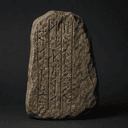
The characters of the ancient Norse alphabet, tied to magic and wisdom. Odin is said to have discovered the runes after hanging himself from Yggdrasil, linking them to divination and secret knowledge.
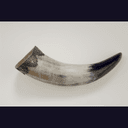
A vessel typical of Norse Scandinavian culture, used during feasts and rituals. It symbolizes hospitality and the divine banquets of Asgard over which Odin presides.
📷 CC BY 2.0 · Wikimedia Commons ↗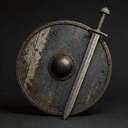
The typical weapons of Norse warriors who venerated Odin, god of war. These objects reflect the martial culture and the high regard for fighters in medieval Scandinavian society.
School Curriculum
Vocabulary & Tags
Key Vocabulary
Tags
Mythologie
Daily Life
Morning
Odin rises before dawn in his dwelling at Asgard, the Gladsheim. He summons his two ravens, Huginn and Muninn, who travel across the nine worlds to bring him news. He consults with the Aesir gods to govern the cosmic order and plan his war strategies.
Afternoon
The god presides over the assemblies of the gods and mediates conflicts between divine powers. He observes the great tree Yggdrasil and the Bifrost, the rainbow bridge connecting the worlds. He devotes himself to studying runes and seidr magic to maintain his hold over fate.
Evening
As night falls, Odin feasts with the warriors slain in battle, the Einherjar, in the great hall of Valhalla. He listens to skalds recite heroic deeds and takes part in the contests and warrior competitions held every evening.
Food
Odin eats very little, surviving mainly on wine and mead. According to Norse traditions, he shares meals with the warriors of Valhalla and consumes the meat of sacrificial animals offered by his devoted worshippers.
Clothing
Odin wears a majestic warrior's attire: golden armor, a blue and gold cloak, and a wide-brimmed hat (symbolizing his wisdom). He is recognizable by his single eye — the other sacrificed in exchange for knowledge — and his iconic possessions: his spear Gungnir, his ring Draupnir, and his eight-legged horse Sleipnir.
Housing
Odin resides in Gladsheim, the palace of the gods located in Asgard, the highest of the nine worlds. This mythical place is the heart of the Norse cosmos, from which he rules upon his throne Hlidskjalf, which allows him to see into all worlds simultaneously.
Historical Timeline
Period Vocabulary
Visual Style
Un style épique et mystique inspiré de l'art viking et du Moyen Âge nordique, caractérisé par l'obscurité, les motifs celtiques entrelacés et une atmosphère arcanique. Les illustrations combinent la finesse des manuscrits enluminés avec la robustesse de la sculpture sur bois germanique, baignées d'une lumière dramatique et dorée.
Sound Ambience
Une ambiance sonore immersive et mystique évoquant la grandeur du panthéon nordique : entre le chaos guerrier des Asgardiens et la sagesse primordiale d'Odin, transcrite par les bruits de la nature sacrée et les échos d'une ancienne civilisation guerrière.
Liens externes & ressources
Références
Œuvres
Le sacrifice de son œil
mythe intemporel
La découverte des Runes
mythe intemporel
L'hydromel de la poésie
mythe intemporel
La création d'Asgard
mythe intemporel
Le Völva et la divination
mythe intemporel
La fondation du système guerrier
mythe intemporel