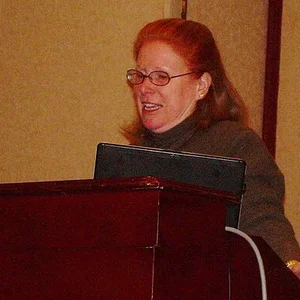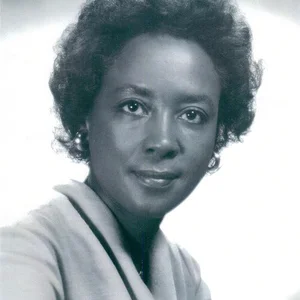

Patsy Sherman (1930-2008) was an American chemist employed by the company 3M. She is known worldwide for co-inventing Scotchgard, a waterproofing and stain-resistant treatment for textiles.
Patsy Sherman
Patsy O'Connell Sherman
5 min read
Frequently asked questions
Key Facts
- Born in 1930 in Minneapolis (Minnesota, United States), she joined the company 3M in 1952.
- In 1953, following a laboratory accident (a spilled product on a shoe resisted water and stains), she discovered the principle of Scotchgard together with Samuel Smith.
- Scotchgard was marketed by 3M starting in 1956 and became a major consumer product.
- She filed numerous patents over the course of her career, at a time when women engineers and chemists remained rare.
- She died in 2008 and was inducted into the National Inventors Hall of Fame.
Works & Achievements
A fluorochemical treatment that makes textiles water-repellent and stain-resistant, co-invented with Samuel Smith. This is the invention that made Patsy Sherman known worldwide.
Identification, from a laboratory accident, of a polymer that repels water and grease. The starting point for the entire Scotchgard line.
A series of patents filed under the names of Sherman and Smith for stain-resistant treatments. They protected and expanded the Scotchgard technology.
Adapting the treatment to new uses: upholstery fabrics, carpets, leather and clothing. The product becomes a standard in household care.
Official recognition of Patsy Sherman's work as an inventor. She is among the first women to be honored in this way.
Anecdotes
In 1953, in the laboratories of the 3M company, an assistant accidentally spilled a few drops of an experimental fluorochemical compound on her tennis shoe. The stain resisted every solvent, and the affected spot now repelled water and dirt: this chance event put **Patsy Sherman** and her colleague **Samuel Smith** on the trail of the future *Scotchgard*.
As a teenager, Patsy took a career aptitude test that advised her to become a housewife. Intrigued, she asked what the same test recommended for boys who had gotten her scores: the answer was “dentist.” Far from being discouraged, she chose to study chemistry.
When Scotchgard went into production at a textile factory, Patsy Sherman was not allowed to enter the workshop because she was a woman. She had to send a male colleague to observe the manufacturing process in her place, then have him describe in detail everything he had seen.
Over the course of her career at 3M, Patsy Sherman filed more than a dozen patents, often jointly with Samuel Smith. In **2001**, she was inducted into the National Inventors Hall of Fame, one of the few women to be included at that date.
Sherman liked to tell young people that great discoveries often arise from the unexpected, but only in someone who knows how to observe it: in her view, chance favors only “the prepared mind,” the one able to notice that a laboratory accident conceals an invention.
Primary Sources
I was told I should be a housewife; when I asked what the test recommended for boys with my grades, the answer was dentist.
Like all inventors, I never stopped observing: just because something is a certain way doesn't mean it can't be improved.
They wouldn't let me onto the shop floor because I was a woman; I had to send a man in my place and have him describe what he saw.
Key Places
Birthplace of Patsy O'Connell Sherman, in the northern United States. She grew up here before studying chemistry.
The institution where Patsy Sherman earned her degree in chemistry and mathematics. This is where she trained before joining 3M.
The industrial research center where Sherman worked for decades. It was here that Scotchgard was developed.
The institution that honors great American inventors. Patsy Sherman and Samuel Smith were inducted here in 2001.
Typical Objects

A spray-on treatment can that lays down an invisible fluorochemical film on fabrics. It makes the fibers resistant to water and stains.

A cotton garment worn by chemists to protect themselves from chemicals. A symbol of research work in an industrial laboratory.

Graduated glass vessels used to mix, heat, and measure reagents. Basic tools of experimental chemistry.

A ventilated cabinet that draws away toxic vapors to protect the chemist. Essential for handling solvents and fluorochemicals.

A logbook where the researcher records each experiment, observation, and result, dated and signed. It also serves as evidence when filing patents.

A small amount of the fluorochemical compound developed in the lab. It is the active substance that gives Scotchgard its stain-repellent properties.

An official document that protects an invention and credits its authors. Patsy Sherman was named on more than a dozen patents filed by 3M.

The shoe onto which the fluorochemical was spilled and proved impossible to clean. It became the symbol of the accidental discovery of Scotchgard.
School Curriculum
Vocabulary & Tags
Key Vocabulary
Tags
Daily Life
Morning
Patsy Sherman began her day in the 3M laboratories, slipping on her lab coat and resuming the experiments underway. She checked the previous day's samples and carefully noted her observations in her lab notebook.
Afternoon
The afternoon was spent under the fume hood, synthesizing and testing new fluorinated compounds on pieces of fabric. She discussed the results with her colleague Samuel Smith and the team of chemists.
Evening
At the end of the day, she wrote up her reports and prepared the next day's protocols. Once home, she divided her time between family life and reading scientific journals.
Food
Like most middle-class American women of the mid-twentieth century, she ate simple food: coffee and eggs in the morning, familiar dishes in the evening. Canned and frozen foods, then booming, made daily life easier.
Clothing
In the laboratory, she wore a white coat over understated everyday attire, a skirt or dress according to the conventions of the era. Outside of work, she followed the American fashions of the 1950s and 1960s.
Housing
She lived in a house in the suburbs of Minnesota, typical of post-war America, with central heating and modern household appliances. This domestic comfort reflected the industrial prosperity of the era.
Historical Timeline
Period Vocabulary
Liens externes & ressources
Références
Œuvres
Scotchgard
1956
Découverte du composé fluorochimique répulsif
1953
Brevets sur les protecteurs de textiles 3M
années 1950-1970
Développement de la gamme Scotchgard
années 1960-1970
Intronisation au National Inventors Hall of Fame
2001