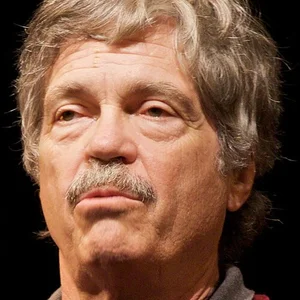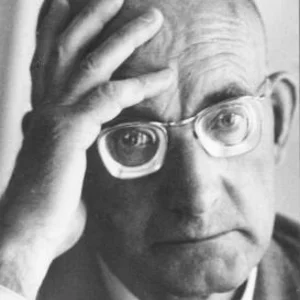

Russian and later Soviet mathematician, one of the founders of modern topology. A professor at Moscow University, he left a deep mark on the Soviet school of mathematics in the 20th century.
Pavel Alexandrov(1896 — 1982)
Pavel Aleksandrov
Union soviétique, Empire russe
6 min read
Frequently asked questions
Key Facts
- Born in 1896 in Bogorodsk (Russia), died in 1982 in Moscow
- Co-founder of general topology and algebraic topology in the 1920s and 1930s
- Introduced the notion of Aleksandrov compactification (one-point compactification)
- Professor at Moscow State University, where he trained many mathematicians
- Co-author with Heinz Hopf of a landmark topology treatise (1935)
Works & Achievements
A method that adds a single point “at infinity” to make a space compact; a fundamental tool still taught today.
Together with Urysohn, he identified and popularized the concept of a “compact” space in its current sense, central to all of general topology.
Decisive contributions to the rigorous definition of the dimension of topological spaces, continued after Urysohn's death.
A monumental treatise that gave structure to combinatorial topology and served as an international reference for decades.
Development of algebraic methods (homology groups, complexes) to study shapes, founding modern algebraic topology.
An educational textbook drawn from his Moscow lectures, which trained generations of Soviet students.
Through his seminar and his teaching, he made Moscow a world center of topology and trained many leading mathematicians.
Anecdotes
As a student, Pavel Alexandrov formed a deep friendship with Pavel Urysohn: the two young mathematicians worked together day and night and laid the foundations of modern topology. In 1924, during a holiday in Brittany, Urysohn drowned while swimming in the ocean before Alexandrov's eyes, an event that marked him for the rest of his life and led him to publish his friend's unfinished work himself.
We owe to Alexandrov the modern mathematical meaning of the word “compact.” He also invented a clever technique, the “one-point compactification” (known as the Alexandroff compactification), which makes it possible to add a single point “at infinity” to a space in order to make it easier to study.
Alexandrov formed a famous duo with Andrei Kolmogorov, one of the greatest mathematicians of the 20th century. The two men were friends and companions for more than fifty years, shared a country house at Komarovka, and organized swims and hikes with their students to blend scientific life with everyday life.
During the 1920s, he made long stays in Göttingen, then the world capital of mathematics, where he rubbed shoulders with David Hilbert, Emmy Noether, and above all Heinz Hopf. With the latter he wrote in 1935 a treatise on topology that remained a classic for decades.
For nearly thirty years (1932-1964), Alexandrov presided over the Moscow Mathematical Society. A passionate teacher, he liked to say that a good professor must convey not only results but also the excitement of discovery, and he trained generations of Soviet topologists.
Primary Sources
First volume of the great joint treatise by Alexandrov and Hopf, which systematized combinatorial topology and set the discipline's vocabulary for decades.
Article in which Alexandrov develops the study of locally compact spaces and the procedure of adjoining a point at infinity (Alexandroff compactification).
Memoirs in which Alexandrov recounts his Moscow education, his friendship with Urysohn, and his stays in Göttingen with Hilbert and Noether.
Teaching textbook drawn from his courses at Moscow University, long used to introduce students to topology.
Key Places
Town in the Russian Empire where Pavel Alexandrov was born in 1896, east of Moscow.
The heart of his entire career: here he studied under Luzin, then taught and built the Soviet topological school.
The world capital of mathematics, where Alexandrov stayed during the 1920s, mingling with Hilbert, Emmy Noether and Heinz Hopf.
The place where his friend Pavel Urysohn drowned in 1924 during their research holiday, an event that deeply shook Alexandrov.
A country house near Moscow that Alexandrov shared with Andrei Kolmogorov, a place of work, swimming and walks with their students.
The city where Alexandrov spent most of his life, presided over the Mathematical Society and died in 1982.
Typical Objects

The mathematician's everyday tool: Alexandrov used it to draw diagrams and simplicial complexes in front of his students. The blackboard is the theatre of the living proof.

A notebook where definitions and proofs took shape before publication. Alexandrov's drafts revealed the step-by-step invention of concepts such as compactification.

A reference work written with Heinz Hopf in 1935, long the bible of topologists. An object for transmitting knowledge on an international scale.

The writing instrument for the abundant correspondence Alexandrov kept up with Hopf, Noether and his foreign colleagues. Letters kept the mathematical community alive despite borders.

Alexandrov was a passionate music lover, fond of classical music that he played and listened to in order to relax. Music was part of his intellectual life just as much as mathematics.

A programme announcing the famous seminar that Alexandrov led in Moscow. A training ground where the Soviet topology school was born.
School Curriculum
Vocabulary & Tags
Key Vocabulary
Daily Life
Morning
Alexandrov often began his days early, with reading and quiet mathematical reflection. At Komarovka, he enjoyed a morning swim or a walk before getting down to work.
Afternoon
The afternoon was devoted to teaching at Moscow University, to lectures, and above all to his famous topology seminar, where he discussed research with his students.
Evening
In the evening, he wrote his articles and his abundant correspondence with foreign colleagues, or relaxed by listening to and playing classical music, his great passion.
Food
His table reflected the Russian and Soviet cuisine of his time: soups such as borscht, black bread, kasha (buckwheat porridge), and tea drunk from a samovar. Periods of war and shortage sometimes imposed frugal meals.
Clothing
He wore the sober attire of the twentieth-century professor: a suit, shirt, and tie for teaching, and simpler, more comfortable clothes for his stays in the countryside and his hikes.
Housing
He lived in Moscow, in lodgings near the university, and spent long periods at the dacha in Komarovka that he shared with Kolmogorov, dividing his time between work, nature, and welcoming students.
Historical Timeline
Period Vocabulary
Liens externes & ressources
Références
Œuvres
Compactification d'Alexandroff (compactification en un point)
1924
Introduction de la notion moderne de compacité
années 1920
Théorie de la dimension (travaux avec Urysohn)
1922-1925
Topologie I (avec Heinz Hopf)
1935
Topologie algébrique et homologie
années 1920-1930
Introduction à la théorie des ensembles et à la topologie générale
1948
Fondation de l'école topologique soviétique
années 1920-1960