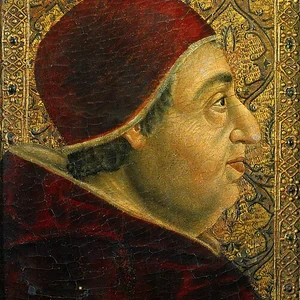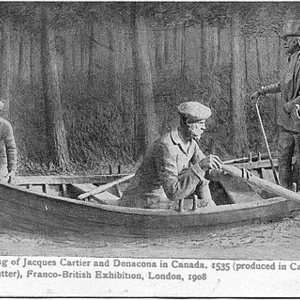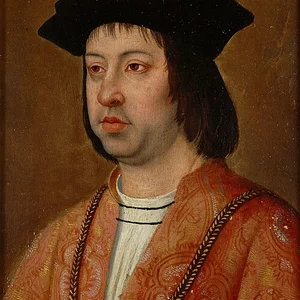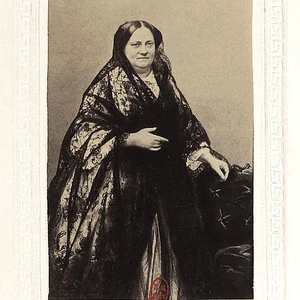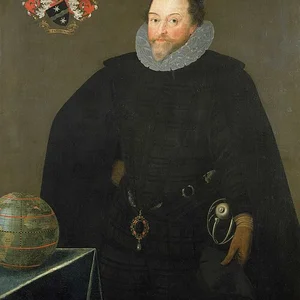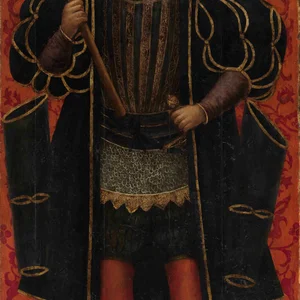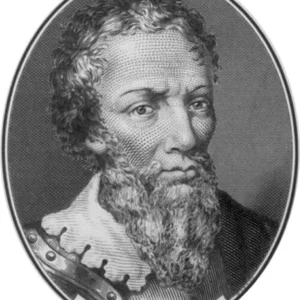

Portuguese navigator and explorer (c. 1467–1520), Pedro Álvares Cabral is officially the first European to have reached Brazil in 1500. Commissioned by King Manuel I of Portugal, he claimed the land in the name of the Portuguese Crown.
Pedro Álvares Cabral(1467 — 1520)
Pedro Álvares Cabral
royaume de Portugal
7 min read
Frequently asked questions
Key Facts
- 1500: official discovery of Brazil on April 22, which he named “Terra de Vera Cruz”
- 1500: commanded a fleet of 13 ships sent to the Indies by King Manuel I of Portugal
- 1500: formal claiming of Brazil in the name of Portugal, the founding act of Brazilian colonization
- The fleet then sailed around Africa to reach India and develop the spice trade
- c. 1467: born in Belmonte (Portugal), into a minor noble family
Works & Achievements
Cabral takes possession of the Brazilian land in the name of King Manuel I, making Brazil a Portuguese colony. This act is at the origin of present-day Lusophone Brazil, the largest country in Latin America.
Cabral leads the second great Portuguese fleet to Calicut, consolidating the spice route opened by Vasco da Gama. He establishes trading posts at Cochin and Calicut, securing a regular flow of pepper, cinnamon, and other spices to Europe.
During his stopover in India, Cabral obtained permission from the King of Cochin to establish a permanent trading post. This *feitoria* became the first lasting Portuguese commercial settlement in Asia.
During his brief Brazilian stopover, Cabral had the nearby coast explored, established a first peaceful contact with the Tupinambá people, and celebrated the first Mass on Brazilian soil on 26 April 1500.
Anecdotes
On 22 April 1500, as his fleet of thirteen ships was sailing toward India along the African coast, Cabral spotted a mountain on the horizon that he named 'Monte Pascoal'. He claimed the land in the name of the King of Portugal, calling it 'Ilha de Vera Cruz' (Island of the True Cross), convinced that he had discovered a large island rather than a continent.
A scribe of the fleet, Pero Vaz de Caminha, wrote a detailed letter to King Manuel I describing the land, its inhabitants, and its flora and fauna. This letter, sent from Brazil on 1 May 1500, is today considered the birth certificate of Brazil and one of the most precious documents in Lusophone history.
While rounding the Cape of Good Hope, a terrible storm struck the fleet: four ships were swallowed by the sea, including the one commanded by Bartolomeu Dias, the celebrated navigator who had been the first to round the cape in 1488. Cabral thus lost nearly a third of his fleet before even reaching India.
At Calicut (India), Arab merchants convinced the local ruler to turn against the Portuguese. Cabral's trading post was attacked and around fifty of his men were massacred. In retaliation, Cabral bombarded the city for two days, marking the beginning of the bloody rivalry between Portugal and the Arab commercial powers in the Indian Ocean.
Despite the commercial success of his expedition to India, Cabral fell out of favor with King Manuel I and was never again appointed to command a major expedition. He withdrew into obscurity and died forgotten around 1520, with neither the exact date nor the place of his death known with certainty.
Primary Sources
Senhor, posto que o Capitão-mor desta vossa frota, e assim os outros capitães escrevam a Vossa Alteza a nova do achamento desta vossa terra nova que se ora nesta navegação achou, não deixarei também de dar minha conta disso a Vossa Alteza.
Partimos de Lixboa a 9 dias de março de 1500 com treze velas […] e a 22 de abril seguinte descobrimos terra.
Pedro Álvares, que mandámos com treze velas ao descobrimento e trato de Calecut, achou em o caminho, desviando-se algum tanto, uma grande terra nova, a qual parece ser terra firme.
E Pedralvares com os outros navios foi em sua viagem pera a India e chegou a Calecut e fez suas feitorias e contrataçõis.
Key Places
Pedro Álvares Cabral's hometown, in the Beira Baixa region. His tomb is located there, and the town has erected a commemorative statue in his honor.
Capital of the Portuguese kingdom from which Cabral set sail on March 9, 1500 with a fleet of thirteen ships, and where he returned with his cargo of spices in 1501.
Coastal area of the state of Bahia where Cabral landed on April 22, 1500, claiming Brazil in the name of Portugal. A monument marks the historic site of the discovery.
Major spice port on the Malabar Coast where Cabral negotiated trade agreements in 1500. The city was bombarded by Cabral after an attack on the Portuguese trading post.
A mandatory waypoint on the route to India where Cabral lost four of his ships in a violent storm in 1500, including that of Bartolomeu Dias.
Typical Objects

A bronze navigation instrument used to measure the altitude of the sun or stars to determine latitude at sea. Cabral and his pilots used it daily to maintain their course toward India.

A sailing vessel typical of the great Portuguese discoveries, sturdy and maneuverable. Cabral's fleet included heavy naus for trade and lighter caravels for exploration.

A stone column topped with a cross and engraved with the arms of Portugal, which explorers erected to signify the taking possession of a territory. Cabral had one planted on the Brazilian coast on April 26, 1500.

A navigation chart depicting coastlines, ports, and winds, essential for long voyages. Portuguese cartographers updated them after each expedition.

A magnetic instrument used to find one's bearings on the open sea, far from any land reference. Its combined use with the astrolabe made oceanic navigation possible.

Used to measure time on board and calculate the ship's speed using the log line technique (a knotted rope). Watch shifts were marked by the regular turning of the hourglass.
School Curriculum
Vocabulary & Tags
Key Vocabulary
Daily Life
Morning
As a *fidalgo* (nobleman) and captain-major, Cabral began his day with prayer, in keeping with the customs of the Portuguese court. Aboard his ship, he would inspect the state of the fleet at sunrise and receive the pilots' report on the night's course.
Afternoon
The afternoon was devoted to navigation councils with the pilots and cosmographers: calculating latitude with the astrolabe, consulting portolan charts, deciding on the heading to maintain. At sea, he supervised maneuvers and the training of the embarked soldiers.
Evening
In the evening, Cabral dined with the fleet's captains, ensuring cohesion within the command. Meals were often accompanied by religious readings or accounts of previous voyages. A religious service was held every evening aboard the flagship.
Food
At sea, the diet was dominated by hardtack (*biscoitos*), dried legumes (chickpeas, lentils), salted or dried fish (*bacalhau*), and wine diluted with water. Fresh meat was only available at the start of the voyage or during stopovers, where fresh provisions were taken on board.
Clothing
At sea, Cabral wore practical clothing: a wool doublet and hose, with a waterproof cloak in stormy weather. During ceremonies to claim new territories or receive foreign rulers, he donned plate armor and an embroidered cloak bearing the arms of Portugal.
Housing
On land, Cabral resided in his palace in **Belmonte** or in a nobleman's townhouse in **Lisbon**. At sea, he occupied the sterncastle cabin of the flagship — a relatively spacious but damp quarters furnished with a rope bed, a chart table, and a chest for his personal belongings.
Historical Timeline
Period Vocabulary
Liens externes & ressources
Références
Œuvres
Découverte officielle du Brésil
22 avril 1500
Deuxième expédition portugaise aux Indes
1500-1501
Fondation de la feitoria de Cochin (comptoir commercial)
1500
Exploration du littoral brésilien initial
Avril-mai 1500