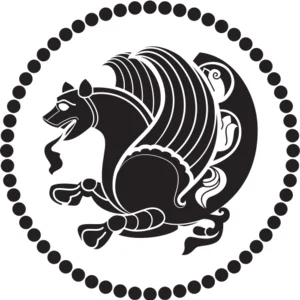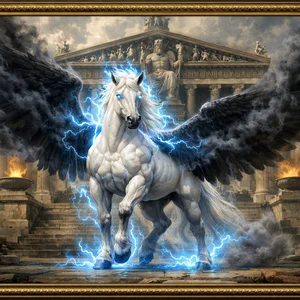

Winged horse of Greek mythology, born from the blood of Medusa when Perseus severed her head. Tamed by the hero Bellerophon with a golden bridle, he helped him defeat the Chimera. He ended his celestial journey among the stars, transformed into a constellation by Zeus.
Pegasus
Pegasus Seiya
Japon
9 min read
Frequently asked questions
Key Facts
- Born from Medusa's blood when Perseus severed her head — attested in Hesiod (Theogony, line 280, 8th c. BCE)
- Tamed by Bellerophon using a golden bridle given by Athena or Poseidon, depending on the version
- Flies with Bellerophon to slay the Chimera, the fire-breathing monster — mentioned in the Iliad (Book VI)
- The Hippocrene spring on Mount Helicon, sacred to the Muses, is said to have gushed forth from a strike of Pegasus's hoof
- Zeus transforms him into a constellation after his death or ascent to the heavens — he becomes the horse of thunder
Works & Achievements
Ridden by Bellerophon, Pegasus made the victory over the Chimera possible by allowing the hero to attack the monster from the air. This is the central heroic deed associated with Pegasus throughout the entire Greek tradition.
With a strike of his hoof on Mount Helicon, Pegasus caused this sacred spring to burst forth, and it became the symbol of poetic inspiration for the Muses and artists from Antiquity to the present day.
After his arrival on Olympus, Pegasus was entrusted by Zeus with carrying his lightning and thunderbolts — a divine mission that definitively confirmed his status as a celestial creature.
Pegasus aided Bellerophon in several trials imposed by King Iobates: defeating the Amazons and fighting the Solymi. These shared exploits forged one of the most celebrated hero-and-animal pairs in all of mythology.
At the end of his earthly life, Zeus transformed Pegasus into a constellation, immortalizing him in the starry sky. This catasterism is the mythological crowning of an extraordinary existence.
Anecdotes
Pegasus was born in an extraordinary way: when Perseus cut off the head of Medusa, the Gorgon whose gaze turned men to stone, a magnificent winged white horse sprang forth from her blood as it spilled onto the ground. This miraculous birth made him an immediately divine creature, associated with the power of life surging forth even from death.
To tame Pegasus, the hero Bellerophon received a golden bridle from the goddess Athena in a dream. With this divine gift, he was able to approach the winged horse near the spring of Pirene in Corinth and master him without violence. This episode illustrates that great heroic undertakings always require the aid of the gods.
Riding Pegasus, Bellerophon accomplished one of the most celebrated feats in Greek mythology: he defeated the Chimera, a fire-breathing monster with the head of a lion, the body of a goat, and the tail of a serpent. By flying over the monster from the air, he could attack it without risking being burned or devoured.
The creation of the Hippocrene spring is one of the most enduring deeds attributed to Pegasus: with a strike of his hoof on Mount Helicon, he caused a spring of pure water to gush forth. This fountain became sacred to the Muses and to poets, who drew their inspiration from it — hence the expression still used today of a "source of inspiration.
Bellerophon, intoxicated by his successes, one day attempted to ride up to Olympus to join the gods. Zeus, angered by this sacrilegious audacity, sent a gadfly to sting Pegasus. The horse reared up, throwing his rider, who fell back to earth, while Pegasus continued his flight all the way to Olympus, where Zeus took him into his service to carry his thunderbolts.
Primary Sources
From Medusa and the god of the bronze neck were born Chrysaor and Pegasus the horse. The latter takes his name from having been born near the springs (pēgai) of Ocean. Pegasus flew away and, leaving the nurturing earth, arrived among the Immortals, where he dwells in the house of Zeus, bearing the thunderbolt and lightning.
Bellerophon, who eagerly desired to capture Pegasus, son of the serpent-haired Gorgon, spent the night beside the altar of Athena. The goddess appeared to him in a dream and gave him a golden bridle; in the morning, near the spring of Peirene, he found the horse and tamed it.
The gods commanded Bellerophon to slay the Chimera, a monster of divine and not human stock — with the head of a lion, the tail of a dragon, and a goat in the middle — that breathed terrible and devastating fire.
With a strike of his winged hoof, Pegasus struck the side of Mount Helicon. The water gushed from the rock with great force. The nine Muses watched in wonder at the new spring that the celestial horse had just brought forth for their inspiration.
Pegasus, born from the blood of Medusa, was raised by the Muses on Mount Helicon. Zeus, to reward his divine nature, transformed him into a constellation and placed him among the stars, visible in autumn in the northern sky.
Key Places
It was near this sacred spring in Corinth that Bellerophon managed to capture Pegasus as the winged horse came to drink. The spring was considered a meeting place between the human world and the divine.
With a strike of his hoof, Pegasus caused the Hippocrene spring to burst forth on this mountain — a sacred site of the Muses and poetic inspiration. Helicon was the mountain dedicated to the arts throughout the entire Greek tradition.
A region of Asia Minor where Bellerophon, riding Pegasus, fought and defeated the fearsome Chimera. This territory was ruled by King Iobates, who had commissioned the heroic feat.
The highest peak in Greece and home of the gods, where Pegasus came to dwell after throwing Bellerophon from his back. Zeus welcomed him there and entrusted him with the task of carrying his thunderbolts.
Zeus transformed Pegasus into a constellation visible in the northern hemisphere's autumn sky, recognizable by its "Great Square." This celestial immortalization is the ultimate reward of the winged horse.
Typical Objects
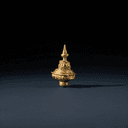
Forged by the gods and delivered to Bellerophon by Athena in a dream, this divine bridle allowed him to tame Pegasus without violence. It symbolizes the mastery of wild power through wisdom and divine favor.
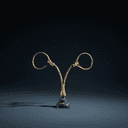
Pegasus's wings, white and majestic, allowed him to cross the skies at prodigious speed. They represent absolute freedom and the bond between the earthly world and the divine.
After ascending to Olympus, Pegasus was tasked with carrying Zeus's lightning bolts and thunder. He thus became the instrument of divine thunder, binding his fate to the supreme power of the gods.
Brought forth by a strike of his hoof on Mount Helicon, this sacred spring was associated with the Muses and poetic inspiration. Its name literally means 'horse's spring', perpetuating the memory of Pegasus for eternity.
In some depictions, Pegasus's hooves are described as exceptionally powerful, capable of making springs burst forth or shattering mountain rock. They embody the raw force of divine nature.
After his ascent among the gods, Pegasus was housed in the celestial stables of Zeus, a place symbolizing his nature as both animal and divine, suspended between the world of mortals and that of immortals.
School Curriculum
Vocabulary & Tags
Key Vocabulary
Daily Life
Morning
Pegasus spends the night in the pastures of Olympus, grazing on the divine grasses of the immortal meadows. At dawn, he takes flight toward the heights of the sky, his wings spread wide to catch the golden light of Eos, goddess of the dawn. His morning gallop through the clouds is like a white arrow cleaving the endless blue.
Afternoon
During the heat of the day, Pegasus carries Zeus's thunder and lightning across the sky at breathtaking speed, from one end of the world to the other. When not on a divine errand, he flies freely above seas and mountains, watching mortals from unreachable heights. Shepherds who glimpse a white shape in the clouds know that the divine horse is passing by.
Evening
At sunset, Pegasus returns to Zeus's stables on Olympus, where the gods welcome him with reverence. He drinks from the celestial springs and grazes on the asphodels of the immortal meadows. At night, his gleaming silhouette is traced across the sky as a constellation that sailors use to navigate.
Food
As a divine creature, Pegasus feeds on the immortal grasses and ambrosia of the Olympian meadows, sustenance that maintains his celestial nature. He drinks from sacred springs such as Pirene at Corinth and the Hippocrene on Mount Helicon, which he himself created. This divine nourishment sets him utterly apart from mortal horses.
Clothing
Pegasus wears no clothing, but his snow-white coat is described as radiant — almost phosphorescent in ancient depictions. His large, smooth, powerful wings are covered in pure white feathers that gleam in the sunlight. When ridden, he wears a golden bridle forged by the gods, the only adornment worthy of his divine nature.
Housing
Pegasus resides in the divine stables of Olympus, the mountain of the gods where the air is pure and eternal. Before his life on Olympus, he roamed the skies in freedom, sometimes sleeping in the meadows of Mount Helicon among the Muses. His true home remains the vast sky, which he can traverse without limit or boundary.
Historical Timeline
Period Vocabulary
Liens externes & ressources
Références
Œuvres
Victoire sur la Chimère
Époque mythologique
Création de la source Hippocrène
Époque mythologique
Transport des éclairs de Zeus
Époque mythologique
Participation aux expéditions de Bellérophon
Époque mythologique
Catastérisme — transformation en constellation
Époque mythologique