
Demigod and trickster hero of Polynesian mythologies, Māui is one of the most celebrated figures in Pacific oral tradition. He accomplishes extraordinary feats: fishing islands up from the ocean floor, slowing the sun, and stealing fire from the gods to give to humankind.
Maui
Māui
10 min read
Frequently asked questions
Key Facts
- Māui appears in the mythologies of all of Polynesia: Māori (New Zealand), Hawaii, Samoa, Tahiti, Tonga
- He is said to have fished up the Pacific islands from the ocean floor using his magical fishhook
- He captures the sun and forces it to slow its path, lengthening the days
- He wrests fire from the goddess Mahuika to give it to humankind
- He dies attempting to win immortality by entering the body of the goddess of death, Hine-nui-te-pō
Works & Achievements
A founding feat: Māui hauls the Polynesian islands up from the ocean floor with his magic fishhook. In New Zealand, this cosmogonic act explains the formation of the North Island and stands as an act of world creation comparable to those found in the great mythologies of the world.
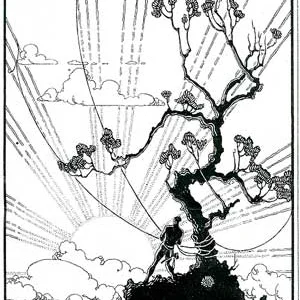
Māui captures the sun with a lasso woven from sacred hair and forces it to travel more slowly across the sky. This cosmic feat directly benefits humanity by granting days long enough to work, cook, and perform sacred rites.
Māui wrests fire from the goddess Mahuika and passes it on to humanity by hiding it within the wood of trees. This Promethean act is one of the most universal myths: the civilizing hero who steals an essential gift from the gods to bestow it upon humankind.
In Hawaiian tradition, Māui fishes the islands of the Hawaiian archipelago up from the depths of the Pacific. Each island corresponds to a different cast of the line, and his fishhook Manaiakalani is visible as a constellation in the night sky.
Māui's final feat: attempting to enter the body of Hine-nui-te-pō to defeat death and make humanity immortal. His tragic failure makes him a hero who is at once comic and deeply humanistic, a reminder that even demigods cannot abolish the human condition.
Anecdotes
Māui is born prematurely, and his mother Taranga, believing him dead, wraps him in a lock of her hair and casts him into the sea. He survives miraculously, taken in by a divine ancestor. This extraordinary beginning foreshadows his remarkable destiny: that of a being between two worlds, neither fully god nor fully human, destined to upend the order of the cosmos.
To slow down the sun, which crossed the sky too quickly and left people no time to work, Māui braids a lasso from his mother's sacred hair. He waits at the edge of the world for dawn and captures the sun as it rises. The sun, now captive, must bargain for its freedom and promises to travel more slowly — and that is why the days last long enough to fish, cook, and dry the nets.
Māui's greatest feat is the fishing up of the islands. Using the enchanted jawbone of his ancestor Muri-ranga-whenua as a fishhook, he casts his line to the bottom of the ocean and hauls up an enormous landmass. The North Island of New Zealand still bears his name: Te Ika-a-Māui, ‘the fish of Māui’. He asked his brothers not to cut up the fish before the proper rites were performed — but they could not wait, which explains the island's rugged terrain.
Māui steals fire from Mahuika, goddess of flames and his own ancestor, by repeatedly demanding new fire-fingernails from her until only one remains. Mahuika, furious, sets the world ablaze. Māui calls upon the rain to extinguish the fire, but the goddess hides the last sparks in the trees — and that is why, ever since, Polynesians obtain fire by rubbing two pieces of wood together.
His final feat is also his death. To win immortality for humankind, Māui attempts to enter the body of Hine-nui-te-pō, goddess of death, while she sleeps. His bird companions, unable to contain their laughter at the absurd scene, wake the goddess. Hine-nui-te-pō crushes Māui between her thighs of stone and obsidian — and so it is that death became the inescapable fate of humankind.
Primary Sources
Maui was the last born of the children of Taranga, and was born prematurely; his mother, thinking he was dead, cut off a lock of hair from her topknot, and tied it round him, and cast him into the surf of the sea. An ancestor found him floating and fostered him. He grew up a great trickster and hero among his people.
Ko Māui-tikitiki-a-Taranga te ingoa o taua tamaiti… Na Māui i hī ake te ika nei a Māui, ko Aotearoa nei. — Māui-tikitiki-a-Taranga is the name of this child. It is Māui who fished up this fish, which is this land, Aotearoa.
Māui-a-Kalana performed his feats in Hawaii: he slowed the sun above the Haleakalā volcano by lassoing it, and fished up the Hawaiian islands from the bottom of the ocean using his magic fishhook Manaiakalani, which has since become a constellation in the Pacific sky.
Maui-Kisikisi, the trickster, snared the sun with a rope to make it move more slowly across the sky. He was also said to have fished up Tonga from the bottom of the sea using a fishhook made of bone belonging to his ancestor.
Māui obtained fire from Mahuika, the fire-deity, by a ruse; he extinguished all fires of the world and then importuned her until she was left with but one fingernail of fire remaining, whereupon she set the world ablaze in her wrath, and the fire was hidden in the trees.
Key Places
The mythical land of origin of all Polynesian peoples, often associated with Raiatea in the Society Islands. It is from here that the great migrations set out on waka canoes, and the place where the souls of the dead return after their earthly lives.
According to Māori tradition, this island is 'the fish of Māui,' hauled up from the ocean floor by his magic fishhook. Its rugged, mountainous landscape is the result of his brothers cutting up the fish before the proper rites had been performed.
According to Hawaiian tradition, it was from the summit of this volcano that Māui cast his lasso to snare the sun at dawn. The entire island of Maui bears his name, and Haleakalā means 'house of the sun' in Hawaiian.
The underworld or undersea kingdom ruled by Hine-nui-te-pō, goddess of death and darkness. It is here that Māui attempts his final feat by seeking immortality for humanity, and where he meets his death, condemning humankind to mortality.
In several Polynesian traditions, it is at the mythical place where the sun rises each morning that Māui sets his trap. This place symbolizes the boundary between the human world and the realm of the gods, accessible only to heroes.
Typical Objects

Carved from the jawbone of his ancestor Muri-ranga-whenua, this magic fishhook allowed Māui to fish islands up from the depths of the ocean. In Māori tradition, it is also a constellation visible in the southern sky, keeping the memory of the feat alive for generations.

Braided from the hair of his mother Taranga — or his grandmother, depending on the version — this lasso was used to capture the sun and force it to slow its course. The hair of a divine ancestor is charged with mana (spiritual power), making it a formidable weapon.

Māui's grandmother offers him her own bony jawbone, which he transforms into a magic fishhook. This object embodies the fundamental bond between the living and their ancestors in Polynesian cosmology, where the dead continue to act on behalf of those they left behind.

Māui's divine weapon appears in several traditions and symbolizes his supernatural power. In some versions, he uses it to strike and shape the very elements of the world, affirming his role as demiurge as much as warrior.

The outrigger canoe is the vessel of Polynesian heroic deeds; Māui and his brothers use it for their mythic expeditions at sea. Building a waka is a sacred act accompanied by karakia (ritual prayers), for the canoe is an extension of the navigator's body and soul.

Each finger of the fire goddess Mahuika holds living flames; Māui draws them from her one by one under the pretense of lighting an ordinary fire. These flames, hidden inside trees after the cosmic conflagration, are the origin of the fire people still produce today by rubbing wood together.
School Curriculum
Vocabulary & Tags
Key Vocabulary
Tags
Daily Life
Morning
In Polynesian narratives, Māui begins his day with karakia (ritual incantations) addressed to the atua (gods and ancestors). Being of divine origin, he knows the sacred formulas that mobilize the mana needed for his endeavors. The sunrise — which he himself slowed down — is a daily reminder of his victory over the celestial forces and of his unique role in the order of the cosmos.
Afternoon
Māui spends his afternoons preparing for his expeditions: braiding fishing lines, carving hooks from bone, repairing his canoe, or practicing combat. As a trickster, he also observes men and gods alike, looking for weaknesses to exploit through cunning. His brothers often regard him as a burden or a braggart — until his impossible exploits prove them wrong.
Evening
In the evening, gathered around the fire he himself stole from the gods, Māui listens to the elders recite the whakapapa (sacred genealogies) and epic chants. He learns the names and powers of his divine ancestors, knowledge he will draw upon in his next exploits. The night belongs to spirits; even Māui respects this boundary between the visible and invisible worlds.
Food
Like all Polynesians of tradition, Māui eats fish, taro, kumara (sweet potato), and tropical fruits. Fish is both a daily staple and a powerful symbol — literally, it is the islands themselves. Some foods are tapu (sacred, forbidden) depending on the ritual context, and transgressing this prohibition brings serious spiritual consequences.
Clothing
Māui wears the beaten-bark loincloth (tapa) common among Polynesian warriors, adorned with ornaments of feathers, bone, or shark teeth that mark his status as a demigod. In Māori tradition, his body bears ritual tattoos — the tā moko — which inscribe in his flesh his divine origin, his genealogy, and his past exploits, making his identity legible to anyone who knows how to read them.
Housing
Māui lives in the whare (communal longhouse) of his family, a shared building at the heart of the marae (ceremonial space). The house is a place of storytelling, prayer, and shared memory where genealogies are recited each evening. In some versions, Māui lives on the margins of the village, underscoring his ambiguous status between the world of men and the world of the gods.
Historical Timeline
Period Vocabulary
Liens externes & ressources
Références
Œuvres
La pêche des îles (Te ika a Māui)
Temps mythiques
Le ralentissement du soleil
Temps mythiques
Le vol du feu à Mahuika
Temps mythiques
La naissance des îles hawaiiennes
Temps mythiques
La tentative de conquête de l'immortalité
Temps mythiques