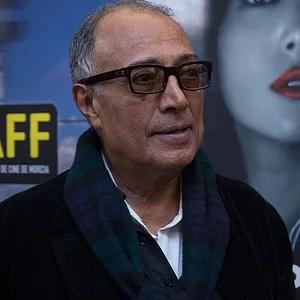
British actor of comic genius (1925–1980), Peter Sellers is celebrated for his ability to inhabit wildly different characters. He is best known for his role as Doctor Strangelove and as Inspector Clouseau in The Pink Panther.
Peter Sellers(1925 — 1980)
Peter Sellers
Royaume-Uni
8 min read
Frequently asked questions
Famous Quotes
« There used to be a me behind the mask, but I had it surgically removed.»
« I have no personality of my own. I am a chameleon.»
Key Facts
- Born on September 8, 1925, in Southsea, Hampshire, England
- 1963: triple role in Stanley Kubrick's Dr. Strangelove
- 1963: first appearance as Inspector Clouseau in The Pink Panther
- 1979: nominated for the Academy Award for Best Actor for Being There
- Died on July 24, 1980, in London of a heart attack
Works & Achievements
A groundbreaking surrealist radio show in which Sellers voiced multiple characters, profoundly shaping British comedy and influencing generations of comedians, from the Monty Python team to the Beatles.
A British social satire in which Sellers plays a rigid and blinkered trade union official — a role that earned him the BAFTA for Best Actor and showcased his ability to bring genuine depth to complex comic characters.
An adaptation of Nabokov's novel in which Sellers plays the unsettling Clare Quilty — his first collaboration with Kubrick and a demonstration of his versatility across registers that blend humour and unease.
The film that launched the franchise, introducing Inspector Clouseau — a bumbling, self-important French detective who became one of the most beloved comic characters in cinema history.
A biting Cold War satire in which Sellers plays three roles simultaneously, widely regarded as one of the greatest comedies ever made and a landmark political film of the twentieth century.
Sellers's final great role, playing a simple-minded gardener mistaken for a sage by American society — a performance of rare subtlety that earned him an Academy Award nomination for Best Actor.
Anecdotes
Peter Sellers was so profoundly transformed by his characters that he claimed he no longer knew who he truly was: “Outside of my roles, I don’t exist,” he confided to journalists on several occasions. This dissolution of identity fascinated him as much as it frightened him, and he regularly consulted mediums and astrologers in an attempt to find himself.
In Stanley Kubrick’s *Dr. Strangelove* (1964), Sellers played three different characters — the President of the United States, a British officer, and the mad scientist Dr. Strangelove — a performance hailed as extraordinary by critics worldwide. His arm rising of its own accord to sketch a Nazi salute was entirely improvised on set, and Kubrick immediately incorporated it into the film.
In 1964, Peter Sellers suffered a series of seven heart attacks over the course of a few days, coming close to death on several occasions. Doctors brought him back to life with a defibrillator during one of them. This traumatic episode left a deep mark on him, and he later claimed to have had a near-death experience, describing himself surrounded by a benevolent white light.
During the filming of *The Pink Panther* (1963), Sellers and director Blake Edwards invented the majority of Inspector Clouseau’s gags together by improvising on set. This creative collaboration resulted in six films in total, with Inspector Clouseau becoming one of the most popular comic characters in cinema history.
Peter Sellers was a passionate photography enthusiast and collected high-end cameras, particularly German Leicas. He changed cameras the way he changed characters, never hesitating to spend considerable sums on the latest models, and photographed everything around him on set. Photography was his way of capturing reality from different angles, much like his approach to acting.
Primary Sources
Sellers stated: "I have no personality of my own. I am an actor. I borrow personalities. When I'm not playing a character, there is literally no one there." This confession about his dissolution of identity is one of the most quoted of his career.
The Goon Show scripts, co-written by Spike Milligan, showcase a brand of absurdist and surrealist humour unlike anything British radio had heard before: grotesque characters, impossible situations, and Dadaist wordplay. Sellers voiced around ten different characters per episode.
The letters exchanged between the two men reveal a mutual admiration and in-depth discussions about nuclear satire. Kubrick wrote notably that Sellers's ability to "find the humanity in grotesque characters" was central to their shared vision for the film.
"The difference between me and a classical method actor is that I don't find my way back. I stay the character. Sometimes for weeks. It's dangerous, but it's the only way I know how to work."
Key Places
A coastal town in southern England where Peter Sellers was born on 8 September 1925, into a family of music-hall performers. His childhood spent backstage in variety theatres shaped his innate comic sensibility and his love of transformation.
It was at the BBC's radio studios in London that Sellers launched his career with *The Goon Show* (1951–1960), a cult programme co-created with Spike Milligan and Harry Secombe that revolutionised British radio comedy and influenced generations of comedians.
These film studios near London hosted many of Peter Sellers' productions, most notably the *Pink Panther* films. They stand as one of the key centres of post-war British cinema.
From the 1960s onwards, Peter Sellers regularly based himself in Hollywood to pursue his international career, collaborating with Stanley Kubrick and Blake Edwards. There he achieved his greatest successes, but also endured his deepest crises of identity.
It was at the Middlesex Hospital in London that Peter Sellers died on **24 July 1980** of a heart attack, aged 54. He had suffered serious heart problems ever since a series of attacks in **1964** that had nearly killed him.
Typical Objects
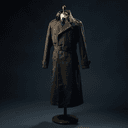
The beige raincoat, the iconic accessory of Inspector Clouseau, became a symbol of slapstick comedy in the 1960s–1970s. Worn with a soft hat and a moustache, it visually defines the character's elegant incompetence.

Peter Sellers was an avid collector of cameras, particularly German Leicas, prized for their optical precision. Photography was his way of capturing reality from different angles — much like his approach to acting.

The ribbon microphones of BBC Radio studios in the 1950s were the instruments through which Peter Sellers built his career on *The Goon Show*. Behind a microphone, without costume or make-up, he could conjure dozens of distinct voices and characters.
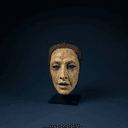
Sellers used make-up extensively to physically transform himself into his characters, reshaping the form of his nose, his skin tone, or the structure of his features. This practice, rooted in the music-hall tradition, was at the heart of his creative method.
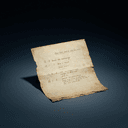
Sellers filled his screenplays with psychological notes on his characters — accents, physical tics, hidden motivations. These annotations reveal a highly methodical working process, despite the apparent spontaneity and playfulness of his on-screen performances.
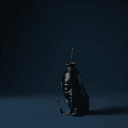
The black glove and wheelchair of Dr. Strangelove, the mad scientist in Kubrick's film, have become icons of 20th-century political satire. The character, inspired by Nazi scientists recruited by the United States after the war, embodies the absurdity of the nuclear arms race.
School Curriculum
Vocabulary & Tags
Key Vocabulary
Tags
Daily Life
Morning
Peter Sellers often began his day around 9–10 a.m. with a lengthy session reading British newspapers, which he had delivered even when abroad. Before a shoot, he would spend hours studying his role, rehearsing his characters' accents and physical mannerisms in front of a mirror, usually alone and in silence.
Afternoon
Afternoons were devoted to filming or, between productions, to his passions: photography, sports cars, and hi-fi audio. A dedicated audiophile, Sellers invested considerable sums in the finest sound equipment and could spend hours listening to classical music or jazz.
Evening
Sellers' evenings were often spent at dinners with friends from the film and music worlds — he was close to the Beatles, particularly George Harrison, with whom he shared an interest in Eastern philosophy. He could also retreat into periods of deep isolation and anxiety.
Food
Sellers had eclectic tastes in food, shaped by his many travels between England, Hollywood, and Europe. He was particularly fond of French and Italian cuisine and was known for hosting elaborate dinner parties. His heart attacks led him to monitor his diet more carefully from the 1960s onward.
Clothing
Off set, Sellers dressed with the quiet elegance of a British gentleman of the 1960s–70s: well-tailored suits, open-collar shirts on weekends. He placed great importance on his wardrobe, which he regarded as an extension of his constant performance around identity.
Housing
Sellers lived in several luxurious homes in England, Hollywood, and the French Riviera, changing residences as readily as he changed characters. His Surrey estate in England was his favourite retreat, fitted with a recording studio and a darkroom for photography.
Historical Timeline
Period Vocabulary
Liens externes & ressources
Références
Œuvres
The Goon Show (émission radio BBC)
1951-1960
I'm All Right Jack
1959
Lolita (réalisé par Stanley Kubrick)
1962
Bienvenue Mr Chance (Being There, réalisé par Hal Ashby)
1979