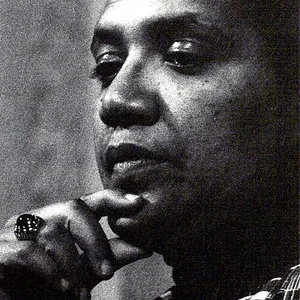

British philosopher, a major figure in twentieth-century moral philosophy. She is one of the founders of the contemporary revival of virtue ethics and the inventor of the famous “trolley problem.”
Philippa Foot(1920 — 2010)
Philippa Foot
Royaume-Uni
5 min read
Frequently asked questions
Key Facts
- Born on 3 October 1920 in Owston Ferry (Lincolnshire, England)
- In 1967 she formulated the “trolley problem” in an article on abortion and the doctrine of double effect
- Co-founded Oxfam in 1965 and became involved in humanitarian work
- Published the collection “Virtues and Vices” in 1978, which contributed to the revival of virtue ethics
- Published her major work “Natural Goodness” in 2001; died on 3 October 2010 in Oxford
Works & Achievements
Article that introduced the trolley problem, which became the most famous thought experiment in contemporary ethics.
Essay in which she challenges the idea that moral judgments are merely the expression of subjective attitudes.
Influential critique of the Kantian view that moral duties are categorical imperatives.
Major collection that revived virtue ethics within English-language analytic philosophy.
Her great late book, which grounds morality in human nature and the idea of flourishing.
Involvement in the creation of the Oxford Committee for Famine Relief, which became the global humanitarian NGO Oxfam.
Anecdotes
In 1967, in an article on abortion, Philippa Foot imagined a case that would become world-famous: a runaway tram is about to kill five people, but it can be diverted onto a track where it will kill only one. Should you throw the switch? This “trolley problem” is now discussed everywhere, even in debates about self-driving cars.
Philippa Foot was the granddaughter of Grover Cleveland, President of the United States. Yet she grew up in the English countryside and was mostly educated at home, without attending school like other children, before going up to Oxford.
At Oxford, she formed a friendship with a remarkable group of women philosophers, including Elizabeth Anscombe, Iris Murdoch and Mary Midgley. During the war, when many men were at the front, these women were able to study and discuss philosophy in an exceptional intellectual atmosphere.
After the Second World War, shocked by the images of the concentration camps, Foot rejected the fashionable idea that morality was merely a matter of taste or emotion. For her, saying that Nazi cruelty was evil was a fact, not just an opinion.
In 1942, she co-founded the humanitarian organization Oxfam (the Oxford Committee for Famine Relief), proof that her interest in good and evil was not merely theoretical.
Primary Sources
Suppose that a judge or magistrate is faced with rioters demanding that a culprit be found for a certain crime... Compare with the case of the driver of a runaway tram which he can only steer from one narrow track on to another; five men are working on one track and one man on the other.
Many people think that, quite at variance with this conclusion, we recognise the bindingness of moral 'oughts' which are independent of the agent's desires and interests.
Moral evaluation... is one example of a wider class of evaluations of living things, in respect of the way they are and the way they act.
Virtues are, as Aquinas says, about what is difficult for men, and... it is the harder choice that may show a man as courageous or temperate.
Key Places
Village in northern England where Philippa Foot was born in 1920 and spent part of her childhood.
Women's college at Oxford where she studied and then taught philosophy for decades.
The heart of her intellectual life, where she debated with Anscombe, Murdoch and the great analytic philosophers.
American university where she taught regularly from the 1970s onward, splitting her time between the two continents.
English university city where she lived for most of her life and where she died in 2010.
Typical Objects

The runaway car hurtling down the tracks is the central image of her moral dilemma: should the trolley be diverted to save five people at the cost of one?

Foot crafted her articles with extreme care, reworking every sentence on her typewriter before publication.

A working tool of twentieth-century academics, on which she composed her dense, precise texts.

Her collections “Virtues and Vices” and “Natural Goodness” spread her ideas about the virtues and the good.

In Oxford's tutorial rooms, she debated arguments one-on-one with her students.
School Curriculum
Vocabulary & Tags
Key Vocabulary
Tags
Daily Life
Morning
Philippa Foot, an academic at Oxford, devoted her mornings to reading and writing in the quiet of her college study. She reworked her articles tirelessly, weighing every word and every argument.
Afternoon
Her afternoons were often spent in tutorials, those small-group meetings characteristic of Oxford in which the student reads out an essay and the tutor discusses it point by point. There she trained young philosophers through close debate.
Evening
In the evening, intellectual life continued over college dinners or long conversations with her philosopher friends, such as Iris Murdoch and Elizabeth Anscombe. These exchanges fed directly into her research.
Food
She took part in the communal meals at the high table of the Oxford colleges, traditional British cooking served in company. These academic dinners were as much occasions for sociability as for fine dining.
Clothing
As a twentieth-century English academic, she wore plain, classic clothing, sometimes covered by the academic gown during ceremonies. The understated style matched the elegant austerity of the Oxford world.
Housing
She lived in Oxford, dividing her time between the premises of Somerville College and university accommodation. Later, her career led her to spend time regularly in California to teach.
Historical Timeline
Period Vocabulary
Liens externes & ressources
Références
Œuvres
The Problem of Abortion and the Doctrine of the Double Effect
1967
Moral Beliefs
1958
Morality as a System of Hypothetical Imperatives
1972
Virtues and Vices and Other Essays in Moral Philosophy
1978
Natural Goodness
2001
Cofondation d'Oxfam
1942