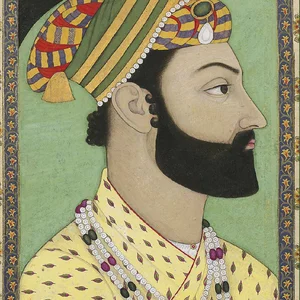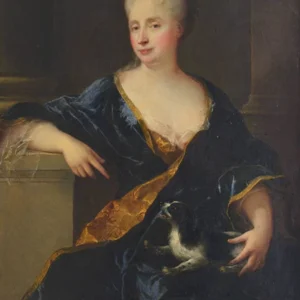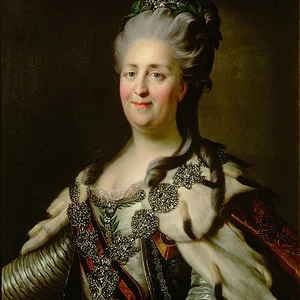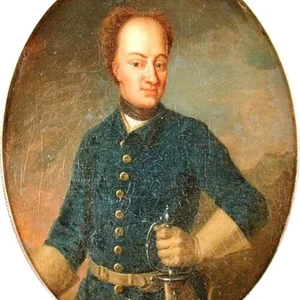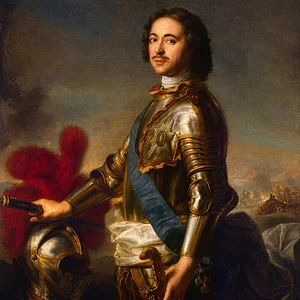

Tsar and first Emperor of Russia (1682–1725), Peter I undertook a radical modernization of his empire inspired by Western European models. He founded Saint Petersburg, reformed the army and administration, and transformed Russia into a major European power.
Peter I of Russia(1672 — 1725)
Peter I of Russia
Empire russe, tsarat de Moscou
9 min read
Frequently asked questions
Key Facts
- 1672: Born in Moscow
- 1682: Becomes Tsar of Russia (co-reign with Ivan V until 1696)
- 1697–1698: Grand Embassy to Western Europe to observe techniques and recruit experts
- 1703: Founding of Saint Petersburg, future 'window onto Europe'
- 1721: Takes the title of Emperor of All Russia following victory over Sweden (Great Northern War)
Works & Achievements
Construction of a new city on Baltic marshlands, designed according to European urban planning principles. Capital from 1712, it symbolizes the break with medieval Russia and integration into Enlightenment Europe.
Peter I built a modern naval force from scratch, as nothing of the sort had existed before his reign. This fleet won the Battle of Gangut (1714) and secured Russia's permanent access to the Baltic Sea.
A sweeping reform organizing Russian society into 14 civil and military grades accessible through merit. The system broke the monopoly of old aristocratic families and created a service nobility tied to the state.
A military code modernizing the Russian army along European lines, establishing discipline, hierarchy, and professional officer training. It laid the foundation for the standing, well-trained army that defeated Charles XII.
Abolition of the Patriarchate of Moscow and its replacement by an ecclesiastical college (the Holy Synod) controlled by the state. This reform subordinated the Orthodox Church to imperial authority, following the Lutheran Protestant model.
A scientific institution modeled on European academies, which attracted renowned foreign scholars such as Euler and Bernoulli. It marked the starting point of scientific and technical development in modern Russia.
The peace agreement ending the Great Northern War, by which Russia gained Estonia, Livonia, and Karelia. The treaty officially established Russia as an empire and a major power of the first rank in Europe.
Anecdotes
In 1697–1698, Peter I traveled incognito through Western Europe under the name 'Piotr Mikhailov' during the Grand Embassy. He worked as a ship's carpenter in the Zaandam shipyards in Holland to learn shipbuilding firsthand, which astonished Europeans who recognized the tsar.
Peter I had a passion for dentistry and would perform tooth extractions on his courtiers, often without being asked. It is said that he kept the teeth he had pulled in a small pouch, some removed with such force that he occasionally took a piece of jawbone along with them.
To compel his boyars to adopt European customs, Peter I introduced a 'beard tax' in 1698. Any nobleman who refused to shave had to pay an annual levy and wear a medallion proving he had paid. The measure symbolized his determination to break with Russia's medieval traditions.
Peter I stood 2.04 meters tall, which was exceptional for the era. His imposing stature contrasted with his unusually small feet (size 5 US / 38 EU), which forced him to have shoes specially made. He also suffered from severe convulsive episodes whose cause remains a matter of debate.
At the founding of Saint Petersburg in 1703, Peter I personally laid the first stones of the Peter and Paul Fortress. The city was built on swampland at such a grueling pace that tens of thousands of workers and serfs died on the construction site, earning it the grim nickname 'the city built on bones.'
Primary Sources
On this day, His Majesty personally inspected the fortifications and ordered that the works be accelerated, judging that the defense of the position could suffer no delay in the face of the Swedish enemy.
Every soldier owes absolute obedience to his officers, for discipline is the soul of the army. He who abandons his post or shows cowardice before the enemy shall be put to death without mercy or exception.
All civil, military, and court grades are henceforth organized into fourteen ranks. Nobility shall no longer be granted by birth alone, but earned through loyal service rendered to the State.
Our fleet must be ready before the end of the month. Russia needs the sea as a man needs air; without free ports, our commerce and our power will remain strangled.
The Holy Synod shall exercise spiritual authority under the direction of the State. There shall no longer be a single patriarch, for such a position might risk overshadowing the sovereign power of the monarch.
Key Places
Founded by Peter the Great in 1703 on the banks of the Neva River, this city was his greatest symbolic achievement. Designed as a 'window onto Europe,' it became the capital of the Russian Empire and a masterpiece of European Baroque architecture.
The first structure built in 1703 on an island in the Neva, this fortress houses the cathedral where Peter the Great is buried. It was the founding nucleus of Saint Petersburg and also served as a state prison.
Site of the decisive battle of July 8, 1709, where Peter the Great crushed the Swedish army of Charles XII. This victory established Russia as a major European power and marked the permanent decline of the Swedish Empire.
The town where Peter the Great worked incognito as a shipwright in 1697 during the Grand Embassy. The house he lived in is preserved today as a museum known as the 'Czaar Peterhuisje.'
Peter the Great established Russia's first shipyard here in 1696 to build the fleet that allowed him to capture Azov from the Ottomans. This site marked the birth of Russian naval power.
The former capital of Russia and traditional residence of the tsars, which Peter the Great symbolically abandoned in favor of Saint Petersburg. It was in the Kremlin that he was crowned and spent his early years of rule.
Typical Objects

Peter I wielded an axe himself at shipyards, notably in Zaandam and Voronezh. This tool symbolizes his determination to learn everything through hands-on practice and his ambition to build a Russian naval fleet.

Passionate about astronomy and navigation, Peter I regularly used optical instruments imported from Europe. He used them to inspect fleets and shipyards from the heights of fortresses.

In contrast to the long traditional Russian robes, Peter I imposed European dress on his court — a justaucorps, breeches, and wig. He wore them himself as an example of the modernization of customs.

Peter I was fascinated by medicine and practiced tooth extraction on those around him. He owned his own set of surgical instruments and could not resist the urge to operate on anyone who complained of a toothache.

Essential instruments for the creation of the Russian fleet, Peter I mastered them personally. He required his naval officers to know how to use them, making promotions contingent on proficiency in nautical techniques.

Peter I was a tireless legislator, signing hundreds of decrees (ukazy) reforming every aspect of Russian life. These documents, written in a simplified vernacular, form the legal foundation of the modern empire.
School Curriculum
Vocabulary & Tags
Key Vocabulary
Tags
Daily Life
Morning
Peter I rose at dawn, around 4 or 5 in the morning, a habit he kept throughout his life. He would begin by personally inspecting the shipyards or fortifications under construction, often dressed in simple work clothes, before attending a brief religious service.
Afternoon
Afternoons were devoted to affairs of state: audiences with ministers and foreign ambassadors, signing decrees, and reviewing administrative reforms. He regularly took part in working sessions of the newly created Colleges, not hesitating to pick up the pen himself to revise documents.
Evening
Peter I's evenings alternated between 'assemblies' — receptions mixing male and female courtiers in the European fashion — and informal gatherings with his inner circle. He drank heavily, played dominoes and cards, and had a fondness for military music.
Food
Despite his imperial status, Peter I had simple tastes in food: he enjoyed rye bread, fish soup (ukha), boiled vegetables, and roasted meats. He drank large quantities of spirits (vodka) and Dutch beer, a taste he had developed during the Grand Embassy.
Clothing
In contrast to the heavy traditional Russian garments, Peter I wore Western dress — short justaucorps, breeches, stockings, and a wig — which he imposed on his court as well. On campaign or at construction sites, he preferred plain work clothes: a Dutch sailor's coat, a felt hat, and tall boots.
Housing
Peter I lived in surprisingly modest quarters for an absolute monarch. In Saint Petersburg, he first resided in a small wooden house (the 'Domik Petra') before moving to the Summer Palace. He favored low-ceilinged rooms heated by Dutch faience stoves, filled with scientific instruments and nautical charts.
Historical Timeline
Period Vocabulary
Visual Style
Le style visuel associé à Pierre Ier est celui du grand baroque européen du début du XVIIIe siècle, mêlant la pompe impériale occidentale aux éléments architecturaux et symboliques de la Russie transformée.
Sound Ambience
L'univers sonore de Pierre Ier mêle les bruits de chantier naval et militaire, les cloches orthodoxes de la vieille Russie et le tintement des instruments européens importés, reflet d'un empire en pleine transformation.
Liens externes & ressources
Références
Œuvres
Fondation de Saint-Pétersbourg
1703
Création de la flotte de la Baltique
1703-1714
Table des rangs (Tabel o rangakh)
1722
Règlement militaire (Voïnski ustav)
1716
Réforme ecclésiastique et création du Saint-Synode
1721
Fondation de l'Académie des sciences de Saint-Pétersbourg
1724
Traité de Nystad
1721