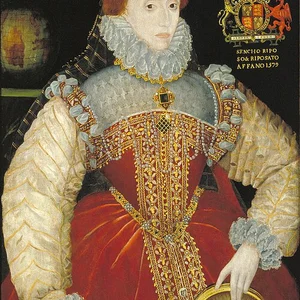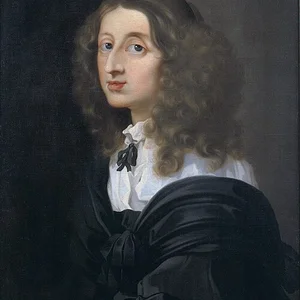

Queen of Sweden from 1632 to 1654, Christina voluntarily abdicated her throne to convert to Catholicism and settle in Rome. An exceptional woman, she invited Descartes to her court and ruled with authority in the Europe of the Thirty Years' War.
Christina of Sweden(1626 — 1689)
Christina I of Sweden
Suède
8 min read
Frequently asked questions
Famous Quotes
« I have never been able to understand how one could submit to a single man.»
Key Facts
- 1632: ascends the throne at age 6 following the death of her father Gustavus II Adolphus, killed at Lützen
- 1648: her reign witnesses the signing of the Peace of Westphalia, ending the Thirty Years' War
- 1654: voluntarily abdicates in favor of her cousin Charles X Gustav
- 1655: officially converts to Catholicism in Innsbruck, scandalizing Protestant Europe
- 1656–1689: settles in Rome, becoming an influential patron of the arts and letters
Works & Achievements
A collection of philosophical and moral reflections written by Christina throughout her Roman life. These texts bear witness to her Stoic thinking and her singular conception of power and freedom.
Christina laid the foundations of this literary and poetic academy, which became one of the most influential in Europe in the 18th century, bringing together poets, musicians, and intellectuals around a pastoral and humanist ideal.
Under her reign, Sweden played a decisive role in negotiating the Peace of Westphalia, which ended the Thirty Years' War. Christina, though young, oversaw Swedish foreign policy alongside Oxenstierna.
Christina had thousands of artworks, manuscripts, and books looted from the imperial collections in Prague repatriated to Sweden. This collection formed the nucleus of the Swedish royal collections.
An autobiographical text in which Christina recounts her childhood, her education, and the reasons for her abdication. A unique fragment that sheds light on her psychology and her vision of her own destiny.
Anecdotes
Christine ascended to the throne of Sweden at the age of six, following the death of her father Gustav II Adolf, killed at the Battle of Lützen in 1632. Raised like a prince, she received an exceptional education in Latin, Greek, modern languages, philosophy, and sciences, often surpassing her tutors.
In 1649, Christine invited the philosopher René Descartes to Stockholm to teach her philosophy. She insisted on holding her lessons at five o'clock in the morning in an ice-cold palace; Descartes, weakened by the Swedish cold, contracted pneumonia and died in February 1650, only a few months after his arrival.
In June 1654, Christine stunned all of Europe by voluntarily abdicating her crown — an extremely rare act for a monarch in good health. She left Sweden disguised as a man, traveled across Europe, and secretly converted to Catholicism in Innsbruck before making a triumphal entry into Rome in 1655.
Christine categorically refused to marry despite repeated pressure from the Estates of the realm. She maintained that marriage was incompatible with her freedom and her desire to rule alone. This attitude, highly unusual for a queen of the 17th century, fueled much speculation about her personality and identity.
Settled in Rome under the protection of the popes, Christine transformed her Palazzo Farnese into a true European cultural center. She founded the Arcadia, an influential literary academy, and patronized artists such as the composer Arcangelo Corelli and the painter Giovanni Battista Gaulli, known as il Baciccio.
Primary Sources
Freedom is the greatest good one can have in this world; whoever loses it loses everything that can make life pleasant.
I am not at all the woman people believe me to be; you have known me too long to think me capable of the weaknesses of my sex.
I freely and voluntarily renounce the crown of Sweden, all the rights and prerogatives attached to it, and I pray God to bless my successor and my kingdom.
My father destined me to reign over men; it was therefore necessary to form in me the mind and courage of a man, without which I would have been nothing but a woman on the throne.
Rome is my true homeland; it is here that my soul breathes, surrounded by the greatest minds of Christendom.
Key Places
Royal residence where Christina grew up and ruled Sweden. The castle, destroyed in a fire in 1697, was the political and cultural heart of the kingdom.
University city where Christina was officially crowned Queen of Sweden in 1650 in a lavish ceremony, and where she had received much of her education.
City where Christina officially and secretly converted to Catholicism in 1655, before continuing her journey to Rome. This symbolic act marked her definitive break with Protestant Sweden.
Christina's main residence in Rome, which became one of Europe's foremost intellectual and artistic salons. She welcomed philosophers, scholars, musicians, and artists from around the world.
Burial place of Christina of Sweden, an exceedingly rare honour granted to a former Protestant sovereign who had converted. Her tomb is located in the Vatican Grottoes.
The place where Christina had her chamberlain Gian Rinaldo Monaldeschi executed in 1657, accusing him of treason. This act provoked widespread outrage across Europe.
Typical Objects

Symbol of power that she wore at her coronation in 1650 and solemnly set aside at her abdication in 1654. This dramatic gesture remains one of the most famous in modern history.
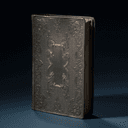
A 6th-century manuscript written in gold and silver on purple parchment, brought back from Prague as war spoils by Swedish armies. Christina made it one of the centerpieces of her library.
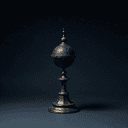
A scientific instrument representing celestial movements, symbolizing Christina's passion for science and natural philosophy. She owned several astronomical instruments in her cabinets of curiosities.
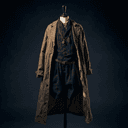
Christina regularly wore men's clothing, most notably upon her departure from Sweden in 1654, when she disguised herself as a man to cross Europe incognito.
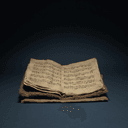
Christina patronized the composer Arcangelo Corelli and funded numerous musical works in Rome. Baroque music held a central place in the entertainments at her Palazzo Farnese.
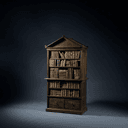
Christina assembled one of the largest private libraries in Europe, gathering philosophical, scientific, and literary works. A large portion of these books now form the Reginensis collection at the Vatican Apostolic Library.
School Curriculum
Vocabulary & Tags
Key Vocabulary
Daily Life
Morning
Christine rose at dawn, as early as five in the morning — a habit she even imposed on Descartes for their philosophical lessons. She devoted her early hours to reading in Latin or Greek, going through manuscripts from her personal library before attending Mass in her private chapel.
Afternoon
Afternoons were dedicated to diplomatic audiences, discussions with the scholars and artists she received at her court, and overseeing her art collections. In Sweden, she also presided over meetings of the Royal Council and settled affairs of state with an authority her ministers acknowledged.
Evening
Evenings at Christine's court, both in Stockholm and in Rome, were occasions for performances: Baroque music concerts, theatrical productions, court ballets, or operas. She enjoyed philosophical debates that stretched late into the night with her learned guests.
Food
Christine ate simply for a queen, preferring quick meals to elaborate banquets. In Rome, she embraced Italian cuisine — fish, vegetables, pasta — accompanied by local wines. Her contemporaries noted that she paid little attention to gastronomic refinements, preferring to spend her time in study.
Clothing
In Sweden, Christine often wore masculine attire — jacket, breeches, and boots — which scandalized part of the court. For official ceremonies, she donned heavy gold-embroidered velvet gowns trimmed with royal ermine. In Rome, her dress became more restrained, blending masculine and feminine elements in a highly personal style.
Housing
In Stockholm, Christine resided in the royal Tre Kronor castle, a vast medieval fortress remodeled into a Renaissance palace, surrounded by her libraries and cabinets of curiosities. In Rome, she moved into the Palazzo Farnese and then the Palazzo Riario (now Palazzo Corsini), which she transformed into a cultural center with painting galleries, a library, and a concert hall.
Historical Timeline
Period Vocabulary
Visual Style
Style portrait baroque royal, mêlant la solennité nordique du XVIIe siècle et la chaleur de la Rome pontificale, avec symboles du pouvoir et de l'érudition.
Sound Ambience
Ambiance entre cour royale baroque scandinave et salon intellectuel romain du XVIIe siècle, mêlant musique de chambre, érudition et vie aristocratique.
Liens externes & ressources
Références
Œuvres
Maximes et pensées de Christine de Suède
vers 1660-1680
Fondation de l'Académie de l'Arcadia à Rome
1690 (fondée juste après sa mort sur ses bases)
Traités de Westphalie (rôle diplomatique)
1648
Collection de l'Inventaire du château de Prague (butin de guerre)
1648
Autobiographie (fragment inachevé)
vers 1681