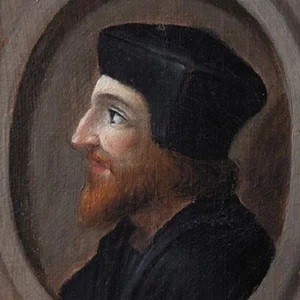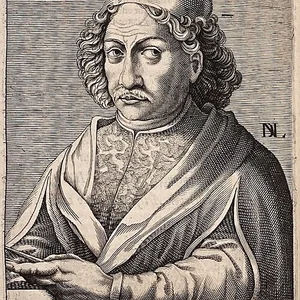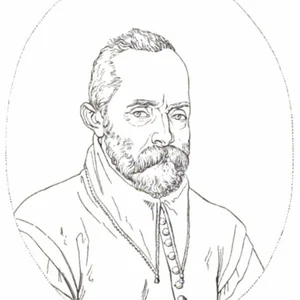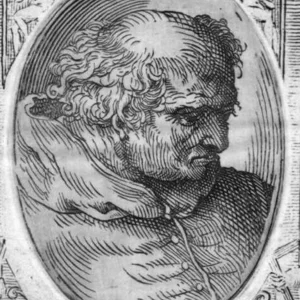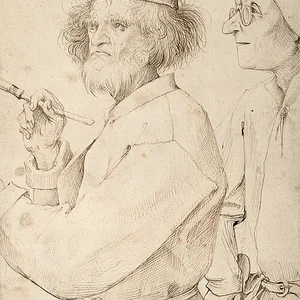

Brabantian painter and printmaker of the Flemish Renaissance, famous for his peasant scenes and vast landscapes. His works depict everyday life, popular proverbs, and 16th-century village festivities.
Pieter Bruegel the Elder(1525 — 1569)
Pieter Bruegel the Elder
duché de Brabant
6 min read
Frequently asked questions
Key Facts
- Born around 1525-1530 in Brabant (the Spanish Netherlands)
- Admitted as a master to the Guild of Saint Luke in Antwerp in 1551
- Travelled to Italy around 1552-1554, crossing the Alps that would inspire his landscapes
- Painted 'The Hunters in the Snow' and 'The Tower of Babel' in 1563-1565
- Died in 1569 in Brussels, founder of a dynasty of painters (Bruegel the Younger, Jan Brueghel the Elder)
Works & Achievements
A painting gathering more than a hundred popular proverbs illustrated within a single village. A visual encyclopedia of human wisdom and folly.
A marketplace scene pitting the pleasures of Carnival against the austerity of Lent. A panorama of Flemish social and religious life.
A monumental depiction of the biblical construction site of the tower, blending technical prowess with reflection on human pride. One of his most famous works.
A masterpiece from the series of the Months, showing hunters returning to the village through the snow. A high point of the winter landscape in Western art.
A peasant banquet in a barn, famous for its lively composition and delightful details. A precious record of village customs.
A village festival enlivened by bagpipes and dancing. Here Bruegel captures the energy and joyful roughness of the peasant world.
A line of blind men stumbling one after another, illustrating the Gospel saying “if a blind man leads a blind man.” A work of great moral force.
A vast apocalyptic landscape where armies of skeletons mow down all of humanity. A striking meditation on universal death.
Anecdotes
Pieter Brueghel the Elder so loved observing peasants that, according to his biographer Karel van Mander, he would disguise himself to attend village weddings and festivals incognito. There he would eat, drink, and dance with the guests, then return home to paint these lively scenes from memory.
His painting *The Tower of Babel* teems with technical details of construction sites: cranes, scaffolding, blocks of cut stone. Brueghel depicts a tower so gigantic that its summit vanishes into the clouds, illustrating the human pride punished in the Bible.
In *Netherlandish Proverbs* (1559), Brueghel painted more than a hundred popular sayings in a single image, such as “to bang one's head against a wall” or “to fall from the ox onto the donkey.” The painting is a veritable encyclopedia of sixteenth-century folk wisdom.
Brueghel did not sign his works **Brueghel** by chance: from **1559** onward, he dropped the “h” from his name (Bruegel instead of Brueghel) for reasons that remain mysterious. His two sons, however, kept the older spelling “Brueghel.”
Before becoming famous as a painter, Brueghel earned his living by drawing satirical engravings for the publisher Hieronymus Cock in Antwerp. His mocking, moralizing prints, widely distributed, made him known long before his great paintings.
Primary Sources
He often went to the countryside, with a merchant friend, to the festivals and weddings of the peasants, both of them disguised as common folk so as to observe the peasants' nature in their ways of eating, drinking, dancing, leaping and courting.
Pieter Brueghel of Antwerp, great imitator of the knowledge and fantasies of Hieronymus Bosch, which earned him the nickname of the second Hieronymus Bosch.
BRVEGEL 1559 — signature and date borne on the painting bringing together the proverbs and sayings of the Flemish people.
Peeter Brueghels, schilder — entry of Pieter Brueghel as a free master painter of the Antwerp painters' guild.
Key Places
Region of the southern Netherlands where Brueghel is thought to have been born around 1525. Its landscapes and villages fed his imagination of rural life.
Great port city and artistic capital of the Netherlands where Brueghel trained, was admitted as a master in 1551 and worked for the publisher Hieronymus Cock.
A stop on his journey to Italy around 1552-1554, where he studied ancient and Renaissance art before crossing the Alps on his way back.
The mountain range he crossed on his return from Italy, which left a lasting mark on the way he painted vast mountain landscapes.
City where Brueghel settled after his marriage in 1563, painted his late masterpieces and died in 1569.
Typical Objects

Oak wood support on which Brueghel painted most of his pictures. Several boards were glued together and sanded to form a smooth surface.

Fine brushes that made it possible to paint the countless tiny figures that populate his peasant scenes. The fineness of the hairs made minutely detailed work possible.

Coloured powders (earths, lapis lazuli, ochres) ground with oil on a flat stone to make the colours. The workshop prepared its own paints.

Plate onto which the engraver transferred Brueghel's drawings to pull prints that circulated in large numbers. It was through engraving that his fame first spread.

Notebook in which Brueghel recorded landscapes, peasants and street scenes from life. These sketches then fed the composition of his large studio paintings.

A wind instrument ever-present in the village festivities that Brueghel painted, as in *The Peasant Dance*. It symbolised popular music and rustic merriment.
School Curriculum
Vocabulary & Tags
Key Vocabulary
Daily Life
Morning
Brueghel rose at dawn to make the most of natural light, indispensable to a painter. He prepared, or had others prepare, pigments and panels, then worked on the compositions commissioned by his wealthy clients in Antwerp and Brussels.
Afternoon
Afternoons were spent in the workshop, painting the countless tiny figures of his scenes, or drawing designs intended for engraving. He sometimes received merchants and patrons who came to discuss a work.
Evening
As daylight faded, lacking good light, Brueghel stopped painting fine details. He could then sketch rough drafts, talk with his humanist friends, or prepare the next day's work by candlelight.
Food
The Flemish diet of the time relied on rye bread, porridges, vegetables, herring, and beer, the everyday drink. At the festivities he loved to observe, meats, pies, and waffles were served in abundance.
Clothing
As a burgher of Antwerp and Brussels, Brueghel wore a dark doublet, a linen shirt, and hose, in keeping with the sober fashion of the Low Countries. To observe the peasants, he put on simple clothes so as to go unnoticed.
Housing
He lived in a timber-framed or brick town house, typical of the Flemish merchant cities. The workshop, a light-filled room, held a central place in his Brussels home.
Historical Timeline
Period Vocabulary
Liens externes & ressources
Références
Œuvres
La Tour de Babel
1563
Chasseurs dans la neige
1565
Le Repas de noce
1567
La Danse des paysans
1568
La Parabole des aveugles
1568