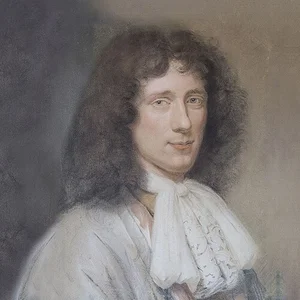

Pietro Bragadin was an Italian printer active between 1614 and 1649. He practiced his craft in Venice, contributing to the spread of texts at a time when Venetian printing was flourishing across Europe.
Pietro Bragadin
Pietro Bragadin
7 min read
Frequently asked questions
Key Facts
- Active as a printer in Venice from 1614 to 1649
- Practiced his trade in one of Europe's leading centers of printing
- Contributed to the production and distribution of printed texts in 17th-century Italy
Works & Achievements
Like most Venetian printers, Bragadin regularly produced religious texts — missals, breviaries, prayer books — which formed a stable and lucrative part of any publishing house's output at the time.
Collections of laws, statutes, and notarial forms met a constant demand in a merchant republic like Venice. This output, essential to economic and administrative life, guaranteed the workshop a steady stream of commissions.
Venice was renowned for printers capable of producing texts in Greek, Hebrew, and Arabic. The Bragadin workshop carried on this tradition of multilingual publishing that extended the Serenissima's reach into the markets of the Levant.
In the context of the Scientific Revolution and the intellectual renewal of the seventeenth century, Venetian printers played a role in spreading new ideas. Bragadin contributed to this circulation of knowledge, under the watchful eye of the Republic's censors.
Anecdotes
Pietro Bragadin plied his trade at the heart of Venice, a city that boasted more than a hundred printing workshops and shone as the European capital of the book. His presses stood alongside those of other celebrated printing dynasties, turning certain Venetian streets into true alleyways of knowledge.
Like every Venetian printer, Bragadin was required to submit each work for approval to the Riformatori dello Studio di Padova, the Republic's official censors. This process could delay the publication of a theological or philosophical text by several months, forcing the printer to negotiate with patience and diplomacy.
Bragadin's workshop used wooden screw presses reinforced with metal, inherited from the Gutenberg tradition. It took several days of labour — the painstaking setting of movable type, inking, pressing sheet by sheet — to produce a single volume of a few hundred pages.
The great plague that struck Venice in 1630–1631 claimed nearly a third of the city's inhabitants — around 46,000 people. Many workshops temporarily shut their doors; Bragadin, whose activity is documented until 1649, survived the catastrophe and resumed his presses in a city deep in mourning.
Bragadin published liturgical and legal texts among others — regular commissions that provided the workshop with a steady income. This output of breviaries, notarial forms, and official documents sometimes financed more ambitious publishing projects, allowing the printer to diversify his production.
Primary Sources
The Republic granted exclusive printing privileges for a limited period, protecting printers' investments. These notarized documents formed the legal basis of the publishing trade and bore the name of the beneficiary printer.
The Riformatori recorded the examination and approval of each work submitted to their censorship, noting the printer, title, and date of authorization. These archives, preserved at the Archivio di Stato di Venezia, allow us to trace Bragadin's publishing output.
'Appresso Pietro Bragadin' — a recurring formula at the end of volumes, indicating the printer's name, the place (Venice), and the year of printing. These colophons are the primary source for identifying and dating his publishing production.
The Venetian printers' and booksellers' guild kept registers of its members, their apprentices, and their obligations. Membership in this *arte* was essential to practice the trade legally in Venice.
Key Places
The historic heart of Venice's book trade, this district housed numerous printing workshops and booksellers. Pietro Bragadin plied his craft here, within a dense community of book artisans.
The Rialto district was the main hub for buying and selling books in Venice. Booksellers displayed works produced by printers such as Bragadin, drawing Venetian customers and visiting foreign merchants alike.
The Venice State Archives hold censorship registers, printing privileges, and records of the printers' guild — essential sources for reconstructing Pietro Bragadin's activity over more than thirty years.
The University of Padua, under Venetian authority, was the chief intellectual center of the Republic. The *Riformatori dello Studio di Padova*, attached to this institution, oversaw censorship of works printed in Venice, including those of Bragadin.
The Venetian Ghetto was home to Hebrew printers renowned throughout Europe. Their proximity to workshops like Bragadin's encouraged technical exchanges and, at times, editorial collaborations on multilingual texts.
Typical Objects

The central tool of the workshop, this metal-reinforced wooden press allowed uniform pressure to be applied to the inked type form to print each sheet. An experienced pressman could produce around 250 sheets per hour.

Every letter, numeral, and punctuation mark was an individual lead block cast from copper matrices. The compositor assembled them by hand in a composing stick to form lines of text — work of extreme precision and painstaking slowness.

A small adjustable metal ruler in which the compositor aligned the movable type line by line. A fundamental tool of the trade, it allowed the justification of the text to be controlled before composing the full form.

Spherical pads made of leather stuffed with horsehair, used in pairs to ink the type form evenly before each impression. Their proper upkeep was essential to the consistency of the print run.

Made from lampblack, boiled linseed oil, and resins, this viscous ink was the closely guarded secret of every workshop. Its proper consistency determined the sharpness of the type on the page.

Venetian workshops sourced their paper from mills in the Marche region or the Venetian hinterland. The quality of the paper — its weight, whiteness, and freedom from blemishes — largely determined the value and selling price of the finished book.

An account book in which Bragadin recorded his orders, expenses on paper and ink, workers' wages, and sums owed by booksellers. This ledger was the indispensable commercial memory of every workshop.
School Curriculum
Vocabulary & Tags
Key Vocabulary
Daily Life
Morning
Bragadin rose at dawn, like his compositor and pressman workers. The workshop came alive at sunrise: ink was prepared, typographic forms composed the day before were checked, and the presses were fed. Natural light was precious for distinguishing the tiny lead characters and avoiding composition errors.
Afternoon
The afternoon was devoted to proofreading, negotiating with authors or patrons, and managing supplies of paper and ink. Bragadin sometimes visited the booksellers of the Rialto to discuss sales, negotiate prices, and take new orders for his workshop.
Evening
In the evening, the workshop stopped for lack of sufficient light to distinguish the type. Bragadin kept his accounts, received authors or clients, and planned the next day's work. Venetian social life — discussions in taverns and the *calli* — also nourished his indispensable professional network.
Food
Like a prosperous Venetian craftsman, Bragadin ate fish (salt cod, sardines, lagoon eels) accompanied by polenta, vegetables, and legumes. Veneto wine was present at every meal. On feast days and well-paid commissions, meat and pasta enriched the daily fare.
Clothing
In the workshop, Bragadin wore a long dark tunic protected by a leather apron, essential for shielding his clothes from ink splashes. For trips around the city, he wore a plain wool cloak, as the Republic's sumptuary laws strictly limited the sartorial display permitted to craftsmen.
Housing
The Venetian printer typically lived in or immediately adjacent to his workshop, in a building typical of Venice: the ground floor was reserved for work and paper storage, while the upper floors served as family quarters. The canals allowed for the discreet delivery of paper and the dispatch of bound volumes to booksellers.
Historical Timeline
Period Vocabulary
Liens externes & ressources
Références
Œuvres
Textes liturgiques et bréviaires
1614-1649
Ouvrages juridiques et notariaux
1614-1649
Publications en langues orientales et grecque
vers 1620-1645
Textes philosophiques et scientifiques
1614-1649