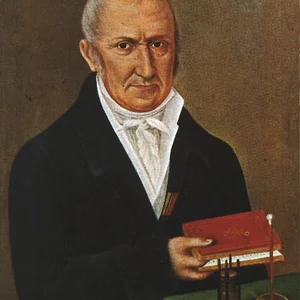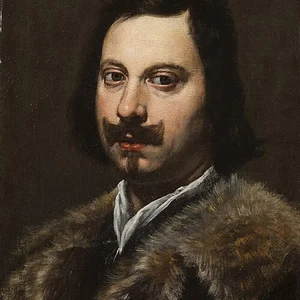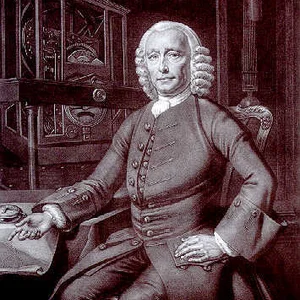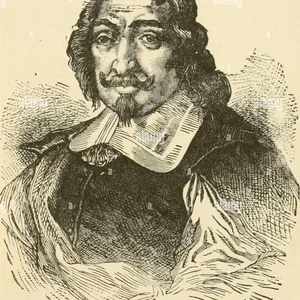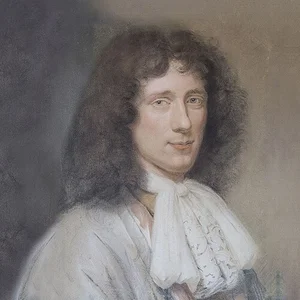

Dutch mathematician, physicist, and astronomer (1629–1695), Huygens invented the pendulum clock and developed the wave theory of light. He discovered Titan, Saturn's largest moon, and formulated the laws of elastic collision.
Christiaan Huygens(1629 — 1695)
Christian Huygens
Provinces-Unies
8 min read
Frequently asked questions
Key Facts
- 1655: discovery of Titan, a moon of Saturn
- 1656: invention of the pendulum clock, a revolution in timekeeping
- 1659: description of Saturn's rings
- 1673: publication of Horologium Oscillatorium on pendulum dynamics
- 1678: formulation of the wave theory of light (Treatise on Light, published in 1690)
Works & Achievements
The first published treatise on probability theory, in which Huygens introduces the concept of mathematical expectation. This foundational text directly influenced Leibniz and the mathematicians of the 18th century.
The first work to describe the pendulum clock, its mechanism, and its applications to the precise measurement of time. It laid the groundwork for a technological revolution in clockmaking and astronomical navigation.
In this work, Huygens explains that Saturn is surrounded by a flat, tilted ring, resolving an astronomical mystery fifty years in the making, and announces the discovery of Titan, its largest moon.
A masterpiece of 17th-century mechanics, this work mathematically demonstrates the properties of the cycloidal pendulum, establishes the laws of uniform circular motion, and lays the foundations of modern dynamics.
In this work, Huygens sets out his wave theory of light, arguing that it propagates as waves through a hypothetical ether. This landmark text anticipates modern wave physics and remains a reference in the history of optics.
A posthumous work in which Huygens uses scientific reasoning to speculate on the plurality of inhabited worlds and the possible conditions for life elsewhere in the universe. This visionary text is among the first to seriously address the question of extraterrestrial life.
Anecdotes
In 1656, Christiaan Huygens built the first functional pendulum clock, reducing timekeeping error from fifteen minutes per day to just fifteen seconds. This invention revolutionized maritime navigation and experimental science, allowing precise measurement of short intervals in the laboratory for the very first time.
On March 25, 1655, while observing Saturn through a telescope he had refined himself with his brother Constantijn, Huygens spotted a small point of light orbiting the planet at regular intervals. He had just discovered Titan, Saturn's largest moon — a world first that earned him immediate recognition throughout learned Europe.
Huygens demonstrated that an ordinary pendulum traces a slightly irregular circular arc. To correct this flaw, he invented "cycloidal cheeks" — curved metal plates that force the pendulum's cord to follow a precise mathematical curve called the cycloid, making the oscillations rigorously isochronous, meaning perfectly constant in duration regardless of amplitude.
Invited to Paris in 1666 by Colbert, Louis XIV's powerful chief minister, Huygens became one of the leading figures of the brand-new Académie royale des Sciences. He received a generous pension from the king and worked in the French capital for fifteen years, surrounded by the finest minds in Europe.
Huygens argued that light travels as a wave through an invisible medium called the "ether
directly opposing Isaac Newton, who viewed it as a stream of particles. This debate between two giants of the 17th century would not be truly settled until the 20th century, when quantum physics showed that light is simultaneously a wave and a particle.
Primary Sources
I dedicate to Your Majesty this pendulum clock, whose usefulness for the precise measurement of time, for astronomy, and for navigation surpasses anything hitherto imagined. The theory of the cycloidal pendulum demonstrates that all oscillations, large or small, are completed in rigorously equal times.
There is no doubt that Light consists in the motion of some matter. For when one considers its extreme speed and that in different places, even opposite ones, the waves pass through one another without interference, one must conclude that it is a motion of waves propagating through a subtle medium.
Saturn is surrounded by a thin, flat ring, nowhere touching the planet and inclined to the ecliptic. I have moreover discovered a satellite that completes its revolution around Saturn in approximately sixteen days, which I call Saturni Luna.
I start from the principle that in a fair game, each player may expect to obtain what his opponent equally expects, and it is this equal expectation that constitutes the fair stake. On this foundation, it is possible to calculate rigorously the value of any chance.
Key Places
Huygens's birthplace and the city where he died in 1695. He spent most of his life in the family home, at the heart of the political and diplomatic capital of the Dutch Republic.
The Huygens family country estate, designed by his father Constantijn Sr. Christiaan stayed there regularly and continued his scientific thinking in a setting that combined nature with intellectual reflection.
Huygens studied mathematics and law here from 1645. Leiden was at the time one of the most prestigious universities in Europe, a hub of Cartesianism and the new sciences.
Huygens worked here from 1666 to 1681, invited by Colbert as a central figure of this institution founded by Louis XIV. It was in Paris that he wrote his works on light, mechanics, and the cycloidal pendulum.
Huygens visited London on several occasions and maintained close ties with the Royal Society, founded in 1660. There he met Boyle, Hooke, and other English scholars, actively taking part in the broader European exchange of scientific ideas.
Typical Objects

Huygens's landmark invention (1656), this clock uses an oscillating pendulum to regulate the flow of time with unmatched precision, reducing the error to just a few seconds per day. It became the reference instrument in observatories and laboratories around the world.

Huygens and his brother Constantijn crafted high-quality telescopes, grinding and polishing the lenses themselves. It was with one of these instruments that he discovered Titan and deciphered the true shape of Saturn's rings.

Huygens designed a compound eyepiece made of two lenses that reduces the chromatic aberrations of telescopes — a major optical advancement that still bears his name today. This eyepiece remained in use in observation instruments for more than two centuries.

Around 1675, Huygens invented the spiral balance spring to regulate portable watches, in an effort to solve the problem of determining longitude at sea. This mechanical principle remains at the heart of modern mechanical watches.

Huygens left behind thousands of pages of mathematical notes and letters exchanged with Leibniz, Newton, Boyle, and other European scholars, bearing witness to the rich circulation of ideas in the 17th century. These manuscripts are preserved at the National Library of the Netherlands.

Huygens was an accomplished musician who played the viola da gamba, a bowed string instrument highly prized in aristocratic and scholarly circles of the 17th century. His father Constantijn Sr. was also a poet and musician, and music held an important place in the family's life.
School Curriculum
Vocabulary & Tags
Key Vocabulary
Daily Life
Morning
Huygens begins his day by reading his scientific correspondence, which was extensive with scholars from across Europe. He replies to letters from Leibniz, Boyle, or Oldenburg, writing in Latin or French depending on his correspondent, before opening his notebooks of mathematical calculations.
Afternoon
The afternoon is devoted to experiments and observations. In his workshop, he grinds and polishes lenses alongside his brother Constantijn, adjusts his clocks, or points his telescope at the sky to measure planetary positions. In Paris, he works at the Académie des Sciences in the company of his colleagues.
Evening
In the evening, Huygens sometimes joins intellectual gatherings or dinners with diplomats and patrons. With family at The Hague or at Hofwijck, he plays the viola da gamba — he was an accomplished musician — and continues his theoretical reflections, filling his notebooks with geometric proofs.
Food
As the son of a prosperous bourgeois family, Huygens dines at a well-stocked Dutch-style table: meats, North Sea fish, seasonal vegetables, local cheeses and beers. In Paris, he adapts to the more refined French cuisine at Academy dinners or at his patrons' homes.
Clothing
Huygens wears the sober but high-quality attire of a Dutch Calvinist gentleman: dark doublet, white lace collar (the “flat collar”), a powdered wig adopted from the 1660s onward, breeches and stockings. At the Paris Academy, he adopts the more ornate dress codes in fashion at Louis XIV’s court.
Housing
Huygens lives in the large family home in The Hague, a patrician house typical of the Dutch Republic with its tall windows and vaulted rooms. In Paris, he occupies an apartment provided by the Crown, with space dedicated to his instruments and experiments. At Hofwijck, the family country villa, he enjoys the peace and garden for quiet reflection.
Historical Timeline
Period Vocabulary
Liens externes & ressources
Références
Œuvres
De Ratiociniis in Ludo Aleae (Du raisonnement dans les jeux de hasard)
1657
Horologium
1658
Systema Saturnium
1659
Horologium Oscillatorium sive de motu pendulorum
1673
Traité de la Lumière
1690
Cosmotheoros
1698