 flip
flipFigs and Dates Candied in Honey and Pomegranate
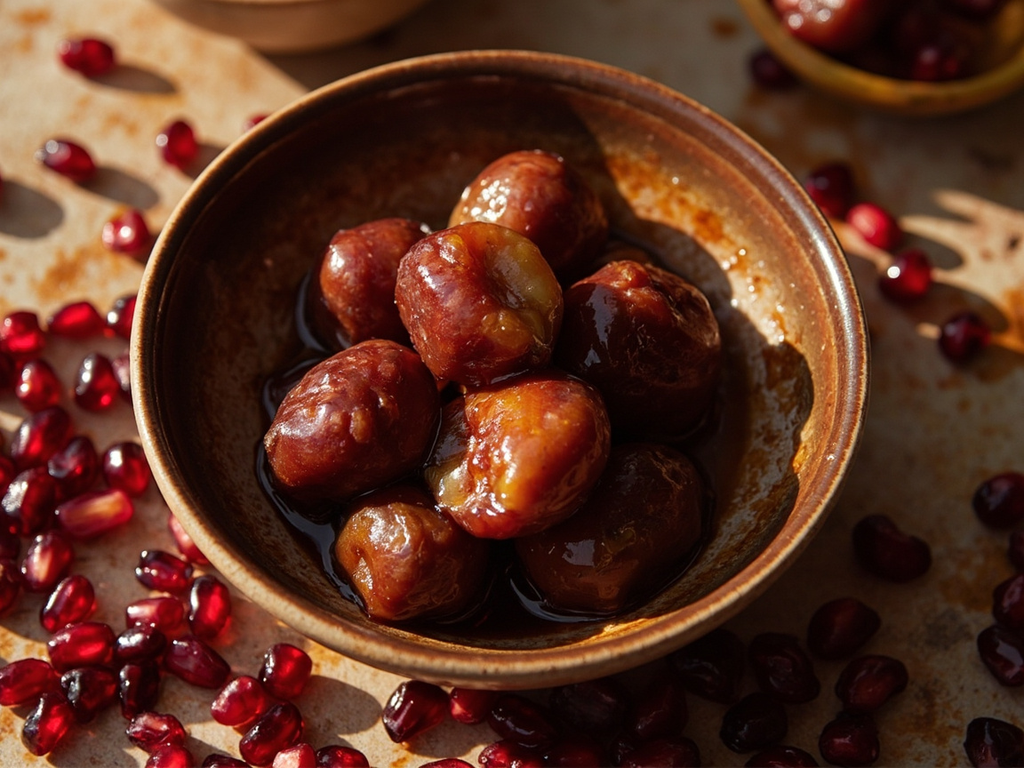
Figs and Dates Candied in Honey and Pomegranate
Why this dish? The storerooms of the solar temples at Heliopolis overflowed with preserved fruits for daily offerings to Ra throughout the year. Figs, dates, and pomegranates, candied in honey, kept their sweetness from harvest to harvest — a reserve worthy of a god who had to be fed every day, without interruption, since the dawn of the world.
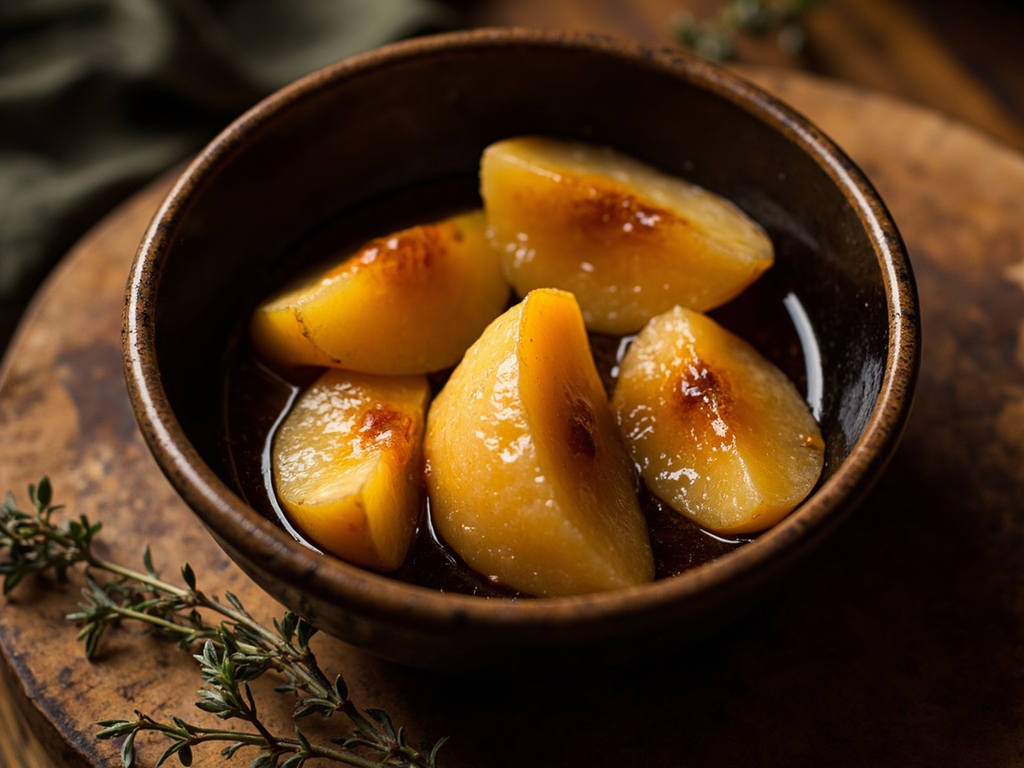
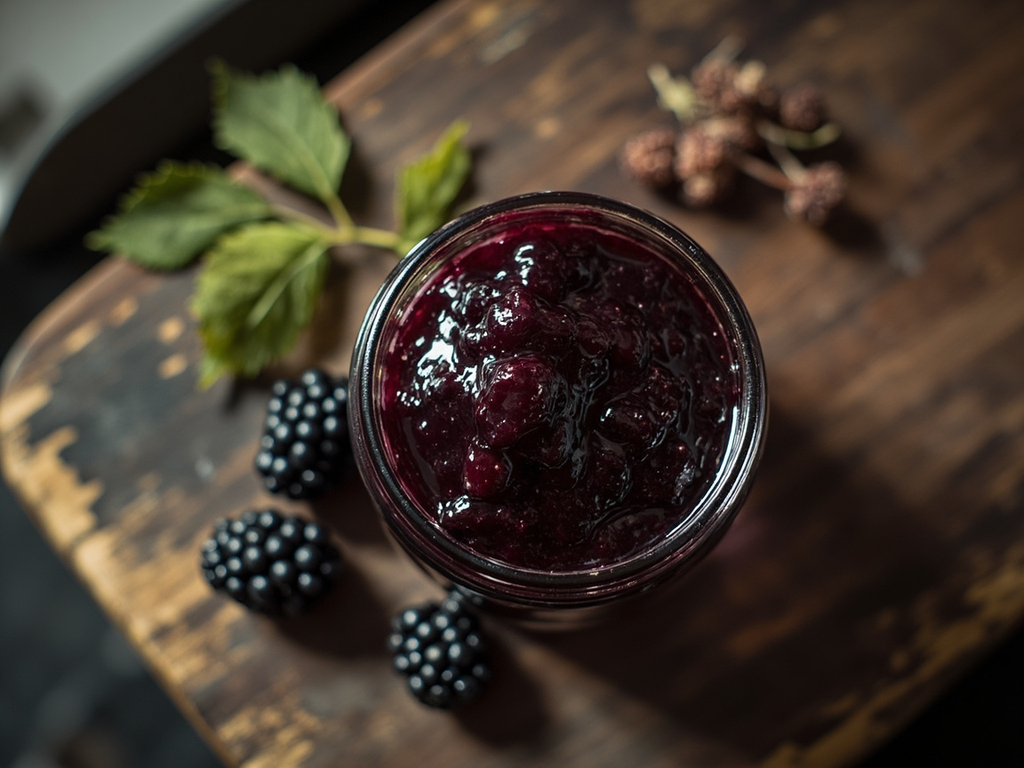
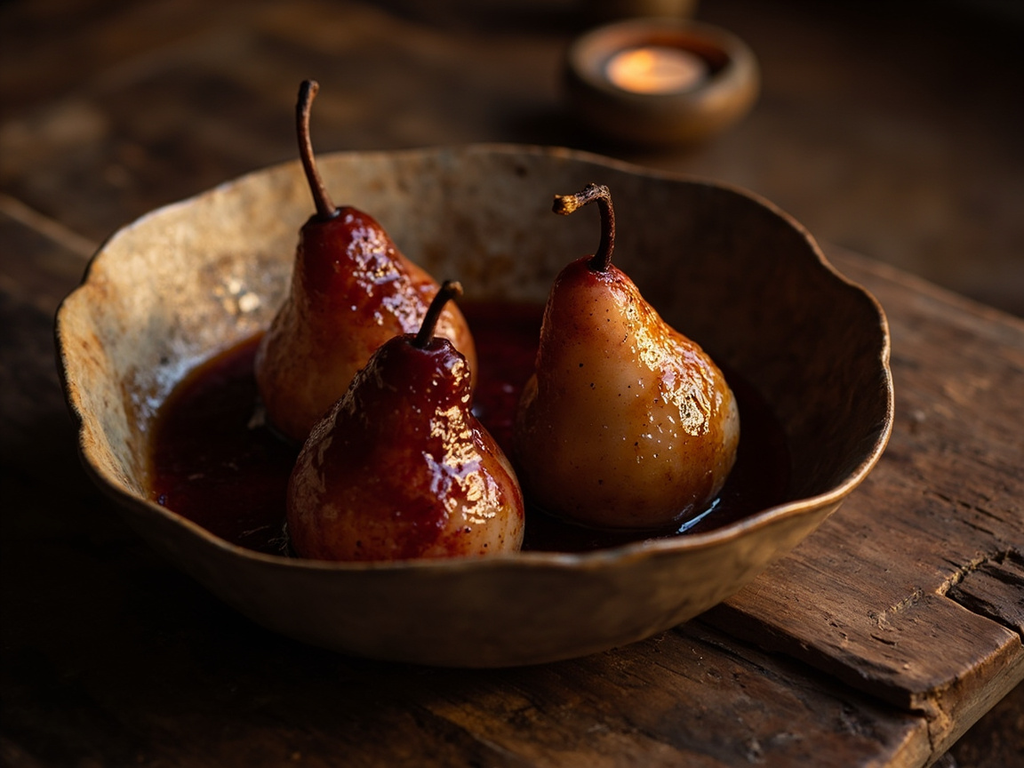
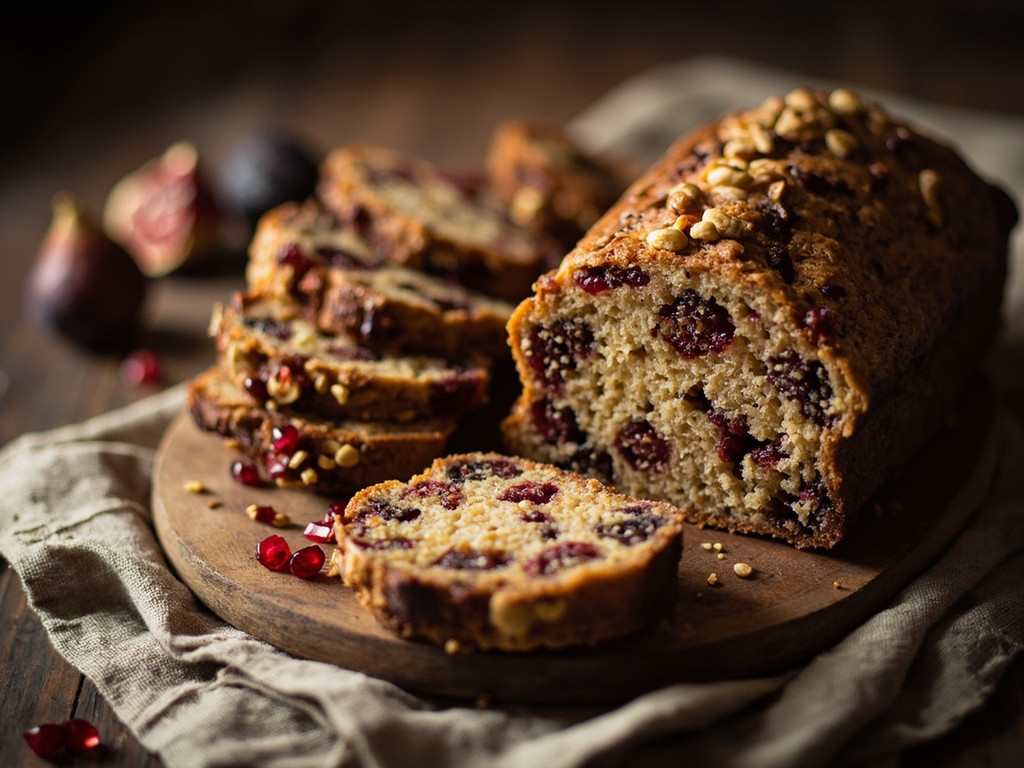
Ripe fruits slowly candied in a honey syrup sharpened with pomegranate juice, until shiny and melting. A sweet-and-sour preserve that keeps for a long time in a jar.
I am served every day, and every day since the beginning: thus I need fruits that do not die with the season. My priests candy figs and dates in honey, and press pomegranate into them to awaken their sweetness with a touch of acidity. So my storerooms never empty, and even in the heart of the flood I receive the gifts of summer. Take a glossy fig: you will taste the sun I have poured upon the orchards of the Valley.
- •Fresh figs — a basket (main fruit)
- •Ripe dates — a handful (fruit and sugar)
- •Honey — generously (preserving syrup)
- •Pomegranate juice — a cup (acidity)
- •Water — a little (syrup)
Figs and Dates Candied in Honey and Pomegranate
Ripe fruits slowly candied in a honey syrup sharpened with pomegranate juice, until shiny and melting. A sweet-and-sour preserve that keeps for a long time in a jar.
Why this dish? The storerooms of the solar temples at Heliopolis overflowed with preserved fruits for daily offerings to Ra throughout the year. Figs, dates, and pomegranates, candied in honey, kept their sweetness from harvest to harvest — a reserve worthy of a god who had to be fed every day, without interruption, since the dawn of the world.
I am served every day, and every day since the beginning: thus I need fruits that do not die with the season. My priests candy figs and dates in honey, and press pomegranate into them to awaken their sweetness with a touch of acidity. So my storerooms never empty, and even in the heart of the flood I receive the gifts of summer. Take a glossy fig: you will taste the sun I have poured upon the orchards of the Valley.
Ingredients (period version)
- Fresh figs — a basket (main fruit)
- Ripe dates — a handful (fruit and sugar)
- Honey — generously (preserving syrup)
- Pomegranate juice — a cup (acidity)
- Water — a little (syrup)
Ingredients
- Fresh figs (or semi-dried) — 400 g (main fruit)
- Pitted dates — 150 g (fruit and sugar)
- Honey — 150 g (syrup)
- Pure pomegranate juice — 150 ml (acidity)
- Water — 100 ml (syrup)
- Fresh pomegranate seeds — 1 handful (decoration and freshness)
Method
- In a saucepan, mix the honey, pomegranate juice, and water; bring to a simmer.
- Add the whole figs and dates; cook over low heat for 25 to 30 minutes, until the fruits are shiny and the syrup has thickened.
- Gently remove the fruits, reduce the syrup for a few more minutes if too liquid.
- Return the fruits to the syrup, let cool slightly.
- Pour into a clean jar (the fruits should be submerged in the syrup); keeps for several weeks in the fridge.
- Serve sprinkled with fresh pomegranate seeds.
How it was made : Honey was the great preservative of antiquity (antibacterial medium): fruits and even some meats were candied in it. Figs, dates, pomegranates, and grapes are among the fruits attested in Egypt by archaeological remains and paintings. The pomegranate, introduced in the New Kingdom, became a prized fruit among elites — consistent with the era of Ra.
The contemporary twist : Arrange the glossy figs opened like a corolla, heart facing upward, sprinkled with pomegranate — like little red suns on a black plate.
Sources : William J. Darby, Paul Ghalioungui, Louis Grivetti, Food: The Gift of Osiris, Academic Press, 1977 · Botanical remains, Theban tombs (New Kingdom)
Ra · Charactorium